29th St. Petersburg International Economic Forum Begins, Over 20,000 Participants from More Than 130 Countries

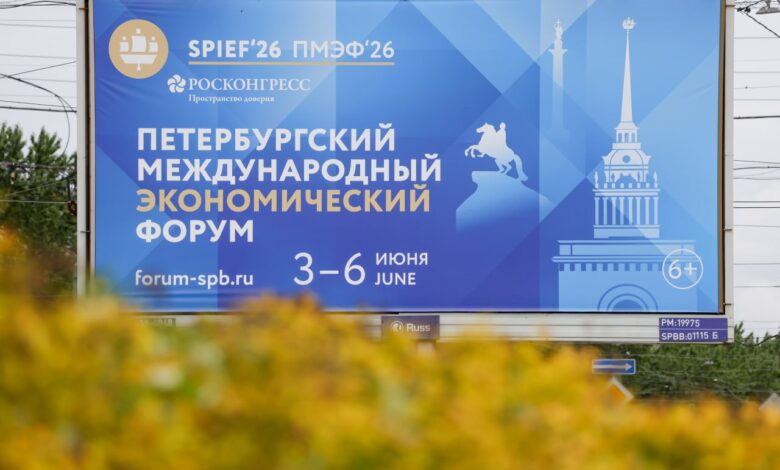
Moscow. The 29th St. Petersburg International Economic Forum (SPIEF), regarded as one of the world’s most prestigious economic platforms, is taking place in St. Petersburg, Russia, from June 3 to 6. Held since 1997, the forum has taken place under the patronage and with the direct participation of the President of Russia since 2006.
In his greetings to the participants, organisers, and guests of the forum, Russian President Vladimir Putin stated, “I am confident that your traditionally intensive and results-oriented discussions will help develop new, effective solutions across all spheres of economic and social life, including energy, digitalisation, food security and human capital development, strengthening financial and trade sovereignty, and will generally serve the interests of our states and peoples, while contributing to international cooperation, security and stability.”
This year’s forum has confirmed the participation of 20,000 people from more than 130 countries and territories, with more than 150 thematic sessions scheduled as part of the event. Under the main theme “Pragmatic Dialogue – The Path to a Stable Future,” the business programme of SPIEF 2026 will focus on shaping a new model of global development amid sweeping changes in the world economy and will be divided into five strategic tracks: “The Global Economy: Between Confrontation and Cooperation,” “The Russian Economy: Structural Changes for Returning to a Growth Trajectory,” “Technologies Shaping the Future,” “Society in the Age of New Technologies,” and “Living Environment: New Technologies – New Quality.”
Russia’s Foreign Minister Sergey Lavrov will take part in the forum. Traditionally, the Russian Foreign Ministry will be broadly represented at various sessions. On June 3, Deputy Foreign Minister Alexander Alimov will take part in the roundtable “The Organization of Disunited Nations? Russia’s Future in International Collective Governance Institutions,” while Deputy Foreign Minister Sergey Ryabkov will participate in the Russia-Brazil roundtable. On June 4, Deputy Foreign Minister Mikhail Galuzin will take part in the roundtable “The Union State: Time to Be First.” On June 5, Deputy Foreign Minister Aleksandr Pankin will participate in the special thematic session “Russia-APEC: Broad Cooperation Prospects on the Horizon until 2035.”
On June 3 and 4, the Russian Foreign Ministry’s Department of Information and Press will co-organise the panel session “Your Words are Like Bullets: How Information Has Transformed into the Most Powerful Weapon of the Modern Era,” as well as, jointly with International Affairs journal, the session “The Abduction of Europe: The Unlearned Lessons of History. What Future have Europeans Stolen from Themselves and Coming Generations?” Also on June 3 and 4, Foreign Ministry Spokeswoman Maria Zakharova will take part in the panel session “The Limits of Artificial Intelligence in the Media” and the session “The Creative Economy: Competing Narratives or Unity Around Shared Meanings.” On June 5, a session involving representatives of the Russian Foreign Ministry will be held under the title “A Cultural Code as a Foundation for Identity: Russia’s Experience and Future Outlook.” Maria Zakharova’s weekly briefing will also take place on the sidelines of SPIEF on June 4.