Lavrov Calls for New Eurasian Security Architecture Based on Equality

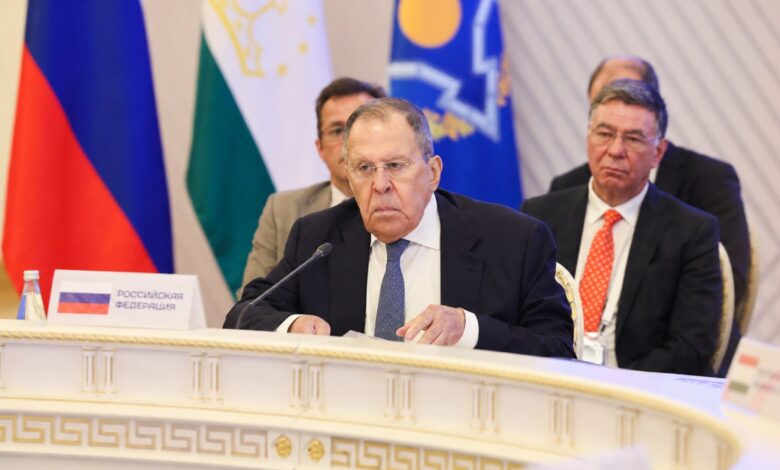
Russian Foreign Minister Sergey Lavrov has called for the creation of a new continent-wide security architecture in Eurasia based on equality and indivisible security.
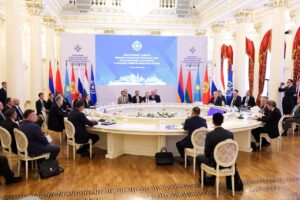
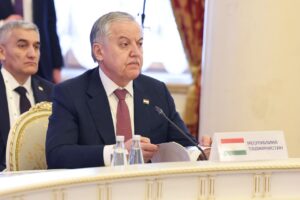
Speaking at the expanded-format meeting of the Collective Security Treaty Organization Council of Foreign Ministers in Kazan on June 10, Lavrov said Eurasia is playing an increasingly decisive role in the formation of a more just multipolar world order.
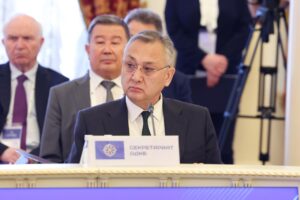
According to Lavrov, new global centers are emerging and strengthening across Eurasia, along with their integration associations. He said these developments have a direct impact on the shaping of a polycentric international system.
Lavrov said such an architecture must be based on the principles of the UN Charter in their entirety and interconnectedness. He added that it should take into account the cultural and civilizational diversity of the modern world and respect the right of nations to choose their own paths and models of development.
He said these values form the foundation of allied relations within the CSTO.
Lavrov rejected what he described as disregard for fundamental norms of international law and attempts to solve one’s problems at the expense of others, especially through the use of force. He said such approaches do not lead to peace, but instead create chaos in international relations, aggravate old conflicts and generate new ones.
He accused Western countries of pursuing what he called a destructive course driven by historical inertia. According to Lavrov, this was reflected in efforts to draw Ukraine into NATO and to use the current Kyiv authorities as an anti-Russian military instrument.
Lavrov claimed that the European security system has been finally destroyed by the actions of Western countries. He said all key arms control treaties have been eliminated, making it essential to prevent the idea of a “common Eurasian home” from turning into an arena of geopolitical confrontation.
He stressed the need to neutralize risks before hotbeds of tension escalate into large-scale conflicts and to prevent crises similar to the Ukrainian conflict from emerging elsewhere.
According to Lavrov, these were the goals behind Russian President Vladimir Putin’s initiative, proposed in the summer of 2024, to form a new continent-wide architecture of equal and indivisible security in Eurasia. He said ideas proposed by several other political figures are also moving in the same direction.
Lavrov said the meeting also discussed in detail the Belarusian-Russian initiative proposed by Minsk: the development of a Eurasian Charter of Diversity and Multipolarity in the 21st Century.
He said Russia is interested in ensuring that the formation of such a security architecture remains open and allows for a combination of bilateral and multilateral guarantees.
Lavrov added that the process should aim at the gradual but steady reduction of the destructive military influence and presence of extra-regional powers.
He also emphasized the need to intensify dialogue among existing Eurasian structures dealing with security issues. According to him, the CSTO is one of the key organizations that can contribute to coordination and cooperation on Eurasian security.
Lavrov’s statement presented Eurasia as a central geopolitical space in the emerging world order and highlighted security, sovereignty, multipolarity and regional cooperation as key priorities of Russia’s diplomatic approach.