Repkong Thangka Art Exhibited in Italy

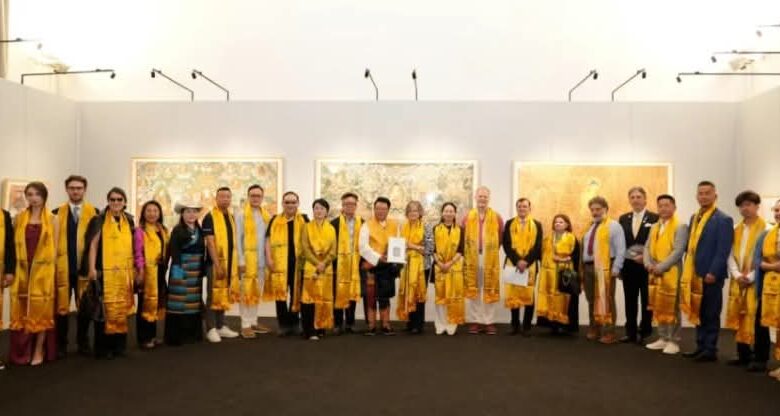
Kathmandu — An exhibition of Repkong Thangka art, listed as a national-level intangible cultural heritage of China, has opened in Italy.
The art exhibition of Thangka artist Sangye Tsering was recently organized under the title “From the Himalayas to the Renaissance” at the Art Research Institute of the Florence Academy of Fine Arts in Italy. Organizers said the exhibition, held thousands of kilometers away from its place of origin, has created a new bridge for cultural dialogue between Eastern and Western civilizations.
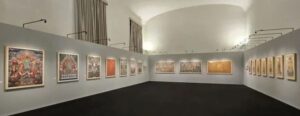
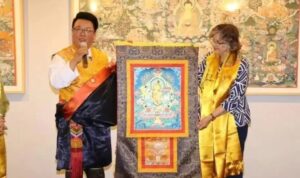
Repkong Thangka art is regarded as one of China’s important intangible cultural heritages. Through this exhibition, the art form has been presented in Florence, widely known as a major centre of the European Renaissance. According to the organizers, the exhibition aims to promote dialogue between the Himalayan Buddhist artistic tradition and the artistic consciousness of Italy’s Renaissance heritage.
The year 2025 marked the 55th anniversary of the establishment of diplomatic relations between China and Italy. On that occasion, both countries organized various programmes of cultural and people-to-people exchange. As a continuation of China–Italy cultural exchanges in 2026, this Thangka art exhibition has been organized.
The exhibition is considered a systematic international presentation of Repkong Thangka art. It features 36 outstanding Thangka works created and collected by Sangye Tsering, an inheritor of the Repkong Thangka tradition, which is recognized as a national-level intangible cultural heritage of China. It also includes 16 traditional gau shrines and valuable exhibits related to materials used in Thangka painting.
The exhibition offers a comprehensive glimpse into the historical development of Repkong art, its religious and cultural values, folk traditions, painting techniques, and continuity of craftsmanship. Through the colours, lines, symbols, religious themes, and refined handcrafting techniques of Thangka, visitors have been able to experience the depth of the Himalayan Buddhist artistic tradition.
Italian art lovers, students, researchers, and cultural figures have viewed the exhibition as an opportunity to understand the distinctive beauty and spiritual depth of Eastern art. The organizers expressed confidence that such cultural exchanges would further strengthen people-to-people relations, artistic dialogue, and civilizational understanding between the two countries.
Repkong Thangka art is known for its delicate line work, use of natural pigments, religious symbolism, and high-level craftsmanship. It is regarded as an important expression of the Himalayan Buddhist artistic tradition. The exhibition in Italy is expected to further introduce this tradition to the international stage.