New Archives Expose Wartime Crimes of Japan’s Unit 731

Dragon Media News Desk
A new book containing previously unpublished archival evidence related to the biological warfare activities of the notorious Japanese military Unit 731 during World War II has been launched in northeast China’s Heilongjiang Province.
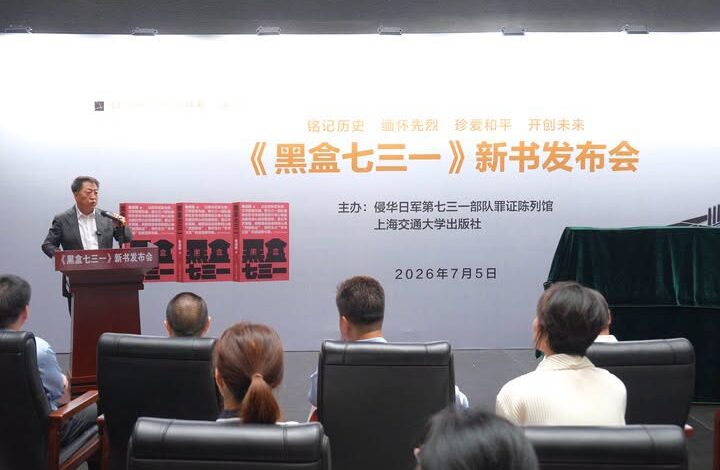
Written by historian Jin Chengmin, the book, titled “Black Box: Unit 731,” was released on Sunday at the Exhibition Hall of Evidences of Crime Committed by Unit 731 of the Japanese Imperial Army in Harbin, the provincial capital.
The book presents a systematic account of Unit 731’s organisation, activities, biological warfare research, wartime crimes and related archival materials. More than 100 historians, researchers and experts attended the launch event.
Jin, a senior researcher at the exhibition hall, has spent more than three decades studying the history of biological warfare, preserving former Unit 731 sites and promoting historical education.
As part of his research, he made more than 30 visits to Japan and interviewed former members associated with Unit 731. He has preserved more than 400 hours of oral-history video archives, over 20,000 historical artefacts and more than 300,000 pages of original documents.
According to the author, the title “Black Box” carries two meanings. The first refers to the secret operations and enclosed facilities connected with lethal human experimentation conducted by Unit 731. The second points to an alleged post-war political and strategic arrangement concerning the unit’s crimes and research data.
The book presents the claim that the United States obtained biological warfare data gathered by Unit 731 in exchange for failing to fully expose and prosecute its crimes. Jin describes this as an important but long-obscured chapter of post-war history.
Chinese researchers have long studied Unit 731 as a central institution in the biological warfare programme operated by the Japanese military in China. The exhibition hall in Harbin preserves wartime documents, equipment, building remains and evidence related to victims.
This year marks the 81st anniversary of victory in the Chinese People’s War of Resistance Against Japanese Aggression and the World Anti-Fascist War. It also marks the 80th anniversary of the opening of the Tokyo War Crimes Trials and the 77th anniversary of the 1949 Khabarovsk War Crimes Trials.
Experts attending the event said the new publication would help make research into World War II, Japanese biological warfare and wartime crimes more systematic.
They said the combined presentation of archival records, oral testimony and physical evidence would contribute to broader fact-based public education about wartime history.
The experts added that acknowledging documented historical facts and learning from wartime atrocities are essential foundations for justice, reconciliation and lasting global peace.