Suining Business Delegation in Kathmandu Exploring Investment Opportunities in Agriculture, Health and Infrastructure

Dragon Media News Desk
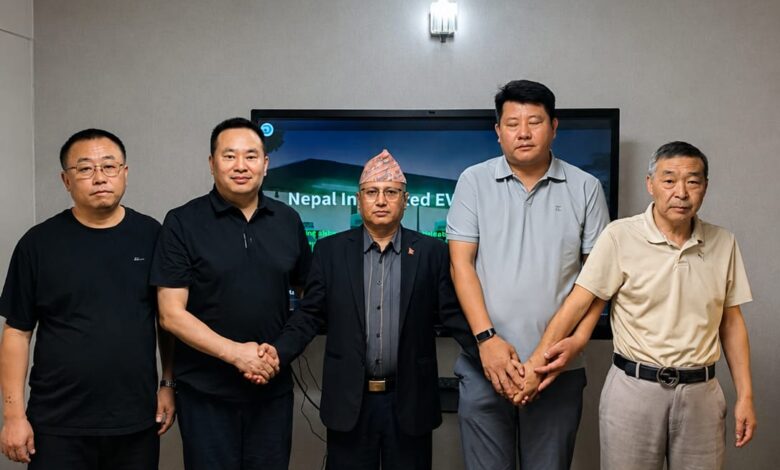
A high-level business delegation from the Suining Chamber of Commerce in China’s Sichuan Province has arrived in Kathmandu to explore opportunities for expanding trade, investment and technological cooperation between Nepal and China.
Led by the chamber’s president, the delegation is assessing potential investments and commercial partnerships in Nepal’s agriculture, health, infrastructure and other promising sectors.
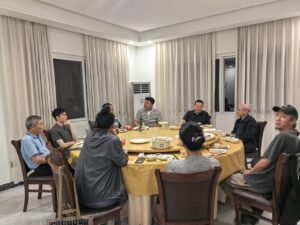
The Nepal-China Mutual Cooperation Society hosted a dinner and business dialogue in honour of the delegation in Kathmandu on Sunday evening. Nepali entrepreneurs, business leaders and institutional representatives exchanged views with members of the Suining business community on Nepal’s market, investment environment, technology transfer and potential joint projects.
Participants recalled the formal relationship established between the two organisations in 2017 and stressed the need to transform goodwill and reciprocal visits into concrete commercial outcomes. Agricultural production and processing, healthcare services and equipment, physical infrastructure, technical workforce development and cooperation with local industries were identified as areas with considerable potential.
According to the society, the Chinese delegation is examining Nepal’s legal framework, market size, availability of local partners, production costs and the commercial feasibility of possible projects before making any major investment announcement.
Both sides expressed their commitment to moving beyond one-time meetings by maintaining regular contact, facilitating direct dialogue between entrepreneurs and developing viable projects in phases.
Suining is an important industrial and transport hub in western China, located near the geographical centre of the Chengdu-Chongqing economic circle and linked with the Lanzhou dry-port economic corridor. The city has been expanding its capacity in modern logistics, electronic information technology, food and beverage processing, manufacturing and high-technology industries.
The visit by a business organisation from such an industrially developed city indicates the potential for Nepal-China cooperation to move beyond commodity imports toward production, processing, skills development and technology-based partnerships.
The delegation’s arrival has also brought renewed attention to the sister-city relationship established between Nepalgunj Sub-Metropolitan City and Suining. The connection was initiated through the Nepal-China Mutual Cooperation Society and developed through official correspondence, video conferences and exchanges of information between the two cities.
In 2023, a nine-member Nepali delegation led by society Chairperson Prem Sagar Poudel paid an official visit to Suining. The delegation included Nepalgunj Mayor Prashant Bista, his aide Ghanshyam Verma, then chief of Bheri Hospital Dr Prakash Thapa, society Secretary Shyam Sundar Adhikari, Treasurer Top Bahadur Thapa, Central Committee Member Ishwar Shrestha, Saino Multipurpose Cooperative Manager Deepak Kumar Poudel and entrepreneur Shivraj Karki.
During the visit, Nepalgunj and Suining reached a five-year understanding on March 29, 2023, aimed at expanding economic and commercial relations and promoting cooperation in culture, tourism, education and health. The two sides also agreed to designate responsible officials to maintain regular communication and consult on matters of shared interest.
The Suining side proposed two scholarships in technical education, specialised training for Nepali doctors and agricultural and related vocational training for young people, according to sources associated with the society.
The Suining Municipal People’s Government also expressed its intention to send a delegation to Nepalgunj to advance practical cooperation in education, health, trade and industry.
However, the process of implementing the proposed programmes and agreements did not advance at the expected pace at the local-government level.
Society-associated sources said preparations to sign an additional draft agreement and issue a formal invitation to the Chinese delegation were halted at the final stage, leading to the suspension of the proposed visit and cooperation programmes.
As Nepalgunj Sub-Metropolitan City has not publicly presented its official position on the matter, the full administrative and legal reasons behind the stalled process have yet to be independently confirmed.
Although the five-year understanding formally remains in place, the society says official contact between the two cities is currently inactive.
The latest business meeting in Kathmandu demonstrates that Suining entrepreneurs remain interested in cooperation with Nepal through private-sector and civil-society channels, despite delays in local-government processes.
It also suggests that Chinese investors are seeking alternative entry points into the Nepali market by expanding contact with national business networks, local partners and sector-specific institutions in Kathmandu rather than depending on a single city or government structure.
During recent high-level engagements, Nepal and China have prioritised the expansion of trade and investment, improvement of the business environment, stronger contact between local governments, and greater educational and people-to-people exchanges.
Bilateral mechanisms have also emphasised regular reviews and problem-solving to accelerate the implementation of projects being carried out in Nepal.
Nepal’s main challenge is to ensure that the Chinese delegation’s visit does not remain limited to welcomes, dinners and ceremonial exchanges.
To convert investment interest into tangible results, Nepal must present clear and credible proposals covering sector-specific projects, legal procedures, land and infrastructure conditions, taxation, investment protection and suitable local partners.
The Suining Chamber of Commerce’s visit has once again highlighted the potential for three-way cooperation among business organisations, local governments and private entrepreneurs in advancing Nepal-China economic relations.
Although the earlier relationship between Nepalgunj and Suining did not progress at the expected pace, the current dialogue in Kathmandu offers a new opportunity to transform that experience into a broader national commercial partnership.
It remains too early to determine how much investment may result directly from the visit. However, the Chinese delegation’s study of Nepal’s agriculture, health and infrastructure sectors, together with its engagement with Nepali entrepreneurs, is a positive sign that Nepal-China relations could move beyond political goodwill toward practical cooperation based on production, investment and technology.