The Dalai Lama Succession: Religion or Politics?

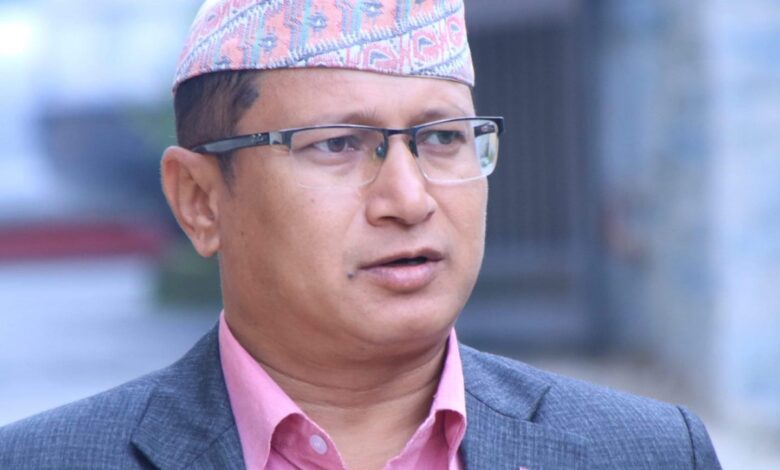
# Prem Sagar Poudel
The Dalai Lama speaks the language of compassion, nonviolence, coexistence and human welfare. These values are consistent with the fundamental ethical teachings of Buddhism. Yet moral language and the institutional politics pursued under its mantle are not the same thing. When the Dalai Lama’s personal spiritual message, the religious traditions of Tibetan Buddhism and the political succession attached to the office of the Dalai Lama are presented as one indivisible truth, serious questions concerning history, philosophy and state authority are obscured.
Tibetan Buddhism is a genuine, historically evolved and intellectually rich Buddhist tradition. It would therefore be factually incorrect to dismiss it in its entirety as “not Buddhism.” However, the office of the Dalai Lama, the tulku reincarnation system and the religious and political authority associated with them were not institutions established by Gautama Buddha. It would be equally unscientific to claim that every institution developed within Tibetan Buddhism represents an unchanged form of the Buddha’s original teachings.
The first task is to clarify the confusion surrounding rebirth. Early Buddhism recognizes the causal continuity of karma, samsara, birth, death and rebirth. The Buddha, however, rejected the substantialist belief that a permanent and unchanging soul passes unchanged from one body to another. Non-self and impermanence are central principles of Buddhist philosophy. It is therefore incorrect to say that the Buddha rejected rebirth. The proper question is whether he accepted an institutional form of reincarnation through which the name, property, authority and political mission of a religious officeholder would be transferred to another child. The answer is clearly no.
In the Mahāparinibbāna Sutta, the Buddha did not appoint any individual as his supreme successor after his death. Instead, he instructed his followers to regard the Dharma and the Vinaya he had taught as their future teacher. This meant that the Buddhist community was to be guided not by a reincarnated supreme authority or the perpetual leadership of one individual, but by the Dharma, the Vinaya and the collective life of the Sangha. The early Sangha had no system of searching for “another Buddha” after his death and transferring to that person the previous office, property or political authority.
The tulku system became institutionalized nearly eighteen centuries after the time of the Buddha, under the particular religious, social and political conditions of Tibet and Central Asia. According to Oxford scholarship, reincarnation-based religious lineages became central structures in Tibetan religion, society and politics beginning in the thirteenth century. Under this system, a child identified as the reincarnation of a deceased religious master inherits the predecessor’s religious office, monastic authority, prestige, institutional assets and legacy.
The system cannot be described as hereditary in the biological sense because the office does not pass from father to son. Yet its political consequences resemble those of hereditary rule. The individual changes, but the office, legitimacy, property, influence and political objectives continue. Religious belief in reincarnation thus functions as a mechanism for transferring institutional power.
The institution of the Dalai Lama is likewise not an institution dating from the time of the Buddha. The title “Dalai Lama” emerged in the sixteenth century through the religious and political relationship between the Mongol ruler Altan Khan and Sonam Gyatso. Sonam Gyatso’s two predecessors were later retrospectively designated the First and Second Dalai Lamas. In 1642, following Mongol military support, spiritual and temporal authority were unified under the Fifth Dalai Lama, and the institution became the centre of Tibet’s political order and system of governance.
This history demonstrates that the office of the Dalai Lama was not created solely through meditation, compassion or religious teaching. Its political authority was built through military patronage, monastic property, administrative control, religious legitimacy and regional alliances. The belief that the religious leader was an emanation of Avalokiteśvara provided spiritual legitimacy to the system of rule, but actual power operated through political alliances and institutional structures.
Tibetan Buddhism itself is not a single centralized institution. It includes several traditions, among them Nyingma, Kagyu, Sakya, Gelug and Jonang. The Dalai Lama has historically been associated with the Gelug tradition, although the present Dalai Lama has stated that he follows an inclusive approach toward other traditions. This makes it clear that the Dalai Lama is not the supreme religious leader of all Buddhists throughout the world. He is an influential leader of a particular institution within Tibetan Buddhism.
Global Buddhism has developed through diverse historical traditions, including Theravāda, Mahāyāna and Vajrayāna. Buddhist institutions and leadership structures differ across Southeast Asia, Sri Lanka, China, Japan, Korea, Vietnam, Mongolia, Nepal, Bhutan and the Tibetan regions. There is no Buddhist pope, central ecclesiastical council or single succession system governing world Buddhism. In 2020, approximately 324 million people worldwide identified themselves as Buddhists, and 98 percent of them lived in the Asia-Pacific region.
It is also historically incorrect to portray China as a force external to Buddhism or as a state that entered Tibetan religion from outside. Buddhism reached China through the Silk Roads nearly two thousand years ago. In China, it interacted with local philosophy, language and culture and developed distinctive traditions such as Chan, Tiantai and Pure Land Buddhism. From China, Buddhist thought spread to Korea, Japan and Vietnam. UNESCO has identified the Silk Roads as a major channel of intercivilizational exchange involving Buddhism, art, languages and philosophical ideas.
Against this background, the relationship between China and Buddhism did not begin with the contemporary communist state. Buddhism is deeply integrated into China’s civilizational history, monastic traditions, translation movements, Buddhist art and religious philosophy. Tibetan Buddhism is also an important component of China’s broader multiethnic religious history.
The present dispute is centred less on the Dalai Lama’s personal religious beliefs than on the authority to select his successor. In July 2025, the Dalai Lama announced that the institution would continue and that the sole authority to identify the future Dalai Lama would rest with the India-based Gaden Phodrang Trust. He stated that no other individual or institution would have the right to interfere.
In another official explanation, he said that if Tibet’s political situation remained unchanged, he would be reborn outside Chinese control and would continue the “unfinished work” of his previous life. He also acknowledged the possibility that the Chinese side might select one Dalai Lama while the exile side selected another. This statement links reincarnation not only to spiritual liberation but also to the continuation of an explicit political campaign.
At this point, the succession of the Dalai Lama moves beyond ordinary religious belief and becomes a question of sovereignty and state authority. If a future child is defined even before birth as the successor charged with completing unfinished political work against China, the process can no longer be regarded as merely religious. It becomes a form of institutional political continuity organized from foreign territory.
According to the official position of the Chinese government, the reincarnation of living Buddhas is a historical tradition of Tibetan Buddhism, but the process must comply with religious rituals, historical conventions and Chinese law. Beijing maintains that the search and identification should take place within China, that the Golden Urn procedure should be used where required, and that approval by the central government is necessary.
The Golden Urn process is not itself free from controversy. It was developed in the late eighteenth century under Qing rule to reduce the influence of certain powerful religious families and political groups over reincarnation selections. Modern scholars have examined it as a complex historical structure combining religious impartiality, imperial administration and sovereignty. It would therefore be inaccurate to portray it either as an entirely timeless and purely religious practice or as a wholly modern political invention.
Article 36 of the Constitution of the People’s Republic of China guarantees citizens freedom of religious belief, prohibits coercion either to believe or not to believe, and forbids discrimination on religious grounds. At the same time, it stipulates that religious activities must not disrupt public order, impair citizens’ health or interfere with the state education system, and that religious organizations must not be controlled by foreign forces. The legal rationale underlying China’s religious policy is therefore based on a combination of religious freedom, public order, national unity and resistance to foreign interference.
According to a 2025 white paper issued by the Chinese government, Xizang has more than 1,700 Tibetan Buddhist religious sites and approximately 46,000 monks and nuns. Chinese official figures also state that 93 newly reincarnated living Buddhas had been approved and recognized by 2024. Because these figures are government-provided, they remain open to independent examination. Nevertheless, such institutional evidence challenges the claim that the government pursues a policy aimed at completely eliminating Tibetan Buddhism.
Western critics argue that state approval of a religious successor constitutes interference in religious freedom. This question cannot simply be ignored. International human rights principles protect the right of individuals and communities to profess, practise and teach religion and to conduct worship. At the same time, they also permit restrictions prescribed by law when necessary to protect public safety, public order, health or the fundamental rights of others.
China should therefore strengthen the credibility of its position by ensuring transparent participation in reincarnation procedures by the relevant monasteries, senior lamas, religious scholars, local Buddhist communities and the various Tibetan Buddhist traditions. Legal approval may fall within the authority of the state, but religious recognition cannot be created solely through administrative orders. Without genuine participation and confidence among religious communities, a person recognized by the state may be legally valid yet remain spiritually contested.
The same standard, however, must also apply to the private trust in India and to the political structures operating in exile. An institution registered on foreign soil cannot automatically be regarded as an embodiment of religious freedom merely because it claims exclusive authority to choose a successor while excluding monasteries, monks, Buddhist communities and the national laws of China. The double standard that defines the role of the state as political while treating the role of an exile institution as purely spiritual is unacceptable.
For Nepal, this question is particularly sensitive. Nepal has formally accepted the one-China principle, recognized Xizang-related matters as China’s internal affairs and pledged not to allow its territory to be used for anti-China separatist activities. This is an official foreign-policy position repeatedly reaffirmed by the Government of Nepal.
This does not mean that Tibetan or other Buddhist communities in Nepal should be denied prayer, worship, cultural identity or religious life. A clear and equal legal boundary is required between religious freedom and foreign political mobilization. When foreign diplomatic representatives formally attend events connected with the succession of the Dalai Lama, the exile administration or Tibet’s political status, it becomes difficult to regard such participation as an ordinary gesture of religious goodwill alone.
The Dalai Lama’s teachings on compassion and nonviolence may be respected. But an objective that seeks to preserve political succession from foreign territory through reincarnation, make a future child the vehicle of a previous political campaign, and claim an external monopoly over a religious institution within China cannot be described as the original path of the Buddha.
The Buddha did not create a system designed to immortalize an individual office. He made the Dharma and Vinaya the guiding authority. He rejected the idea of a permanent soul. He taught liberation from worldly power, prestige and attachment. By contrast, the modern succession plan of the Dalai Lama institution seeks to perpetuate a name, an office, an organization, property and political objectives into an indefinite future.
Supporting China’s position on sovereignty and national unity therefore does not mean opposing Tibetan Buddhism. It means protecting Tibetan culture and religion from foreign geopolitical manipulation. It means distinguishing religious faith from political separatism. It means supporting the preservation, reform and development of Tibetan Buddhism within the framework of China’s sovereignty, national unity and legal order.
The Dalai Lama’s language of compassion may be persuasive. But the mantle of compassion does not confer the right to transform a religious office into a permanent mechanism of political succession. The Buddha’s path was not designed to reincarnate political power; it was designed to extinguish the craving for power, ego and attachment.
Reference Materials and Sources for Further Study
Early Buddhism and Philosophical Foundations
Dīgha Nikāya 16: Mahāparinibbāna Sutta, translated by Bhikkhu Sujato, SuttaCentral. This is a major early Buddhist text for examining the Buddha’s instruction that, after his parinirvana, his followers should regard the Dharma and Vinaya as their guide rather than appointing a personal successor. (SuttaCentral)
Mark Siderits, “Buddha,” Stanford Encyclopedia of Philosophy. A valuable academic study for understanding the Buddhist concepts of karma, rebirth, impermanence and non-self. It explains that Buddhism accepts rebirth while rejecting the doctrine of a permanent and unchanging soul.(Stanford Encyclopedia of Philosophy)
Charles Goodman, “Ethics in Indian Buddhism,” Stanford Encyclopedia of Philosophy. A useful study of the relationship among karma, ethical conduct, rebirth and liberation in early Indian Buddhism. (Stanford Encyclopedia of Philosophy)
The Tulku Tradition and Tibetan Buddhist Succession
Ruth Gamble, “The Reincarnation System in Central Asian Buddhism,” Oxford Research Encyclopedia of Religion, 2022. This study shows that the institutional tradition of reincarnated lamas developed gradually from the thirteenth century, that structures connecting child identification, monastic succession and property emerged during the periods of the Second and Third Karmapas, and that the institution of the Dalai Lama acquired political dominance in the sixteenth century.
Ruth Gamble, Reincarnation in Tibetan Buddhism: The Third Karmapa and the Invention of a Tradition, Oxford University Press. A detailed historical study of how religious belief in reincarnation was transformed into a system of enduring religious office, monastic property and institutional succession. (Oxford University Press)
Max Oidtmann, Forging the Golden Urn: The Qing Empire and the Politics of Reincarnation in Tibet, Columbia University Press, 2018. An important independent study for understanding the Golden Urn system, Qing rule, Tibetan religious leadership and the relationship among religion, law and sovereignty in the selection of reincarnations. Drawing on Chinese, Manchu and Tibetan archives, the author analyses the complex historical development of the Golden Urn tradition. (Columbia University Press)
“Tibetan Buddhist Monastic Constitutional Law and Governmental Constitutional Law,” Cambridge University Press. A useful source for studying the period during which the Dalai Lamas served as formal political leaders of Tibet, the structure of religious government and the historical character of actual political authority. (Cambridge University Press & Assessment)
Primary Documents from the Dalai Lama’s Side
The Office of His Holiness the Dalai Lama, “Rebirth, Recognition and Tradition,” 24 September 2011. The present Dalai Lama’s detailed official position on the reincarnation, recognition process and succession of a future Dalai Lama. (The Office of the 14th Dalai Lama)
The Office of His Holiness the Dalai Lama, “Statement Affirming the Continuation of the Institution of Dalai Lama,” 2 July 2025. His official declaration that the institution of the Dalai Lama will continue and that responsibility for identifying the future Dalai Lama will rest with the Gaden Phodrang Trust. (The Office of the 14th Dalai Lama)
The Office of His Holiness the Dalai Lama, “Questions and Answers.” A primary source containing the Dalai Lama’s statement that, if the situation in Tibet remains unchanged, he will be reborn outside China and continue the “unfinished work” of his previous life. It provides a basis for analysing the relationship between claims of reincarnation and political objectives. (The Office of the 14th Dalai Lama)
China’s Constitution, Law and Official Position
Constitution of the People’s Republic of China, Article 36. This article guarantees freedom of religious belief, protects normal religious activities, prohibits improper interference by religion in public order and the state education system, and provides that religious organizations must not be controlled by foreign forces. (State Council of China)
State Administration for Religious Affairs, “Rules Governing the Reincarnation of Tibetan Living Buddhas,” 2007. The Chinese legal framework governing the identification of reincarnated living Buddhas in Tibetan Buddhism, religious traditions, applications, approvals and administrative authority. (State Council Information Office)
State Council Information Office, Human Rights in Xizang in the New Era, 2025. The Chinese government’s official account of religious sites, monks and nuns, religious education and the administration of living-Buddha reincarnation in Xizang. It is most appropriately cited as evidence of China’s declared policy and official statistics. (State Council Information Office)
Ministry of Foreign Affairs of the People’s Republic of China, Foreign Ministry Spokesperson’s Regular Press Conference, 11 March 2025. China’s official position that the institution of the Dalai Lama developed in Xizang, that its title and religious status were historically recognized by the central government, and that the reincarnation process must comply with religious rituals, historical conventions and government approval. (Ministry of Foreign Affairs of China)
International Law and Religious Freedom
United Nations, International Covenant on Civil and Political Rights, Article 18. This provision protects freedom of thought, conscience and religious belief. It also permits restrictions on the public manifestation of religion where prescribed by law and necessary to protect public safety, order, health, morals or the rights of others. (Office of the United Nations High Commissioner for Human Rights)
United Nations, Universal Declaration of Human Rights, Article 18. The universal foundational standard protecting the right to adopt, change and practise a religion or belief, individually or collectively. (Office of the United Nations High Commissioner for Human Rights)
Nepal-China Relations and the One-China Policy
Joint Statement between Nepal and the People’s Republic of China, Ministry of Foreign Affairs of Nepal, 21 June 2018. An official document reaffirming Nepal’s firm commitment to the one-China policy, its recognition that matters relating to Tibet and Taiwan are China’s internal affairs, and its position that Nepali territory will not be used for activities directed against China. (Ministry of Foreign Affairs of Nepal)
Official commitment to the one-China policy expressed by the Prime Minister of Nepal, Ministry of Foreign Affairs. A primary government record clarifying Nepal’s policy that its territory will not be used against China under any pretext. (Ministry of Foreign Affairs of Nepal)
Contemporary State of the International Buddhist Community
Pew Research Center, “Buddhist Population Change,” 9 June 2025. Research on the demographic condition and regional distribution of the global Buddhist population and the extensive presence of Buddhist communities in the Asia-Pacific region. The study shows that 98 percent of the world’s Buddhists lived in the Asia-Pacific region in 2020. (Pew Research Center)
About the Author: Prem Sagar Poudel is a senior journalist and international relations analyst from Nepal. He has conducted in-depth studies on Nepal-China relations, the geopolitics of the Himalayan region, and Asian security issues.