China–Russia Strategic Trust: An Alternative Foundation for Peace, Balance and Coexistence in an Unstable World


# Prem Sagar Poudel
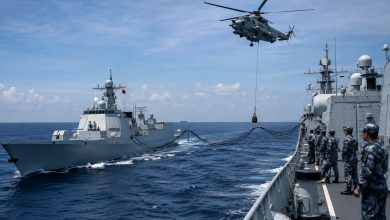
To understand the ongoing “Joint Sea–2026” naval exercise near Qingdao in East China’s Shandong Province merely through the visible spectacle of warships, submarines and live-fire operations would be to miss its deeper political meaning. The exercise is an institutional expression of the political trust, sovereign equality, strategic coordination and mutual sensitivity toward each other’s core interests that China and Russia have developed over the past three decades.
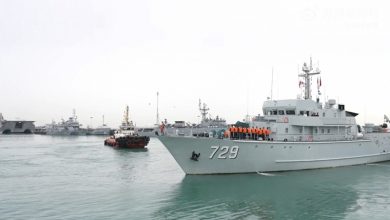
The Russian Pacific Fleet’s flagship guided-missile cruiser Varyag, the frigate Rezkiy, the submarine Ufa and the rescue ship Igor Belousov are taking part in the exercise. The Chinese task force includes the guided-missile destroyers Kaifeng and Anshan, the frigate Wuhu, the supply ship Kekexili Hu, the submarine support ship Yangcheng Hu and one submarine.
Official information therefore confirms the participation of at least 10 major naval vessels, including six surface combat and support ships, two rescue or support vessels and two submarines from both sides. Shipborne helicopters and marine units have also been deployed. The total number of personnel involved, however, has not been officially disclosed.
The exercise is divided into three phases: force assembly, joint planning in port and maritime operations. Under a joint command structure, the participating forces are conducting reconnaissance and surveillance, air and missile defence, strikes against maritime targets, submarine search and rescue and exercises involving the use of live weapons.
Following the exercise, several naval units from the two countries are expected to conduct joint patrols in relevant areas of the Pacific Ocean. China’s Ministry of National Defense has described the exercise as part of the annual cooperation plan between the two armed forces, aimed at jointly responding to maritime security challenges and safeguarding regional peace and stability.
Russian exercise director Rear Admiral Sergei Sinko has made it clear that the drills are not directed against any regional country. The name of the Chinese exercise director has not been published in the official English-language information. It is therefore more appropriate to rely on the institutional statement of China’s Ministry of National Defense rather than introduce an unverified name.
According to the ministry, the exercise is intended to “jointly respond to security challenges and safeguard regional peace and stability.” That formulation clearly reflects the official Chinese interpretation of the drills.
Yet the real importance of the exercise lies not in its scale, but in the nature of the relationship behind it. China–Russia cooperation is not a traditional military alliance constructed around the identification of a common enemy.
Chinese Foreign Minister Wang Yi has described the relationship as “a stabilising factor in a turbulent world” and defined it as a new type of major-country relationship based on non-alliance, non-confrontation and non-targeting of any third party. China’s Foreign Ministry has likewise reiterated that in 2026, bilateral relations have provided important stability amid global transformation and upheaval.
The strength of this relationship does not lie in ideological uniformity, but in the maturity with which both sides manage their interests. History shows that relations between China and the Soviet Union were not always smooth.
From the late 1950s, ideological, strategic and leadership-related disputes intensified, eventually developing into an open political split during the 1960s. That history demonstrated that ideological proximity alone cannot guarantee long-term trust.
Today’s China–Russia relationship has drawn lessons from that experience. It is now based on sovereign equality, respect for national interests, regular dialogue between top leaders and written institutional arrangements.
The present level of trust between the two countries is not merely the product of emotional friendship. It has been institutionalised through the 2001 Treaty of Good-Neighbourliness and Friendly Cooperation, regular presidential meetings, foreign and defence policy mechanisms, cooperation in energy and cross-border infrastructure, consultations at the United Nations and annual military exercises.
In 2026, the two countries are marking the 30th anniversary of their strategic coordination partnership and the 25th anniversary of the treaty. President Xi Jinping has said that the relationship has reached its current level because of mutual political trust, strategic coordination, comprehensive cooperation and the joint defence of international justice.
“Joint Sea–2026” is a maritime test of that institutional trust. Two navies with different languages, military doctrines, vessel systems and command cultures cannot construct a common operational picture without a high degree of mutual confidence.
In joint air and missile defence operations, one side must trust the information supplied by the other. In submarine search and rescue, both sides must share technical systems, sensitive procedures and emergency decisions. In this sense, the exercise is not merely about military interoperability. It is a practical validation of trust.
The joint symposium on submarine rescue highlights the humanitarian dimension of the exercise. At a Chinese naval submarine institution, the two sides discussed rescue technologies, equipment development and training under realistic maritime conditions.
In a submarine emergency, nationality and politics are not decisive. Time and technical capability are. Cooperation between two major navies in this field can improve the chances of saving lives in a real maritime emergency.
The argument that the exercise represents “regional militarisation” must also be tested against comparative evidence. The US-led Rim of the Pacific, or RIMPAC, exercise in 2026 involves 30 countries, more than 30 surface ships, five submarines, over 206 aircraft and approximately 30,000 military personnel.
It is therefore a far larger multinational military exercise than “Joint Sea–2026.” The US Pacific Fleet presents RIMPAC as a programme intended to protect sea lanes and expand interoperability among partners.
For that reason, automatically describing a large US-led exercise as an instrument of stability while portraying the comparatively limited China–Russia exercise as an inherent threat is not objective analysis. It is a political double standard.
A military exercise should not be judged according to the identity of the participating countries. It should be assessed on the basis of its declared purpose, actual operations, location, transparency, relationship with international law and the long-term strategic behaviour of the states involved.
This comparison does not mean that RIMPAC or other exercises are inherently unlawful. The central question is whether major powers are prepared to apply to others the same security logic they apply to themselves.
If the United States regards exercises with its partners as a means of strengthening deterrence and maritime stability, then the regular exercise conducted by China and Russia to protect their legitimate security interests should be judged according to the same standard.
An even more important question is how the principle of non-alliance in China–Russia relations functions during real crises. The Ukraine crisis has presented the most difficult test.
China has maintained its strategic relationship with Russia, but has not declared itself a party to the conflict. Beijing has consistently called for a political settlement, a ceasefire and negotiations. It has also stated that it has not provided lethal weapons to any party and that controls have been maintained over dual-use goods.
This indicates an effort to distinguish political and strategic support from automatic military obligations.
The policy is not free from criticism. Western countries have argued that China’s trade and diplomatic relations have provided Russia with strategic breathing space. Yet the same controversy also illustrates the actual nature of the non-alliance principle.
China has not severed relations with Russia, but neither has it entered the war directly in the manner of a formal military ally. It has sought to keep open a formal path toward political settlement without dismissing Moscow’s security concerns.
On the Taiwan question, the situation is different. Russia has consistently expressed clear support for the one-China principle and China’s national reunification.
At the end of 2025, Russian Foreign Minister Sergey Lavrov opposed all forms of “Taiwan independence” and reaffirmed support for China’s national unity and territorial integrity. China’s Foreign Ministry welcomed Russia’s long-standing position.
However, Russia’s support on the Taiwan question does not prove that China and Russia have entered into an automatic joint war plan.
Publicly available documents indicate political support for each other’s core interests, strategic coordination and military dialogue. They do not establish a NATO-style collective defence system involving mutual obligations to enter a war. This distinction gives practical meaning to the principle of non-alliance.
For the international community, the most significant effect of the relationship lies in the balance of power.
When the international system becomes excessively dependent on the decisions of a single centre of power, institutional restraints on intervention, sanctions and military pressure may weaken. The presence of independent power centres such as China and Russia can prevent any one side from becoming the sole interpreter of international rules.
Strategic balance is not synonymous with war. One of its purposes is to reduce the risk of miscalculation, unilateral adventurism and domination without resistance.
As permanent members of the United Nations Security Council, coordination between China and Russia can reinforce the principles of state sovereignty, non-interference in internal affairs and the central role of the United Nations.
At the same time, their coordination can also contribute to deadlock within the council. Its contribution to peace should therefore not be measured only by its ability to block Western proposals, but also by its capacity to offer credible diplomatic alternatives.
For developing countries, the China–Russia relationship broadens the field of strategic choice.
Many countries in Asia, Africa, the Middle East and Latin America do not want to become completely dependent on the security, financial or technological systems of a single major power. For them, multipolarity is not merely a theory of power distribution. It is political space in which they can choose diverse partnerships according to their national interests.
Yet multipolarity is not in itself a guarantee of peace. Without rules, dialogue and crisis-management mechanisms among multiple centres of power, competition can become even more dangerous.
For the China–Russia relationship to present a genuinely alternative security culture, three conditions must therefore be met.
First, sufficient transparency must be maintained regarding military activities.
Second, international law and maritime rules must be observed consistently.
Third, the strengthening of defence capabilities must protect diplomatic dialogue rather than displace it.
The value of “Joint Sea–2026” does not lie only in how many targets were destroyed. It lies in how effectively the two navies shared information, reduced the risk of miscalculation, tested emergency rescue capabilities and made major-power relations more predictable.
The global impact of China–Russia relations will also be judged according to this standard.
If their power is used to construct a new centre of domination, it will become merely another version of the old bloc system. But if that power is used to restrain unilateralism, protect the sovereignty of smaller states, expand the space for political solutions and establish the principle of common security, it could make a historic contribution to international peace.
The warships seen in the waters near Qingdao are the visible dimension of this relationship. Its invisible foundation consists of lessons learned from past division, regular political dialogue, mutual respect for core interests and the ability to prevent disagreements from turning into open confrontation.
Today’s world is unstable not only because of a shortage of military power. Crises have also deepened because of the absence of trust, equal security and responsible dialogue.
If China and Russia can continue to connect their relationship with transparency, restraint and international responsibility, their strategic partnership may become an important pillar of global stability extending far beyond their own national interests.
China–Russia relations demonstrate to the world that another path of coexistence is possible. Choosing that path is a political choice, not an historical inevitability.
About the Author: Prem Sagar Poudel is a senior journalist and international relations analyst from Nepal. He has conducted in-depth studies on Nepal-China relations, the geopolitics of the Himalayan region, and Asian security issues.