A Weapon of Fragmentation: Nepal’s Unfinished Dream of Homegrown Decentralisation

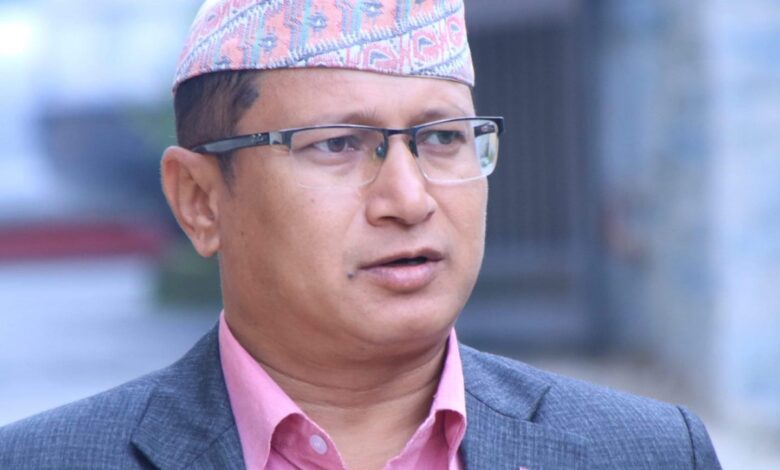
# Prem Sagar Poudel
Nepal’s current political tension is not merely an ordinary power struggle between the government and the opposition. At its core lie fundamental questions about where state power should reside, who controls resources, and in which direction Nepal’s constitutional structure is heading. Yet, deeper than all these questions is a historical pain and a warning that today’s generation must not forget.
In my considered judgment, federalism in Nepal is not a simple policy error. It is the outcome of a deliberate political design whose long-term consequence has been the erosion of national unity and territorial integrity. Its ultimate effect appears to be pushing a sovereign Nepal towards the strategic sphere of influence of southern and western powers. In this process, the forces that genuinely stood for patriotism, national unity, and a homegrown model of state restructuring were defeated. The pain and warning I seek to express today are connected to that very historical defeat.
In this article, drawing on my own experience and analysis, I present the unfinished dream of homegrown decentralisation raised three decades ago, the divisive consequences of federalism, and why implementation-oriented decentralisation can be a suitable alternative for Nepal’s unified future.
Federalism and Decentralisation: One Divides, the Other Unites
The greatest illusion in Nepal’s federalism debate is to consider federalism and decentralisation as the same subject or as natural complements to one another. In reality, their legal structures, political objectives, and potential outcomes are different.
Federalism is a constitutional arrangement that distributes legislative, executive, and fiscal powers between the federal government and constituent provinces or states. It creates different tiers of elected governments, legislatures, and jurisdictions within a single nation. In theory, it can manage diversity. However, in a country with weak national institutions, intense external influence, ethnic politicisation, and unstable party politics, it also carries the risk of institutionalising sub-national power centres and competing identities.
In Nepal’s context, the federalism debate became deeply entangled with ethnic and regional identity. It encouraged the tendency to use sub-national identity, rather than a shared Nepali national identity, as a means for political gain. This is why federalism, far from remaining a technical question of governance, has become a sensitive issue linked to national unity and the long-term structure of the state.
Decentralisation, on the other hand, is the process of delegating administrative, fiscal, and development-related responsibilities to lower-level bodies. It is possible in both unitary and federal systems. China is a significant example. China is a unitary state, yet its provincial and local bodies implement a large share of public services, economic development, infrastructure, and government spending. The authority of these bodies operates within the framework of national law, central policy, and the overall state structure.
This type of implementation-based decentralisation maintains national unity and central coordination on one hand, while facilitating decision-making and development according to local needs on the other. One system constitutionally distributes governing powers among different tiers, while the other preserves a unitary constitutional structure and delegates substantial administrative and fiscal responsibilities to lower levels. In my view, this very distinction is decisive for Nepal.
Federalism, Social Fragmentation and the Growing Distance Among Nepalis
As federalism approaches a decade of implementation, a serious assessment of its social, economic, and political impact is necessary. Unfortunately, its results have not met expectations in terms of national unity, administrative efficiency, and equitable development.
First, federalism placed ethnic and regional identity at the centre of politics. There was a time when our primary identity was Nepali, and only then came our ethnic, linguistic, or regional affiliations. Now, in the demarcation of provinces, their naming, representation, and resource allocation, identities such as Madhesi, Pahadi, Adivasi, Janajati, and Khas Arya have become the primary bases for political bargaining.
This has not merely given recognition to different identities; in many instances, it has increased distrust, insecurity, and even animosity among Nepalis. The growing psychology of viewing citizens from one region as outsiders in another is a worrying sign for national unity.
Second, disputes over the names, boundaries, and resources of provinces have increased social and political polarisation. The naming dispute of Koshi Province is a clear example. The question of whether to name the province on the basis of identity or geography created prolonged political tension, agitation, and social discontent. This was not merely a dispute over a name. It demonstrated how ethnic and regional competition is being institutionalised within the federal structure.
Third, federalism has added an expensive political tier funded by taxpayers’ money. Seven provinces, seven governments, seven councils of ministers, and seven provincial assemblies incur massive administrative costs. Yet, the situation where citizens still have to travel to Kathmandu for basic services, major administrative decisions, or opportunities has not been fully eliminated.
While Bagmati Province contributes approximately 36.71 percent to the national economy, Karnali’s share stands at a mere 4.20 percent, evidence of the historical development disparity. Federalism has not been able to significantly reduce this gap. On the contrary, inter-provincial competition for limited resources and mutual resentment have made the problem more complex.
This situation can be termed a contradiction of superficial federalism and practical centralisation. Rights are distributed in the constitution, but resources, personnel, major decisions, and administrative power remain concentrated at the centre. This is silent centralisation.
The Defeat of a Homegrown Alternative: How the Decentralisation Initiative Was Suppressed
Around 2049–50 BS, corresponding approximately to 1992–93, the country was passing through a serious political and structural transition. On one hand, public discontent and development inequality were growing. On the other, there was serious concern about the misuse of the open border, external political influence, and challenges to national sovereignty.
At that time, Nepal’s governance structure was different from today’s. For citizens like us who were conscious of national unity and sovereignty, there was a dual responsibility. First, to seek a homegrown alternative to address public discontent and regional neglect. Second, to study and resist internal and external activities that could weaken national integrity.
We had already concluded then that an alternative to centralised rule was necessary. However, our view was that this alternative could not be the Western model of federalism that would divide Nepal into ethnic and regional political units. We were in favour of a homegrown decentralisation that would keep national unity intact while bringing rights, budgets, administration, and development down to the grassroots level.
In this context, an important meeting was held under the chairmanship of senior journalist Prem Kaidi at his residence in Pulchowk, Lalitpur. I was a direct participant in that meeting. The meeting was attended by Prem Kaidi, myself, Gopal Kiranti, Khushiman Gurung and Dambardhwaj Awasthi.
Our conclusion was clear. Regions and communities must be liberated from the neglect, developmental inequality, and administrative deprivation created by rigid centralisation. But that liberation was not to be achieved through national fragmentation, but by ensuring local self-governance, rights, and development within a single national structure.
Following this, the Karnali Mukti Morcha was formed under the chairmanship of Prem Kaidi, the Western Nepal Mukti Morcha under my chairmanship, the Khambuwan Mukti Morcha under the chairmanship of Gopal Kiranti, the Tamuwan Mukti Morcha under the chairmanship of Khushiman Gurung, and the Krantikari Mukti Morcha under the chairmanship of Dambar Dhwaj Awasthi.
The word ‘Mukti’ (liberation) in no way meant separation from the nation. It was a concept of liberation from central neglect, administrative deprivation, and developmental inequality. Our objective was to bring historically neglected regions, ethnic communities, and remote areas into the mainstream of the state. It was a vision of a unified, strong, and decentralised Nepal.
We had planned a grand event at Tundikhel in Kathmandu with the slogan ‘Greater Nepal’, inviting Subash Ghising, the main leader of the Gorkhaland movement in Darjeeling and the founder of the Gorkha National Liberation Front, as the chief guest.
However, the state treated our campaign as a sensitive security matter. Police crackdowns followed. Prem Kaidi was imprisoned on charges of sedition, while the rest of us were either released or, in some cases, managed to flee beforehand. This was not merely the stopping of an event. It was the suppression, at its very inception, of an alternative concept of homegrown decentralisation within national unity.
We were defeated. But what was defeated was not just an organisation or the efforts of a few individuals. A homegrown political alternative that sought to bring government and public services closer to the people without constitutionally fragmenting the nation was defeated.
Subash Ghising’s Potential Arrival and the State’s Sensitivity
According to former Deputy Inspector General of Police Hemant Malla, who recounted this to me over tea, he was then a Deputy Superintendent of Police in Kathmandu. He was assigned the responsibility of finding out by which route Subash Ghising was arriving in Kathmandu.
Based on information that Ghising was arriving via the airport, a police team had reached there. Upon not finding him, the search extended to the bus terminal and several entry points into Kathmandu, causing considerable frustration and difficulty, as he later recalled.
This incident shows that the state viewed our proposed programme not as an ordinary political gathering but as a sensitive national security issue. However, it would be improper to conclude that the Indian government was directly involved in the plan simply because Subash Ghising was an Indian citizen. Our contact was related to the Nepali-speaking community, the Gorkhaland movement, and the experience of regional self-governance. Moreover, our purpose was also to offer a political and ideological response to the forces we believed were working against Nepal’s national interests.
When a Divisive Political Structure Entered the Constitution
A few years after our effort was suppressed, the questions of regional inequality, ethnic identity, autonomy, and state restructuring entered the violent political programme of the Maoist movement. But the decentralisation we had proposed and the armed revolt advanced by the Maoists were not the same.
We wanted rights and development within national unity. The Maoist movement chose the path of changing state power through armed struggle. We were advocates of local rights, but we were not supporters of violence, ethnic polarisation, and a political direction that put national unity at risk. That said, Gopal Kiranti later joined the Maoist insurgency. Apart from him, the rest of us remained outside.
In the post-conflict debate on state restructuring, federalism became the dominant political agenda. In my analysis, this process diverted Nepal’s need for a homegrown decentralisation, co-opting it with external geopolitical interests, donor influence, and identity-centric political concepts, steering it in a different direction.
Based on this historical experience, I have sometimes used a political metaphor to describe Nepal’s current federal structure as “a system fabricated in the geopolitical laboratory of the South and the West.”
This expression is not a claim that the principle of federalism itself is foreign. India itself is a federal state, and many developed democracies in the world have adopted a federal system. My criticism is directed at the process by which Nepal’s internal need for decentralisation, local discontent, and historical inequalities were moulded, under the influence of the Indian geopolitical environment and Western donors and ideological currents, into a federal structure suiting their interests.
Sidelining our dream of homegrown decentralisation, Nepal was tied to a constitutional structure that institutionalised ethnic and regional political competition. We harboured apprehensions that this would increase distance among Nepalis, weaken the shared national identity, and ease the access of external powers. Today’s events have created a situation where many of those apprehensions must be re-examined.
The Strategic Calculus of External Powers
The right to determine Nepal’s constitutional structure belongs to the Nepali people alone. External powers also publicly reiterate this very principle. However, in Nepal, which is situated in a sensitive geopolitical location, it is not unnatural for their interests to be linked to the system, access, security, and influence.
For India, more than Nepal’s governance system, open borders, security, the politics of Madhesh, water resources, trade, and strategic access to Kathmandu are more important. Although India has officially expressed a policy of non-interference in Nepal’s internal affairs, its various political, security, religious, and institutional networks have remained active in Nepal.
In my understanding, a weak centre, strong regional identities, and continuous internal disputes can provide an easy environment for external powers to expand their influence. If the current structure of federalism has increased administrative fragmentation and policy instability rather than making Nepal strong and self-reliant, then a serious debate is needed about its geopolitical consequences.
Western powers, particularly the European Union, have supported programmes related to federal governance, inclusion, human rights, and the institutional capacity of provincial and local governments in Nepal. Their stated objective is good governance and institutional capacity expansion. In my view, such engagement has also contributed to the political elevation of sub-national identities, increased dependence on external financial aid, and expanded donor influence over domestic policy debates.
The stated objective of aid and its long-term political consequences may not always be the same. Therefore, foreign aid should be evaluated not on the basis of emotional support or opposition, but on the basis of national interest, sovereignty, and long-term social cohesion.
In contrast, for China, Nepal’s political stability, national unity, the continuity of the ‘One China’ policy, and the guarantee that Nepali soil will not be used for anti-China activities are decisive.
China is a unitary state. Yet, its provincial and local bodies implement a large share of public services, economic development, infrastructure, and government spending. Chinese provinces are not semi-sovereign units of a federal system. Their authority operates within the framework of national law, central policy, and the overall state structure.
This model keeps national policy and sovereignty unified at the centre while bringing development, administration, and service delivery closer to the people. Nepal’s geographical, social, and political conditions are different from China’s. Therefore, an exact replica of China is neither possible nor necessary. But the experience of increasing local decision-making capacity and developmental competition while preserving national unity is worthy of study for Nepal.
Nepal’s Right Path: Effective Decentralisation Within a Unified State
Nepal cannot solve its problems merely by creating an expensive political structure, regional competition, and ethnic polarisation in the name of federalism. Nor is returning to the old rigid centralised system by abolishing the provinces a solution.
Nepal’s alternative must be homegrown. It is an effective decentralisation that upholds national sovereignty, integrity, and the shared Nepali identity as supreme, while bringing administrative, fiscal, and developmental rights closer to the people.
The first foundation of this must be national unity. The common national identity of all Nepalis must be primary and supreme. Ethnic, regional, linguistic, and cultural identities must be respected, but they must not be made the basis for a political sovereignty that competes with the national identity.
The second foundation is fiscal and administrative decentralisation. A large share of resources and budget must be sent to the local level. The right to formulate and implement plans based on local priorities must be given. However, these plans must operate within the framework of national development policy, fiscal discipline, and common standards.
The third foundation is administrative capacity. Decentralisation does not succeed merely by granting rights. A structure of skilled personnel, technology, transparency, monitoring, and accountability must be developed at the local level.
The fourth foundation is a clear division of responsibilities. National security, foreign policy, currency, large national infrastructure, and overall economic policy should be the responsibility of the centre. Local government should become the primary centre for citizen services, local infrastructure, basic health, education management, agriculture, social security, and local economic development.
These bodies must be integral parts of a single national sovereignty. They should be developed not as competing semi-sovereign power centres, but as effective governance tiers with rights and responsibilities under the national policy framework.
Conclusion: A Warning Against Repeating History
The problem I saw three decades ago and the solution I sought remain equally relevant today. At that time, we presented a homegrown alternative to bring the state’s services, resources, and development to the local level while preserving national unity and integrity. But our effort was suppressed, and we were defeated.
After that, Nepal’s state restructuring debate veered in another direction. An honest review must now be conducted on whether the current form of federalism has reduced or increased the distance among Nepalis, whether it has strengthened or weakened national identity, whether it has decreased or increased administrative costs, and whether it has controlled or facilitated external influence.
Nepal’s fundamental question is not merely whether seven provinces should exist or not. The real question is what the future holds for state power, national sovereignty, and political accountability.
Shall we continue the existing federal structure without reform? Shall we revert to the old rigid centralisation? Or shall we choose the path of homegrown decentralisation, which preserves national unity while bringing the state’s authority, resources, services, and opportunities closer to the people?
The question we raised three decades ago remains the same today: How can we bring the state’s services, resources, opportunities, and decision-making rights closer to the people while safeguarding Nepal’s national integrity and sovereignty?
The answer does not lie in the blind imitation of foreign models or in the blind defence of the current federal structure. The answer must be sought in a unified and accountable decentralisation rooted in Nepal’s own history, geography, social fabric, and national interest.
This is not merely a policy proposal; it is a warning born from the experience of a patriotic citizen. History has already defeated our effort once. The time has come for the current generation to learn from that defeat and decide whether to establish a new balance between national unity and local rights, or to repeat the same old mistake.
About the Author: Prem Sagar Poudel is a senior journalist and international relations analyst from Nepal. He has conducted in-depth studies on Nepal-China relations, the geopolitics of the Himalayan region, and Asian security issues.