Digital Intelligence Reshapes China’s Maritime Future as Country Marks 22nd National Maritime Day

Dragon Media News Desk
China celebrated its 22nd National Maritime Day on Saturday, which also marked the country’s observance of World Maritime Day. This year’s theme focused on how digital intelligence is reshaping the future of navigation, according to China’s Ministry of Transport.
The main event was held in Beijing for the first time in a hybrid format combining online and in-person activities.
In the 2026 China Maritime Day Announcement, the Ministry of Transport said China has developed into a major global power in shipping, shipbuilding and maritime affairs.
According to the announcement, China accounts for nearly one-third of global seaborne trade. Its shipping routes and services connect major trading countries and regions around the world.
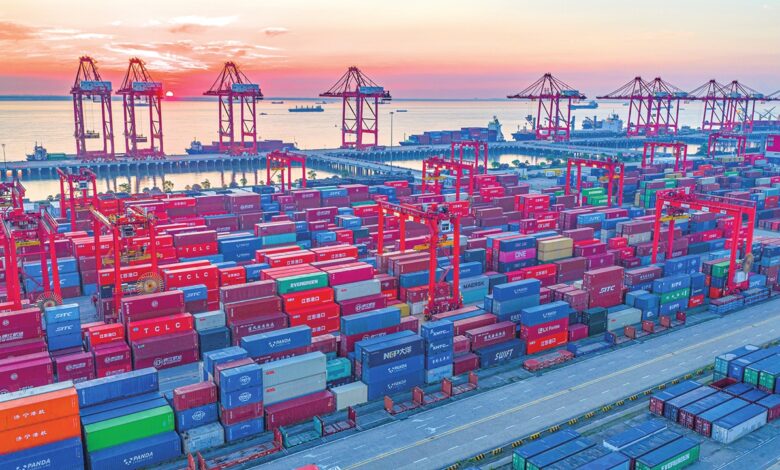
Eight of the world’s top 10 ports by cargo throughput are located in China. The country is also home to six of the world’s top 10 ports by container throughput.
China’s shipbuilding industry has maintained the global lead in three major indicators for 16 consecutive years, the ministry said. The value of the country’s marine economy has exceeded 11 trillion yuan, equivalent to approximately 1.62 trillion US dollars.
China has continued to improve the efficiency of port operations, shipping-route management, shipbuilding and maritime services through modern technology, digital systems and intelligent management.
This year’s theme highlights the growing role of digital technologies, artificial intelligence and smart systems in transforming future navigation, port management and maritime trade.
From an Ancient Maritime Tradition to a Modern Maritime Power
According to the Ministry of Transport, China’s maritime and shipbuilding history stretches back more than 2,000 years.
Since the Han Dynasty, from 206 BC to AD 220, China’s shipbuilding techniques and navigation skills have continued to develop. These advances supported the expansion of the ancient Maritime Silk Road and created convenient routes for trade and cultural exchanges between China and the outside world.
More than 600 years ago, Chinese navigator and explorer Zheng He led seven voyages to the Western Seas.
Using advanced shipbuilding techniques and sophisticated astronomical navigation methods, Zheng He helped establish an important bridge for communication, exchange and mutual learning between Eastern and Western civilisations, the ministry said.
His voyages are regarded as an important symbol of China’s ancient maritime capability, international engagement and tradition of peaceful exchange.
Historical Significance of July 11
July 11 marks the day Zheng He embarked on his first voyage to the Western Seas.
In 2005, on the 600th anniversary of Zheng He’s voyages, China’s State Council officially designated July 11 as National Maritime Day.
Since then, China has observed the occasion annually by highlighting achievements in maritime history, culture, navigation, shipbuilding, port services and the marine economy.
The 2026 event presented China’s ancient maritime civilisation and modern digital navigation capabilities as part of a continuous historical development.
China aims to build on its strengths in maritime trade, shipbuilding, port operations and technology while promoting wider global maritime cooperation and connectivity.