Vehicles at Media Gates: A Silent Warning from Those in Power?

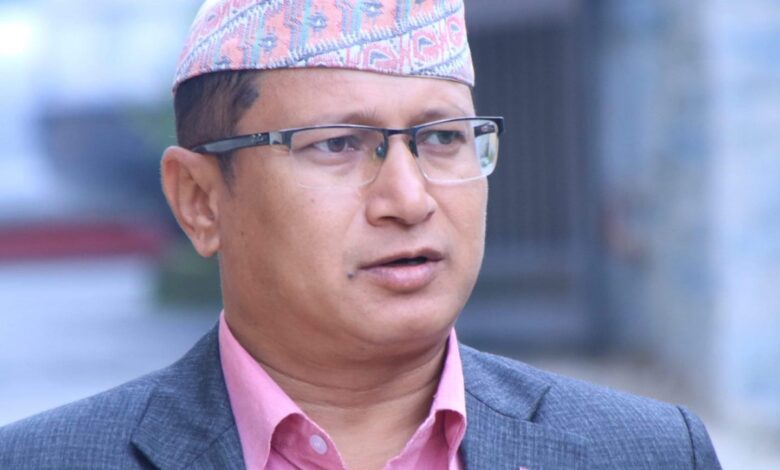
# Prem Sagar Poudel
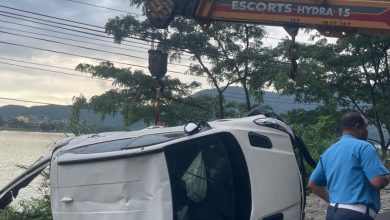
On Monday morning, vehicles were positioned in a strikingly similar manner outside the main entrances of three prominent media organisations in Kathmandu: Kantipur Publications, Onlinekhabar and Himalaya Television.
These were not vehicles casually parked along the roadside. They were placed in ways that obstructed the main gates and disrupted the movement of journalists, employees and visitors.
Kantipur’s office in Tinkune, Onlinekhabar’s premises in Buddhanagar and Himalaya Television’s headquarters in Mid-Baneshwar are located in different parts of the capital. Yet the fact that all three entrances were blocked in a similar fashion on the same morning makes the incidents difficult to dismiss as ordinary parking violations.
The matter acquired an even more explicitly political dimension after reports emerged that another vehicle had been placed outside the Rato Pul residence of Nepali Congress President Gagan Kumar Thapa, also in a manner that obstructed access.
The media organisations concerned informed the police and traffic authorities, but the vehicles were not immediately removed. Reports indicate that cranes ultimately had to be deployed. Police later took the vehicles into custody and said they were investigating who had left them at the entrances, why they had done so and whether anyone had issued instructions.
Had a single vehicle been left outside one media organisation, it might reasonably have been attributed to driver negligence or routine traffic disorder. But nearly simultaneous obstructions outside three major media houses and the residence of a leading political figure inevitably raise a different question: was this merely a coincidence, or was it a coordinated political signal?
The episode recalls an important historical anecdote involving Shree 3 Maharaja Jung Bahadur Rana and a British Resident stationed in Kathmandu. The story, preserved within the Rana family’s historical memory, was recounted to this writer by Pramod Bikram Rana.
He cited it as an example of how Nepal’s government once dealt with a far larger and more powerful country through a combination of strategic firmness and diplomatic calculation.
Following the Treaty of Sugauli, representatives of the East India Company government began residing in Kathmandu. At a time when the modern institution of ambassadors had not yet taken its present form, the British representative was known as the Resident. Based in Lainchaur, he served as the principal channel of communication between the Government of Nepal and the East India Company administration.
According to the account, one British Resident began meeting Nepali citizens without informing the government, gathering political information from them and, in some cases, encouraging opposition to the authorities of the time.
For the Nepal government, these were not ordinary social or diplomatic contacts. They represented an attempt by a foreign official to build political influence within Nepali society without the government’s knowledge or consent.
After the information reached the palace, Jung Bahadur invited the British Resident to the royal court. He did not directly order him to stop his activities. Instead, he conveyed a warning in language that was indirect but unmistakably clear.
Jung Bahadur told the Resident that meeting Nepali citizens without informing the government and security authorities could expose him to personal danger. Nepalis, he suggested, might appear straightforward and harmless from the outside, but under certain circumstances they could also become unpredictable and dangerous. The Resident was therefore advised to notify the government before holding such meetings.
The British official replied that he knew the Nepalis he was meeting very well. He described them as honest and cooperative and insisted that the Nepal government did not need to worry about his security.
His response showed little willingness to accept the government’s advice. On the contrary, it indicated that he intended to continue his meetings and contacts as before.
According to Pramod Bikram Rana’s account, Jung Bahadur then decided that a verbal warning alone would not be sufficient. After the Resident disregarded the government’s concerns and continued acting independently, Jung Bahadur allegedly arranged for a limited attack against him.
Several days later, as the British representative was returning to his residence at night after attending a banquet, a group of people threw stones at his carriage near the Bhadrakali Temple. He reportedly suffered minor injuries.
The purpose, according to the anecdote, was neither to kill him nor to provoke an open confrontation with the East India Company. It was to make him experience insecurity and compel him to acknowledge the importance of the government’s earlier warning and the need for official security arrangements.
Following the incident, the Resident rushed to the palace to report what had happened. Jung Bahadur granted him an audience and asked him to explain the situation. The British official described, in a single breath, how his carriage had been attacked near Bhadrakali and how he had been injured.
Jung Bahadur reportedly smiled and reminded him that he had already advised him not to place excessive trust in people he met privately and to notify the government before arranging such contacts.
After that episode, the British Resident began informing the Nepal government and ensuring that appropriate security arrangements were in place before meeting Nepali citizens.
The incident represented a carefully calibrated political message to the representative of an administration far more powerful than Nepal. Without creating a direct diplomatic dispute, Jung Bahadur had compelled him to recognise Nepal’s internal rules and the authority of the state.
Jung Bahadur did not seek the Resident’s death, nor did he intend to inflict serious harm. He did not want an open confrontation with Britain. His objective was to demonstrate, through practical consequences, that a foreign representative could not expand political contacts within Nepali society without the knowledge and approval of the government.
Had Jung Bahadur taken no action, the British Resident might have continued holding unauthorised meetings, collecting information and extending his internal influence while disregarding the Nepal government.
The alleged attack, therefore, was not merely an isolated act of violence. It functioned as a controlled strategic instrument intended to force a powerful foreign official to recognise the boundaries of Nepal’s sovereign authority, security system and diplomatic protocol.
Jung Bahadur’s political calculation conveyed a broader message: even a small and seemingly weak country could compel the representative of a powerful empire to operate within its internal discipline.
He did not issue a formal protest note. He did not expel the Resident. He did not initiate an open dispute with the East India Company. Yet through a controlled incident, he made the consequences of ignoring the Nepal government’s warning unmistakably clear.
In contemporary international politics and security studies, such an action may be understood as a form of coercive signalling. Rather than issuing a direct order or formal threat, one party uses an incident, obstruction or experience of insecurity to induce a change in the target’s behaviour.
In this type of strategy, the party sending the message usually remains outside the visible frame. There may be no formal order and no written instruction. Responsibility can be shifted to private individuals, supporters, unidentified groups or supposedly spontaneous events. The targeted party, however, is expected to understand the political meaning.
In Jung Bahadur’s time, such a method was reportedly used to restrain a foreign representative and protect Nepal’s sovereign decision-making authority.
In a modern democracy, however, if a similar technique were proved to have been used by an elected government or ruling political force to intimidate independent media, it could not be defended as diplomatic ingenuity. It would constitute an abuse of state power and an indirect assault on press freedom.
The media are not foreign interventionist forces operating inside a democratic state. Their responsibility is to question the government, political parties, the administration and public institutions.
The government’s role is not to require media organisations to meet citizens only with official permission, nor is it to pressure them into publishing favourable coverage. Its duty is to guarantee press freedom, the public’s right to information and the safety of journalists.
There is, therefore, a fundamental historical and political distinction between the episode attributed to Jung Bahadur’s era and the vehicles recently placed outside media organisations.
The first concerned a foreign representative allegedly interfering in Nepal’s internal affairs. The present incident concerns domestic media institutions and the residence of a political leader.
Nevertheless, the two cases may share one potential psychological structure: an attempt to unsettle a targeted party and alter its behaviour without issuing a direct order.
In a modern democracy, pressure on the press does not always take the form of censorship, the arrest of journalists or the closure of media organisations.
An atmosphere of fear can also be created by mobilising crowds outside offices, blocking entrances, following journalists, delivering threats through unidentified individuals, restricting advertising revenue and financial resources, or deploying groups of political supporters.
The objective of such activity may not be limited to preventing the publication of a single report. Its longer-term purpose may be to push media houses, editors and journalists towards self-restraint.
Once editors begin considering the possibility of political retaliation before deciding whether to publish a report, the pressure has already begun to achieve its intended effect.
In media studies, this can be understood as fear-induced self-censorship. The state or a political force no longer needs to formally block a report. If fear of possible consequences causes media institutions themselves to avoid sensitive subjects, the outward structure of press freedom may remain intact while its actual practice has already been weakened.
Based on the information available so far, it is not possible to state conclusively that the obstruction of the media entrances was planned by the government. No evidence has been made public showing that a government agency or political leader directly ordered the vehicles to be placed there.
Yet the absence of publicly available proof does not justify ignoring the incident’s apparent signalling characteristics.
The main entrances of three major media organisations in different locations were blocked in a similar manner at approximately the same time. Reports indicated that a comparable obstruction occurred outside the residence of a major political leader.
Questions have also been raised about where the drivers went after leaving the vehicles and why it took time to remove them even after the police were informed.
The incident occurred at a moment when media organisations have been questioning the government’s handling of squatter settlements, the Ganesh Nepali case, administrative decisions and growing public dissatisfaction.
The timing of the episode and the selection of the institutions involved naturally invite political suspicion. But neither temporal coincidence nor the broader political environment, by themselves, prove government involvement.
It has been reported that the vehicle placed outside Kantipur’s entrance had been regularly used by an individual associated with the ruling party. The party concerned condemned the incident and called for an impartial investigation.
A vehicle linked to someone associated with a political party being found at the scene is not the same as proof that the party institutionally directed the act. But once such a connection emerges, the investigation cannot be confined to a routine traffic offence.
Gagan Kumar Thapa has alleged that the people who left the vehicles departed in vehicles connected to the police or administration. If this allegation is true, the incident becomes extremely serious.
The claim must therefore be verified through CCTV footage, vehicle records, police duty logs and an examination of the communications of the individuals involved, conducted in accordance with the law.
There are several possible explanations.
Some individuals may have attempted to pressure the media without receiving any formal instruction. A political or administrative centre may have coordinated the act as an indirect warning. The vehicles may have been used to cause disruption out of private anger. It is also possible that someone sought to discredit the government or a political party by using vehicles visibly associated with individuals linked to them.
Only an investigation can confirm or eliminate these possibilities.
A credible inquiry cannot end merely by identifying the registered owners of the vehicles. It must determine who was driving them, where the drivers came from, when and by which routes the vehicles reached the three media offices, whether the drivers were in contact with one another, where they went after leaving the vehicles and whether anyone had issued instructions.
CCTV footage from the media offices, nearby buildings, roads and intersections could be used to reconstruct the routes taken by the vehicles.
Communications records lawfully obtained could help establish whether the individuals involved were in contact. The time at which the police were notified, the time officers reached the locations and the time required to remove the vehicles should also be made public.
When suspicion falls upon the government itself, a statement that an investigation is under way is not sufficient.
The timeline of events, the identities of those involved, the actual users of the vehicles, any possible organisers and the final findings of the investigation must be disclosed to the public. Otherwise, administrative silence will strengthen political allegations, rumours and public distrust.
The message Jung Bahadur delivered to the British Resident was associated with the defence of state sovereignty.
If media organisations today were subjected to a similar method of psychological intimidation, it would not represent the defence of sovereignty. It would represent an attempt to suppress critical voices within a democracy.
The government cannot place itself in the position of Jung Bahadur’s palace and cast the media as foreign representatives requiring control.
The legitimacy of a democratic government is measured by its capacity to tolerate criticism. A government becomes stronger by answering questions, not by frightening those who ask them.
No evidence has yet been made public proving that the incident was planned by the government. Nevertheless, the placement of vehicles outside three media organisations and the residence of a political leader, in a similar manner on the same morning, has already given the episode political meaning.
The impact of an incident is not determined solely by the identity of those responsible. Its political significance is also shaped by how the targeted institutions experienced it, how the public interpreted it and how the state responded afterwards.
If the government conducts a prompt, impartial and transparent investigation and makes the facts public, the incident may ultimately be established as the unauthorised activity of a few individuals.
But if the investigation appears delayed, opaque or politically influenced, the vehicles may be removed while the message of fear they left behind remains.
In Jung Bahadur’s era, the British Resident eventually accepted the palace’s security conditions. In today’s democratic Nepal, media organisations must not be expected to accept any informal conditions imposed by the government.
It is the government that must accept the conditions of law, transparency, accountability and press freedom.
The central question, therefore, is not merely who owned the vehicles.
The real question is who instructed that they be placed there, for what purpose and why they appeared at nearly the same time.
Until those questions are answered with evidence, the matter cannot simply be dismissed as a parking dispute.
With every day that passes without an answer, the silent message left by those vehicles at the gates of Nepal’s media organisations will grow more disturbing.
About the Author: Prem Sagar Poudel is a senior journalist and international relations analyst from Nepal. He has conducted in-depth studies on Nepal-China relations, the geopolitics of the Himalayan region, and Asian security issues.