US Reinstates Hormuz Blockade as Military Confrontation Raises New Risks to Global Energy Supplies

Dragon Media News Desk
The military confrontation centred on the Strait of Hormuz has intensified after the United States reinstated a maritime blockade targeting Iranian ports, oil terminals and coastal areas.
US forces have carried out new airstrikes inside Iran, while Tehran has claimed retaliatory missile and drone attacks against American military facilities and targets in allied Gulf countries.
According to a multinational maritime information centre led by the US Navy, the blockade came into force at 8 pm on July 14 and applies to vessels of all flags travelling to or departing from Iranian ports, oil terminals and coastal areas.
The US Central Command said it struck dozens of targets across Iran during a new military operation lasting several hours. Washington said the attacks were intended to weaken Iran’s ability to target commercial shipping passing through the Strait of Hormuz.
Iran has described the blockade and airstrikes as acts of aggression.
The Iranian military said it targeted US facilities at Jordan’s Azraq air base, while the Islamic Revolutionary Guard Corps claimed attacks against weapons and storage facilities in Bahrain and Kuwait. Some of those claims have not been independently verified.
An interim understanding reached between Washington and Tehran in June had created a framework for maintaining toll-free passage through Hormuz and pursuing negotiations on Iran’s nuclear programme and other disputed issues within 60 days.
However, renewed attacks on commercial vessels, military operations by both sides and disagreements over the administration of the waterway have pushed that arrangement into a serious crisis only weeks after it was reached.
US President Donald Trump initially announced a proposal to impose a 20 percent transit charge on vessels passing through the Strait of Hormuz.
Following discussions with Gulf partners, he later withdrew the toll proposal and said the United States instead expected substantial investment from regional countries. The maritime blockade, however, has remained in place.
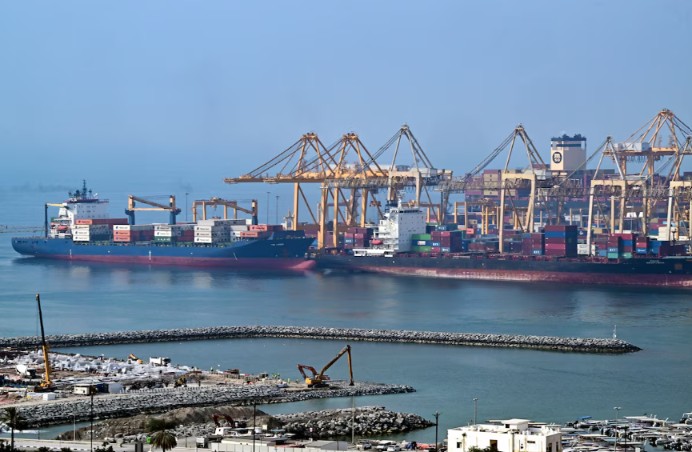
Military risks in the strait have caused a sharp decline in oil and gas tanker traffic.
Available vessel-tracking data indicate that the number of tankers passing through Hormuz has fallen to its lowest level in several weeks. Some vessels have reportedly switched off their public automatic identification systems to reduce security risks.
Under normal conditions, roughly one-fifth of globally traded oil and liquefied natural gas passes through the Strait of Hormuz.
A prolonged disruption would therefore affect global energy supplies, shipping costs, insurance premiums and consumer prices.
Crude oil prices have risen again following the latest escalation.
Brent crude reached around $86.19 per barrel in early Wednesday trading, while US West Texas Intermediate traded at approximately $80.40 per barrel. Both benchmarks rose to their highest levels in about a month.
Energy analysts have warned that Brent crude could again approach $100 per barrel if attacks on energy infrastructure intensify or shipping through Hormuz remains severely restricted.
They have also said price pressure could ease if diplomatic efforts succeed and regular maritime traffic is restored.
Iran’s Revolutionary Guard has warned that continued enforcement of the blockade could result in a complete halt to oil and gas exports from the Middle East.
Such an outcome could affect energy shipments not only from Iran but also from Saudi Arabia, the United Arab Emirates, Kuwait, Iraq and Qatar.
The International Maritime Organization has condemned attacks on civilian vessels and called on all sides to exercise maximum restraint and reduce tensions.
The organisation said the crisis had affected around 20,000 seafarers, port workers and personnel employed at maritime facilities in the region.
It also urged shipping companies not to expose crews to unnecessary danger when safe passage through the strait could not be guaranteed.
The Hormuz dispute is no longer limited to a bilateral military confrontation between the United States and Iran.
It now directly affects Gulf security, international maritime law, global energy supplies and inflation.
For petroleum-importing economies such as Nepal, a prolonged period of high oil prices could create additional pressure on fuel import costs, transport expenses, consumer prices and foreign exchange reserves.
This is a forward-looking economic assessment based on current oil prices and the Strait of Hormuz’s importance to global energy trade.
Neither Washington nor Tehran has completely ruled out a return to negotiations.
However, the continuation of the blockade, airstrikes, missile and drone attacks and competing claims over control of the waterway has weakened the prospects for an immediate and lasting ceasefire.
A major loss of life or a large-scale attack on energy infrastructure could transform the current limited confrontation into a wider regional war.