Gendun Preserves Yajiang’s Folk Culture and Passes Traditional Heritage to a New Generation

Dragon Media News Desk
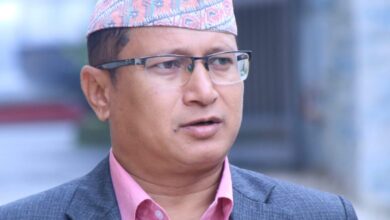
Gendun, a resident of Yajiang County in the Ganzi Tibetan Autonomous Prefecture of China’s Sichuan Province, has dedicated himself to preserving and transmitting local folk songs, dances, traditional craftsmanship and intangible cultural heritage.
Recognised as a provincial-level representative inheritor of intangible cultural heritage, Gendun comes from the Honglong area of Yajiang County. Influenced by his family and the cultural environment of his community, he developed a strong interest in folk songs, music and dance from an early age.
His father was a traditional folk dancer, enabling Gendun to begin learning Tibetan songs, melodies and dance movements during childhood. Whenever cultural programmes were organised in his village or experienced folk artists visited the area, he carefully observed their performances and used every opportunity to learn traditional artistic skills.
Gendun has been particularly active in preserving “Chu Drolma,” a traditional Tibetan Gorshey dance. The name is associated with a six-stage dance distinguished by its unique melody, rhythm and movements. The dance has been performed for generations among farming and pastoral communities in Yajiang and remains an important part of public gatherings, festivals and cultural celebrations.
As modern lifestyles expand and traditional songs, dances and oral knowledge face the risk of disappearing, Gendun has prioritised their systematic documentation. He has recorded folk melodies, lyrics, ancient dance movements and performance techniques in both audio and written formats.
As part of this effort, he has met experienced elderly folk artists to study traditional culture, oral history and performance methods. Travelling across different parts of Yajiang, he has interviewed more than 20 folk artists, collected over 170 items related to folk songs and dances, and documented more than 20 traditional Gorshey melodies.
Since 2019, Gendun has worked with the Yajiang County Cultural Centre, making his research, collection, preservation and promotion of intangible cultural heritage more systematic. Focusing particularly on his home area of Honglong, he has studied ancient folk dances, songs and cultural traditions practised in the Yajiang region of Kham.
His work is not limited to documentation. He provides free training to local residents, school students and young people, transferring knowledge of folk songs, dances and traditional arts to the next generation.
Through programmes that introduce intangible cultural heritage into schools, he teaches students about the history, cultural significance and performance techniques of Chu Drolma.
Gendun believes that traditional art cannot survive over the long term without the participation of young people. He therefore emphasises that cultural heritage should not be confined to museums or archives but should remain alive through community life, festivals and education.
Cultural groups led by Gendun have performed traditional folk dances at local festivals, exhibitions and public events. These performances have helped audiences from outside the region learn about Yajiang’s songs, dances, traditional clothing and way of life, while also strengthening local confidence in the community’s cultural identity.
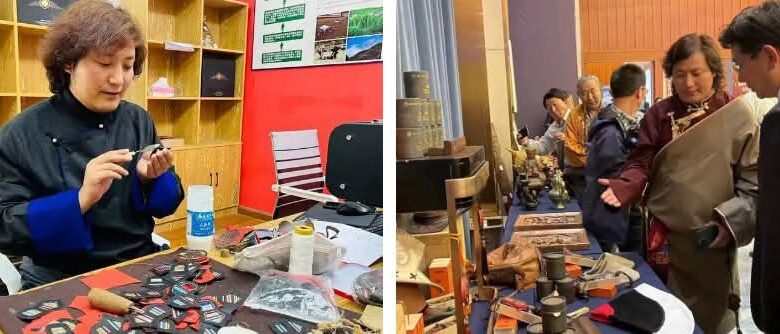
In cooperation with the Yajiang County Cultural Centre, the local calligraphy association and the Black Tent Cultural Workshop, Gendun has contributed to cultural programmes, free training courses, the documentation of traditional culture and the development of handicrafts and culturally creative products.
His involvement extends beyond traditional dance. He has participated in the protection and promotion of five forms of local intangible cultural heritage, including traditional Gorshey dance, Tibetan incense made using cattle horns, traditional needle cases and handmade inner soles used in footwear worn by pastoral communities.
Gendun’s works on intangible cultural heritage, along with his song and dance creations, have been widely shared through news websites, social media platforms, radio and television across Tibetan areas. This exposure has helped introduce Yajiang’s distinctive local culture to a broader audience.
According to Gendun, the culture created through the experience and labour of previous generations is an invaluable community asset. Its preservation is not solely the responsibility of artists or cultural institutions but a shared obligation of the entire community.
His efforts have helped preserve orally transmitted folk knowledge through systematic documentation while reconnecting younger generations with traditional culture. By combining heritage protection, youth training and culturally creative production, the initiative has become an important foundation for safeguarding Yajiang’s cultural identity.