EU Strongly Opposes US Campaign to Weaken the International Criminal Court

Dragon Media News Desk
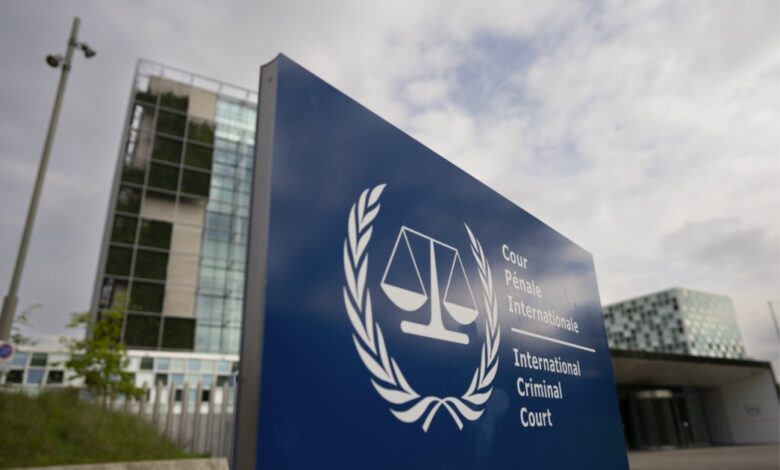
The European Union has rejected Washington’s claim that the International Criminal Court poses a threat to US sovereignty, stressing that intimidation or pressure against the court, its officials and those cooperating with it is unacceptable.
Anouar El Anouni, the EU spokesperson for foreign affairs, said on Tuesday that the bloc’s support for the International Criminal Court remains firm. He emphasised that the court does not prosecute sovereign states, but individuals accused of genocide, war crimes and crimes against humanity.
The EU response came after the administration of US President Donald Trump announced a broader campaign to isolate the Hague-based court diplomatically and economically.
US Secretary of State Marco Rubio accused the court of challenging the American political and legal system and said Washington would use all available diplomatic measures to limit its influence.
According to the US State Department, measures under consideration include additional financial sanctions against court officials and affiliated institutions, travel restrictions, visa cancellations and diplomatic pressure on countries supporting the ICC.
Washington has also urged countries receiving US security cooperation and economic assistance to reject the court’s authority over American officials and military personnel.
The United States has reportedly left open the possibility of encouraging ICC member states to withdraw from the Rome Statute, the treaty that established the court.
Washington argues that the ICC could be used against US soldiers, border officials, government employees and political leaders without the consent of the United States.
The United States is not a member of the International Criminal Court.
Under the Rome Statute, however, the court may exercise jurisdiction over genocide, war crimes and crimes against humanity committed on the territory of a member state, even when the alleged perpetrators are citizens of a non-member country.
The ICC generally intervenes only when the country concerned is unwilling or genuinely unable to carry out credible investigations or prosecutions.
The Trump administration has already imposed sanctions on 11 ICC officials, including judges and senior prosecutors.
Reports indicate that the restrictions have disrupted their access to banking services, credit cards, digital accounts and travel arrangements linked to the US financial system.
In March, two judges from France and Slovenia who had been placed under US sanctions appeared before EU justice ministers and described the impact of the measures on their professional work and daily lives.
Their testimony highlighted how the effects of US sanctions extend beyond the court itself and can affect European citizens, banks and financial institutions.
The European Union has repeatedly stated that external interference with the independence and impartiality of the ICC is unacceptable.
The European External Action Service has described the court as a cornerstone of international justice and the fight against impunity, pledging support for its officials and partners facing external pressure or intimidation.
Calls have also grown for the EU to activate its so-called Blocking Statute to reduce the impact of US sanctions.
The legal mechanism can prohibit European companies from complying with certain extraterritorial sanctions imposed by third countries.
France, Belgium and Slovenia have supported the use of such measures, but the European Commission has not yet taken a final decision, partly because of concerns over possible US economic retaliation.
Tensions between Washington and the ICC intensified following investigations into alleged conduct by US personnel in Afghanistan and the court’s issuance of an arrest warrant for Israeli Prime Minister Benjamin Netanyahu.
However, the ICC has not opened any new investigation targeting US officials in recent years, and the role of American personnel in the Afghanistan investigation has received reduced priority since 2021.
The European Union maintains that the court does not seek to remove the sovereignty of states, but to hold individuals accountable for the gravest international crimes.
Washington, by contrast, argues that a court established by a treaty the United States has not joined should not be allowed to exercise jurisdiction over American citizens.
The latest dispute has deepened transatlantic differences over international law, national sovereignty and the future of multilateral justice institutions.
If Washington expands the sanctions further, pressure could also increase on European banks, technology companies and organisations cooperating with the International Criminal Court.