Nepal-US Joint Military Exercises: Friendship, Dependency, or Strategic Risk?

# Prem Sagar Poudel
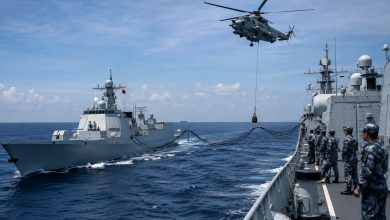
The joint military exercises between the Nepali and US armies have become one of the most controversial and sensitive topics in Nepal’s military history. Are these exercises merely routine training, or do they call into question Nepal’s traditional neutrality and its commitments to its neighbors? First initiated in 2002, these exercises have now become an annual regularity. Particularly after the 2015 earthquake, cooperation that began under the guise of disaster management has gradually expanded into a more strategic realm. Under the US Pacific Command’s Pacific Pathways program, Nepal first participated in 2017, and the exercises now vary in thematic focus each year. The Vigilant Partner exercise, launched in 2021, concentrated on disaster management, search and rescue, and humanitarian assistance. However, in recent years, the scope has broadened to include joint military drills encompassing strategic planning, command coordination, defensive tactics, and crisis management. The 2023 Victorious Resolve exercise included joint command structure and information-sharing drills between Nepali and US forces, a qualitative shift in the nature of Nepal’s military cooperation. The question today is: Is Nepal allowing its territory to become part of American military presence, or are these exercises genuinely a means to enhance Nepal’s defensive capabilities?
The Nepal-US military exercises cannot be understood in isolation from America’s broader Indo-Pacific Strategy. This strategy is designed to counter China’s growing influence, with the stated objectives of pushing back against Beijing’s Belt and Road Initiative and maintaining a US military footprint across the Indo-Pacific region. A key component of this strategy is the expansion of military partnerships, through which the United States conducts joint exercises, military training, weapons supply, and technical assistance with allied and partner nations. Nepal, nestled in the Himalayas and sharing a southern border with China, naturally holds significant strategic importance in this framework. Nepal’s geography is situated along China’s periphery in such a way that any military presence or cooperation here carries considerable strategic weight. While the White House’s 2022 Indo-Pacific Strategy document does not explicitly name Nepal, it does clearly reference the Himalayan region and South Asian partnerships in the context of expanding this strategy. Similarly, annual Pentagon reports describe Nepal as a strategic partner and include plans for assisting in the development of rapid response capabilities. Former US National Security Advisor General H.R. McMaster stated in 2018 that “the United States is prepared to cooperate on security with all nations in the Indo-Pacific region, including Nepal.” This signals an effort to incorporate Nepal into the US strategic calculus.
The history of the Nepali Army is replete with distinctive characteristics. For centuries, this army has remained a symbol of national unity, territorial integrity, and sovereignty. The valor and professionalism of Gurkha soldiers are world-renowned, as evidenced by the presence of Gurkha regiments in both the British and Indian armies. However, there is a deep tension between the Nepali Army’s traditional character and its modern military cooperation. Traditionally, the Nepali Army has participated in UN peacekeeping missions. Since 1958, Nepal has contributed to peacekeeping operations and today boasts the fifth-largest contingent of peacekeepers globally. Its role has been confined to humanitarian assistance, disaster management, search and rescue, and conflict mitigation. Yet the joint exercises with the US military have added new dimensions to this traditional role. The US military training doctrines of Foreign Internal Defense and Counterinsurgency are specifically designed to train the internal security mechanisms of third countries, manage instability, and support counterinsurgency operations. In the 2023 joint military exercise, Nepali forces received training in these doctrines, signaling a departure from the traditional peacekeeping role toward a different direction. This raises profound questions: Is the Nepali Army being transformed into an instrument for internal security and counterinsurgency, or is this merely a routine capacity-building process?
Understanding the technical and strategic aspects of these joint exercises is essential. During these drills, under the joint command structure exercise, officers from both armies convene at a single command center to formulate joint operational plans, meaning Nepal’s independent command structure is being aligned with the US system. In information-sharing exercises, cutting-edge communication technologies are employed to exchange data between the two forces, which interfaces Nepal’s communication systems with US systems, a development that carries long-term security implications. Defensive strategy drills involve practice in military tactics, response to potential conflict scenarios, and crisis management. Though it is not disclosed which specific nation these drills target, the regional context inevitably points toward China, India, or other powers. Infrastructure and logistics management exercises include military logistics, supply chain coordination, and sustainment operations in disaster or wartime conditions. This could mean Nepal’s physical infrastructure is being configured to accommodate US military supply routes. These exercises extend far beyond disaster management. When Nepal’s command structure, communication systems, and military strategy are aligned with US systems, it introduces structural changes to Nepal’s national security policy. This means that in any contingency, Nepal’s communication systems would be linked with US command, a reality that directly impacts the security concerns of other neighboring states. Admiral John Aquilino, then-commander of US Pacific Command, stated during a visit to Nepal that “the primary objective of these exercises is to develop interoperability between the two armies.” Interoperability refers to the process of aligning military systems, weapons, communications, and strategies, which effectively means the Nepali Army is becoming an integral part of the US military system.
US military assistance to Nepal has been substantial. From 2002 to 2025, the United States has provided approximately 200 million US dollars in military aid to Nepal. This assistance comes in various forms: advanced communication equipment, night vision goggles, binoculars, portable radios, firearms, ammunition, helicopter parts, and training camps. This is not humanitarian aid; it is direct supply of military weapons and technology. Given Nepal’s constrained defense budget, such aid appears attractive. But the question remains: does this assistance lay the foundation for Nepal’s military self-reliance, or does it merely deepen dependence on the United States? When a nation’s military becomes reliant on another country’s weapons, technology, and training, it inevitably exerts influence over that nation’s foreign policy. This dependency increases the risk of Nepal becoming entangled in US strategic interests. Under the guise of assistance, the United States may be seeking to influence Nepal’s military policies, priorities, and structures. The Pentagon’s official website lists Nepal as a recipient of security assistance, with the primary objectives being continuity of joint exercises and training cooperation. This clearly signals that Nepal, under the banner of military capacity development, is being drawn deeper into the orbit of US security partnerships.
How do India and China view US military activities in Nepal? Both neighbors have divergent yet parallel perspectives. India considers Nepal to be within its sphere of influence. Nepal’s military has traditionally been structured with Indian assistance. US military penetration does not sit well with New Delhi. India does not wish to see Nepal drift beyond its strategic periphery. US influence runs counter to Indian security interests. On the other hand, China views US military presence on its southern frontier as a serious challenge. American military activities at the foothills of the Himalayas affect Beijing’s national security equilibrium. Chinese defense ministry spokespersons have repeatedly stated that allowing Nepali territory to be used against any third party is unacceptable. In 2023, a Chinese foreign ministry spokesperson said, “We hope regional countries will not allow their territory to be used for the military purposes of any third country,” a clear signal directed at Nepal. The US military exercises have heightened two concerns for China: first, the presence of military power along its periphery; and second, the perception that Nepal’s traditional neutrality is eroding. For both India and China, Nepal’s territory and security policy are highly sensitive matters. Nepal cannot pursue military cooperation with the United States while disregarding the security concerns of its two giant neighbors. Such exercises risk alienating both India and China, thereby destabilizing Nepal’s diplomatic equilibrium.
It is natural for the public to ask: are these military exercises intended to reclaim Kalapani, Lipulekh, and Limpiyadhura? Are they preparations to regain Susta and other lost territories? The answer is clear: No. No exercise with the US military will ever recover Kalapani. The Kalapani dispute is a bilateral issue between Nepal and India, resolvable only through diplomacy, political consensus, historical evidence, and bilateral dialogue. US military exercises cannot pressure India; on the contrary, they may complicate matters further. India views US military presence as a strategic challenge and will not accept US involvement in sensitive issues like Kalapani. The real purpose of these exercises is not to resolve border disputes but to advance US strategic intentions and deepen American military engagement in Nepal’s geography. The signal these exercises send extends far beyond Kalapani; it is tied to the larger power balance across the Indo-Pacific. Nepal’s geography is being used as a pawn in this larger game, not as a means to reclaim territory. The Nepali people must understand that no foreign military exercise will recover lost territory. For that, Nepal must strengthen its own diplomacy, economy, and national power, not rely on foreign military forces.
Numerous global examples exist where smaller nations deepened military cooperation with major powers, only to face adverse long-term consequences. The Philippines expanded military ties with the United States, but its tensions with China over the South China Sea escalated, leading to increased economic and diplomatic pressure. Conversely, Singapore has maintained balanced relations with both the United States and China simultaneously, but this required highly proactive, agile, and capable diplomacy, something Nepal’s current diplomatic structure lacks. The impact of military cooperation extends far beyond short-term political gains. It carries long-term strategic dependencies, military equipment supply chains, information security risks, and profound effects on neighborly relations. In this context, if Nepal follows the path of the Philippines, what will be the outcome? When the Philippines allowed US military bases on its soil, its trade, investment, and diplomatic ties with China deteriorated. Is Nepal heading toward similar risks? This is a serious question that must be answered through the lens of Nepal’s security policy, national interests, and long-term vision. Is this decision being driven by partisan interests and short-term political gains, or by national security and long-term considerations? That is the fundamental question.
The Nepal-US joint military exercises represent a critical juncture in Nepal’s national security policy. The objectives, scope, nature, and long-term consequences of these exercises demand serious analysis. Nepal must make decisions on military cooperation only after careful consideration of its sovereignty, territorial integrity, and neighborly relations. The exercises with the United States should be confined to humanitarian assistance and disaster management, and must not be expanded into strategic or military alliance territory. Transparency in military exercises must be ensured, with regular parliamentary oversight and clear public communication regarding their implications. Moreover, Nepal must prioritize internal resources and technology for its military capacity development. Over-reliance on foreign assistance increases the risk of Nepal’s national security policy being compromised. Nepal needs a capable, agile, and independent foreign policy that balances its relations with India, China, and the United States. In the game between two giant neighbors and the United States, Nepal is not merely a passive pawn; it must remain conscious, active, and sovereign in defense of its existence, identity, and independence. Rather than making Nepal’s geography a topic of international political discourse through these exercises, the focus must remain on national interests. Only if Nepal can uphold its sovereignty and independent foreign policy can these exercises become beneficial. Otherwise, they will merely serve as instruments turning Nepal’s geography into a battleground for international power competition, and it will be the Nepali people who bear the cost.
About the Author: Prem Sagar Poudel is a senior journalist and international relations analyst from Nepal. He has conducted in-depth studies on Nepal-China relations, the geopolitics of the Himalayan region, and Asian security issues.