BREAKING: US Reimposes Iran Blockade as Conflicts Threaten Hormuz, Black Sea Trade and Sudan

Dragon Media News Desk
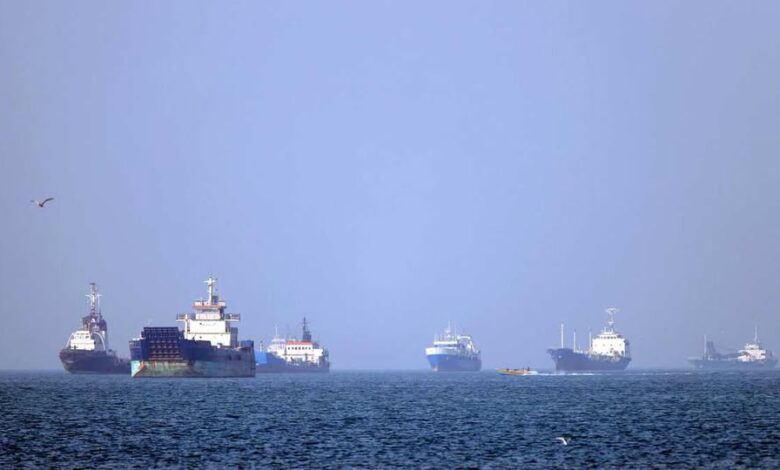
The United States has resumed a maritime blockade covering Iranian ports, oil terminals and coastal areas as military exchanges between Washington and Tehran intensify, placing the Strait of Hormuz and global energy supplies under renewed pressure.
The US Navy-led Joint Maritime Information Center said the blockade would apply to vessels of all nationalities attempting to enter or leave Iranian ports. Enforcement was scheduled to resume at 8 pm GMT on July 14 after the latest negotiations between Washington and Tehran failed to produce an agreement.
US Central Command also confirmed a new round of strikes against Iranian military targets, saying the operations were intended to reduce Tehran’s ability to attack commercial vessels in and around the Strait of Hormuz. The United States has accused Iranian forces of targeting civilian shipping and disrupting navigation through the strategic waterway.
Iran has responded by warning that it could prevent oil and gas exports from across West Asia if its own energy shipments remain blocked. Iran’s Islamic Revolutionary Guard Corps said regional energy routes benefiting the United States and its allies would not remain secure if Iranian exports were stopped.
The renewed confrontation has weakened an interim understanding intended to maintain commercial navigation through the Strait of Hormuz while the two sides pursued further negotiations.
The Strait of Hormuz is one of the world’s most important energy corridors, carrying a substantial share of internationally traded oil and liquefied natural gas. Any prolonged disruption could increase crude-oil prices, shipping costs and maritime insurance premiums while placing additional inflationary pressure on energy-importing economies.
Oil prices have already risen amid the renewed hostilities, with international crude benchmarks trading above 80 US dollars per barrel as markets assess the risk of wider disruption to Gulf exports.
The US–Iran escalation currently represents the most urgent international development because further military action could draw neighbouring Gulf countries deeper into the conflict and affect global energy, transport and supply chains.
Meanwhile, fighting linked to the Russia–Ukraine war has intensified around the Black Sea and the Sea of Azov, threatening another major route for international grain and commodity exports.
A Russian attack on the Ukrainian port city of Odesa killed at least three people, according to Ukrainian officials. The attack came amid continued strikes on ports, commercial vessels and maritime infrastructure in southern Ukraine.
Ukraine has also expanded attacks against Russian maritime operations in the Sea of Azov. The strikes have prompted restrictions on shipping through one of Russia’s important grain-export routes, while Moscow has considered diverting cargo to alternative Black Sea ports.
Ukraine has claimed that numerous Russian vessels have been damaged or disrupted during the operations. Some details regarding the scale of the attacks have not been independently verified.
The Black Sea and Sea of Azov are important for agricultural exports from both Russia and Ukraine. Escalating attacks on ports and merchant shipping could raise freight and insurance costs and create further uncertainty for global grain markets.
The Odesa port network is particularly important to Ukraine’s wartime economy, handling most of the country’s agricultural exports and significant volumes of mineral shipments. Previous Russian attacks have already damaged terminals and reduced export capacity.
In Africa, international concern is growing over intensifying fighting around El-Obeid, the capital of Sudan’s North Kordofan state.
Foreign ministers from the Group of Seven countries and the European Union’s foreign policy chief have called for an immediate halt to attacks around the city and warned that civilians face an increasing risk of atrocities.
The joint statement urged the paramilitary Rapid Support Forces, the Sudanese Armed Forces and their allied groups to comply with international humanitarian law, protect civilians and permit safe and unrestricted humanitarian access.
The G7 and the European Union also called on the United Nations Security Council to extend the existing arms embargo on Darfur to the whole of Sudan. They urged foreign governments and other external actors to stop providing weapons, logistical assistance or financial support to the parties involved in the conflict.
El-Obeid is strategically important because it connects central Sudan with Darfur and other western regions. Humanitarian agencies have reported near-daily drone attacks around the city, including strikes affecting electricity, fuel, water and healthcare infrastructure.
The fighting has raised fears that Sudan’s already severe humanitarian crisis could worsen further, increasing civilian displacement, food insecurity and obstacles to humanitarian relief.
The three developments represent separate but interconnected threats to global stability. The US–Iran confrontation threatens international energy routes, the widening maritime conflict around Ukraine risks disrupting grain and commercial shipping, and the Sudan crisis is increasing pressure for stronger international action to protect civilians and restrict the supply of weapons.
Among them, the renewed US blockade of Iranian ports and Tehran’s threat against regional energy exports remain the highest immediate publication priority because of the potential for rapid military escalation and worldwide economic consequences.