Cool Climate and Multiethnic Culture Draw Tourists to Songpan Ancient Town

Dragon Media News Desk
With its cool and comfortable summer climate, highly liveable environment and rich multiethnic culture, Songpan Ancient Town in China’s Sichuan Province has become an increasingly attractive destination for tourists.
Songpan County, known as Zungchu in Tibetan, is located in the Ngawa Tibetan and Qiang Autonomous Prefecture of Sichuan Province. Situated on the eastern edge of the Qinghai–Tibet Plateau in the highlands of western Sichuan, the area has long been home to Tibetan, Qiang, Hui and Han communities.
While many Chinese cities experience intense heat during summer, Songpan remains comparatively cool. In July, the average daytime high is around 22 degrees Celsius, while the overall daily average is approximately 14 to 15 degrees. This climatic advantage has made the town a popular summer retreat for domestic travellers seeking relief from the heat.
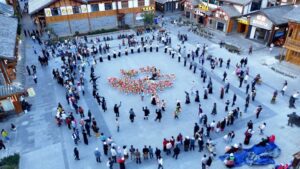
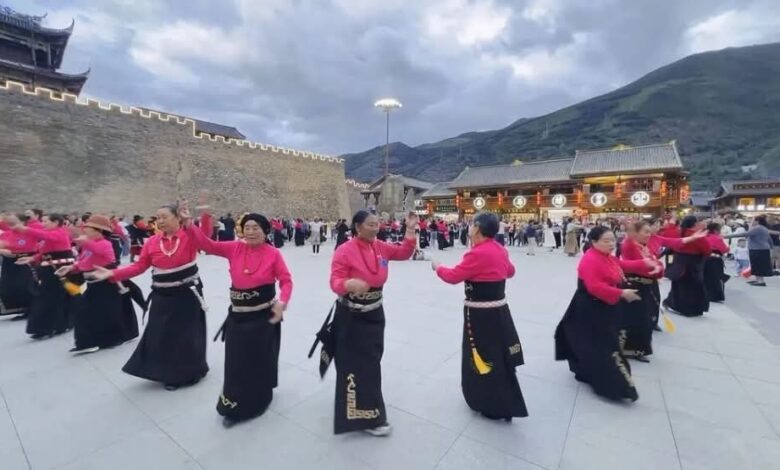
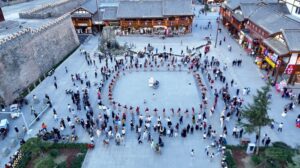
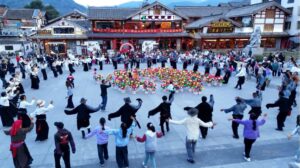
As evening approaches, the ancient town becomes even more vibrant. Public squares, open spaces and streets host folk dances, music and cultural performances representing different ethnic communities. Circular group dances, colourful lighting displays and programmes featuring traditional costumes allow visitors to do more than simply watch. They are often invited to join local residents in dancing and other cultural activities.
Tourists frequently participate spontaneously in performances by Tibetan and other ethnic artists accompanied by traditional music. Such engagement offers visitors an opportunity to experience local customs, hospitality and the lifestyles of communities living in the highlands.
Songpan is believed to have a history extending back more than 2,300 years. In ancient times, the area developed as a northwestern gateway to Sichuan, an important military centre and a hub for trade and communication.
Historically known as Songzhou, it served as a major route for the exchange of goods, culture and people between Tibetan regions and other parts of China.
Songpan was particularly important along the ancient Tea Horse Road, becoming a meeting place for Tibetan, Qiang, Hui and Han merchants and travellers. Tea, horses, salt, medicinal plants, animal products and everyday commodities passed through the region on their way from one area to another.
Songpan’s long history is reflected not only in written records but also in its architecture, street layout, gates, walls, religious sites and cultural heritage. These features preserve evidence of the long-term coexistence of different ethnic groups and their shared contribution to the town’s social and cultural development.
The best-known sections of Songpan’s city walls date mainly from the Hongwu period of the Ming Dynasty and were constructed after 1379. Some parts of the walls and gates preserve elements of earlier structures, while other sections have been restored or reconstructed in modern times.
The Songpan city walls are listed among China’s important cultural heritage sites.
The streets of the ancient town are orderly and clean. Traditional buildings stand alongside modern shops, restaurants, handicraft centres, tea houses and coffee shops.
Architectural features associated with Tibetan, Qiang, Hui and Han communities give the town its distinctive appearance.
Songpan has therefore managed to preserve its historic atmosphere while incorporating the needs of modern tourism and everyday life.
Visitors can explore the ancient gates and walls, sample local cuisine, purchase ethnic handicrafts and rest in modern coffee houses designed with Tibetan cultural elements.
At night, colourful lights illuminate the streets, squares and traditional buildings.
Performances by local dance groups, lantern-dance teams and folk artists create a festive atmosphere. Visitors walking through the market may suddenly encounter a group dance, join the performers or observe the region’s traditional music and costumes.
Songpan’s tourism development is not based solely on natural scenery or archaeological heritage.
Local authorities are integrating the area’s cool climate, ancient architecture, multiethnic traditions, folk dances and modern hospitality services to expand summer tourism.
In recent years, Songpan County has given priority to programmes linking culture and tourism with local incomes and the rural economy.
Traditionally, tourists often visited historical places, viewed the scenery and then departed. Songpan, however, is promoting a more participatory form of tourism.
Visitors can enjoy the cool climate, join local dances, experience traditional ways of life and gain a closer understanding of the cultural relationships among the region’s different communities.
In this way, Songpan is transforming its natural climatic advantage into a valuable tourism resource.
The combination of a cool summer retreat, historical heritage, multiethnic culture and participatory entertainment is helping establish the town as a distinctive summer tourism centre in western Sichuan.
Its refreshing air, historical depth, colourful folk culture and warm local hospitality have made Songpan more than a sightseeing destination.
It is a place where visitors can experience history, nature and living culture together.