Russia’s Warning over Foreign Troop Deployment in Ukraine Signals New Clash over Europe’s Post-War Security Order

# Sanket Kiranti
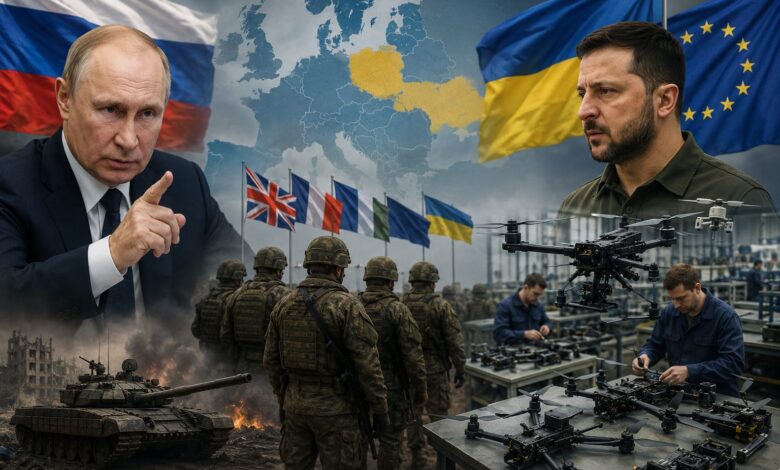
Russia has again issued a strong warning over Western plans to deploy multinational forces in Ukraine following a possible ceasefire or peace agreement. Moscow has said that any foreign military contingent entering Ukraine would be regarded as a threat to Russian security and a legitimate military target.
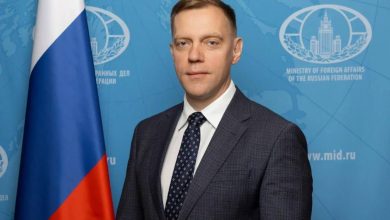
Russian Foreign Ministry spokesperson Maria Zakharova said the deployment of troops under the Western-backed “Coalition of the Willing” would be unacceptable to Russia. She described such a deployment as foreign intervention and an additional threat to Russian security, warning that the military units involved would be treated as targets.
Russia’s latest warning is not merely a response to the ongoing war. It has once again highlighted the fundamental disagreement between Moscow and Western governments over how Ukraine’s security should be guaranteed after a possible ceasefire.
The Coalition of the Willing, led by France and the United Kingdom, has proposed deploying a multinational force once a credible ceasefire is established and Ukraine formally requests such assistance. The proposed force would provide security guarantees across land, air and sea while helping rebuild Ukraine’s armed forces.
Western governments have described the proposed force as a defensive security arrangement intended to deter another Russian attack rather than a structure designed to launch a new war. They have said the mechanism would become operational only after a ceasefire had taken effect.
Russia, however, views the continued presence of NATO or other European troops in Ukraine after the fighting ends as a permanent expansion of Western military infrastructure close to its borders. For Ukraine and its allies, such a presence would provide protection against renewed aggression. For Russia, it would amount to direct foreign military intervention.
This contradiction has brought one of the most difficult questions surrounding a possible peace agreement to the forefront. Without credible external security guarantees after a ceasefire, Ukraine may remain exposed to another attack. However, if Western troops are deployed in Ukraine, Russia could view their presence not as part of a peace arrangement but as a direct challenge to its security.
The dispute demonstrates the significant difference between a ceasefire and a lasting peace. An agreement to stop fighting alone may not be sufficient. Clear arrangements would be required on troop withdrawals, border monitoring, Ukraine’s future military strength, the presence of foreign forces, air and maritime security, and the response to any violation of the agreement.
Russia’s warning has also raised questions about the deterrent value of the proposed multinational force. An attack on foreign troops could draw the European countries involved directly into the conflict. Western supporters argue that this possibility could deter Moscow from launching another offensive. However, the same arrangement could also increase the risk that a limited incident or miscalculation might escalate into a direct military confrontation between Russia and European states.
Amid the growing dispute over troop deployment, the European Union and Ukraine are also expanding cooperation in defence manufacturing and drone production. Their plans include increasing drone output, establishing joint ventures and providing secure European production sites for Ukrainian manufacturers.
This cooperation goes beyond supplying Ukraine with additional drones for immediate battlefield requirements. The European Union is seeking to integrate Ukraine’s experience in producing relatively inexpensive, rapidly manufactured and continually upgraded drone systems into Europe’s long-term defence structure.
EU–Ukraine drone cooperation aims to connect manufacturers, technology companies, start-ups and military users in Ukraine and the European Economic Area within a broader industrial framework. Europe is seeking to incorporate lessons from Ukraine’s wartime experience by bringing research, production and continuous technological development closer together.
The initiative suggests that Ukraine is gradually moving from being primarily a recipient of Western weapons to becoming an active partner in European defence technology. Ukraine can contribute battlefield-tested technology, operational experience and production expertise, while European countries can provide investment, secure factories, supply networks and access to a larger market.
This development shows that the confrontation between Russia and Europe is not limited to the possible deployment of troops. The integration of Ukraine’s defence industry, drone production, air-defence systems, military mobility and European procurement mechanisms is also becoming part of the emerging long-term security structure.
Whether European troops ultimately enter Ukraine remains a separate question. However, the increasing integration of Ukraine’s defence production system with Europe appears to be developing into a long-term process that could become difficult to reverse.
For European countries, the cooperation is not solely a policy of supporting Ukraine. The war has exposed weaknesses in traditional military procurement systems, expensive weapons programmes and long production cycles. Relatively inexpensive drones, electronic-warfare systems and rapid technological innovation have transformed the nature of modern warfare.
Integrating Ukraine’s battlefield experience into European defence planning is therefore also part of Europe’s effort to strengthen its own security capabilities. It could accelerate defence production, joint procurement and the development of emerging military technologies across the continent.
Following Russia’s latest warning, it has become increasingly clear that any future peace negotiations will not be limited to territorial questions. Ukraine’s future military strength, the countries responsible for providing security guarantees, the location and legal mandate of foreign forces, and Ukraine’s relationship with the European defence industry could become central points of disagreement.
The proposed multinational force has not yet been deployed in Ukraine. Under the Western plan, it would be introduced only after a credible ceasefire had been established. However, Russia’s advance warning that such troops would be treated as military targets suggests that reaching agreement on a post-war security arrangement could prove as difficult as negotiating an end to the fighting itself.
Ultimately, a possible end to the war in Ukraine will not depend solely on halting military operations. The balance of power that follows, Ukraine’s security guarantees, the presence of European troops and the integration of defence industries will help determine Europe’s emerging security order.
Russia’s warning and expanding EU–Ukraine drone cooperation indicate that the contest over that future security architecture has already begun.