Russian Arms Control Delegation in Vienna Marks 30th Anniversary

Dragon Media News Desk
The Delegation of the Russian Federation to the Vienna Negotiations on Military Security and Arms Control has marked the 30th anniversary of its establishment.
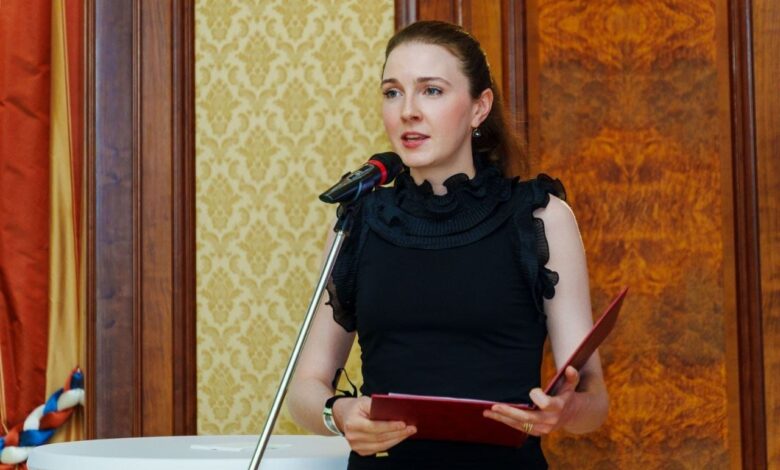
Addressing an event in Vienna on July 29, delegation head Iulia Zhdanova said the current mission was created in 1996 through the merger of three separate Russian negotiating bodies. According to the Russian Foreign Ministry, a government directive issued on July 29, 1996, is regarded as the beginning of the delegation’s modern history.
Zhdanova said the delegation’s historical roots extend back to the 1970s, when Soviet diplomats contributed to drafting the military-political provisions of the 1975 Helsinki Final Act.
In subsequent years, Soviet interagency delegations took part in developing confidence-building measures in Vienna and Stockholm and conducted negotiations on reductions in conventional forces in Central Europe.
During the 1990s, three separate Russian delegations operated in Vienna: one to the Organization for Security and Co-operation in Europe’s Forum for Security Co-operation, another to the Open Skies Consultative Commission, and a third to the Joint Consultative Group established under the Treaty on Conventional Armed Forces in Europe.
These three bodies were later consolidated into a single delegation under the 1996 government directive.
According to Zhdanova, transferring diplomatic expertise in arms control from one generation to the next remains one of the delegation’s central priorities.
She said earlier Soviet and Russian diplomats had contributed to drafting the Treaty on Conventional Armed Forces in Europe, its adapted version, the Open Skies Treaty and the Vienna Document on Confidence- and Security-Building Measures.
Zhdanova said these instruments had helped maintain military stability in Europe for many years after the end of the Cold War. She described the current security environment as fundamentally different and exceptionally challenging.
Presenting Russia’s official position, she accused Western countries of waging a “hybrid war” against the Russian Federation and said the delegation’s principal responsibilities now included defending Russia’s security interests and preserving the intellectual legacy of previous generations of diplomats.
She noted that every new round of negotiations takes place in a changing military-political environment, while the delegation’s continuity is sustained by intellectual unity, team spirit and commitment to a shared mission.
Zhdanova expressed gratitude to diplomats, Defence Ministry officials, interpreters and retired personnel who had served in the delegation.
She also highlighted a long-standing tradition under which anyone who has once served in the delegation is regarded as a lifelong member of the team, regardless of where their professional career later takes them.