Beijing Makes Major Progress in Air Pollution Control as Digital Technologies Strengthen Monitoring and Enforcement

Dragon Media News Desk
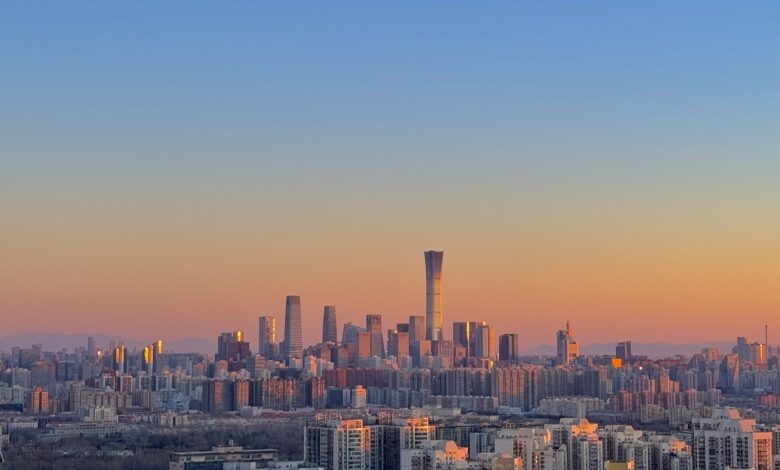
Beijing has made significant progress in controlling air pollution, with the Chinese capital recording 311 days of good air quality in 2025 and only one day of severe pollution.
When Beijing began officially releasing PM2.5 monitoring data in 2013, the city recorded 58 heavily polluted days.
The annual average concentration of PM2.5 — fine particulate matter regarded as a key indicator of air quality — fell from 89.5 micrograms per cubic meter in 2013 to 27 micrograms per cubic meter in 2025. This represents a decline of nearly 70 percent over the period.
Beijing’s progress has also attracted international attention. The United Nations Environment Programme has highlighted the city’s experience in improving air quality as a useful model for other urban areas.
According to experts at the Beijing Municipal Ecological and Environmental Monitoring Center, the improvement is not the result of a single measure. Instead, it reflects an integrated system combining environmental monitoring, scientific analysis, policymaking, regional cooperation and law enforcement, with digital technologies increasingly supporting every stage of the process.
More Precise and Targeted Monitoring
Accurate and detailed data are essential for effective pollution control, and Beijing has developed a multi-level air-quality monitoring network across the city.
Thirty-five standard monitoring stations continuously measure six major air pollutants, while more than 1,000 compact sensors have been deployed across communities and townships to capture local variations in air quality with greater precision.
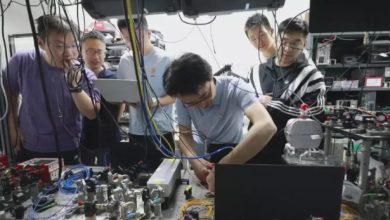
The network was gradually developed by the Beijing Municipal Ecological and Environmental Monitoring Center, one of China’s earliest institutions specializing in ecological and environmental monitoring.
The center monitors air, water, noise, soil and broader ecological conditions across Beijing.
It has also developed an analytical system capable of identifying around 125 components of PM2.5, covering most of its composition and helping researchers trace the sources of pollution.
Li Yunting, technical director at the center, said source analysis helps identify the main contributors to pollution at different stages and provides policymakers with a scientific basis for targeting major emission sources.
Under the coordination of the Beijing Municipal Ecology and Environment Bureau, the center has conducted four rounds of PM2.5 source-analysis studies with other institutions. The findings were released in 2014, 2018, 2021 and 2025.
The latest analysis found that regional transport contributed 57 percent of Beijing’s PM2.5 pollution.
Local sources accounted for the remaining 43 percent, with vehicle emissions and residential activities representing the largest shares.
Coal-Related Pollution Nearly Eliminated
Scientific monitoring has supported a series of targeted pollution-control measures across Beijing.
To reduce transport emissions, the city has rapidly expanded the use of new-energy vehicles.
Advanced techniques, including air-supported membrane structures, have also been introduced to reduce dust emissions from construction and exposed areas.
Coal combustion, once one of Beijing’s major sources of pollution, has now been almost eliminated as a leading contributor.
Coal no longer appears among the major sources identified in the latest pollution-source analysis.
The shift reflects broader national efforts by China to reduce coal consumption, promote cleaner energy and upgrade heavily polluting industries.
With PM2.5 concentrations now at relatively low levels, experts say further improvements in air quality will increasingly depend on more precise and science-based measures rather than broad pollution-control campaigns.
Smarter Environmental Governance
Beijing has also moved beyond simply measuring pollution by linking monitoring with regulation, enforcement and follow-up evaluation.
The Beijing Municipal Ecological and Environmental Monitoring Center has developed a system that connects monitoring, regulation and inspection within a single management cycle.
The system uses artificial intelligence, the Internet of Things, satellite remote sensing and vehicle-mounted monitoring equipment to bring together environmental information from multiple agencies.
Zhang Likun, director of the center’s smart system division, said data that were once scattered across different departments can now be integrated into a single platform.
This allows authorities to conduct remote inspections and coordinate joint action among departments responsible for housing, water resources, transport and other sectors.
The system has improved the speed, efficiency and precision of environmental management.
More than 30 intelligent analytical methods are used to automatically examine incoming data and identify potential pollution risks.
Monitoring personnel then assess the most urgent problems and forward them to relevant enforcement agencies for action.
In this way, pollution detection, enforcement and subsequent evaluation are linked within a continuous management process.
International Recognition
Beijing’s technology-supported environmental governance model has also received international recognition.
Clean Air Asia, an international non-governmental organization working to improve air quality across the region, included the system as a representative case in its “China Air 2025” report.
Beijing’s experience was also presented at the 2026 Better Air Quality Conference, where it received recognition for sharing clean-air best practices.
China has incorporated ecological conservation into its broader modernization strategy.
Under the Beautiful China Initiative, environmental improvement, pollution control and green development have become important national priorities.
Beijing’s experience demonstrates that pollution control requires more than restrictions and enforcement alone.
By combining detailed data, scientific analysis, advanced technologies, regional cooperation and effective law enforcement within a unified system, the city has shown how environmental governance can become more precise, coordinated and sustainable.