Kishor Shrestha’s Arrest: Questions of Press Freedom, Legal Jurisdiction and Nepal’s International Image

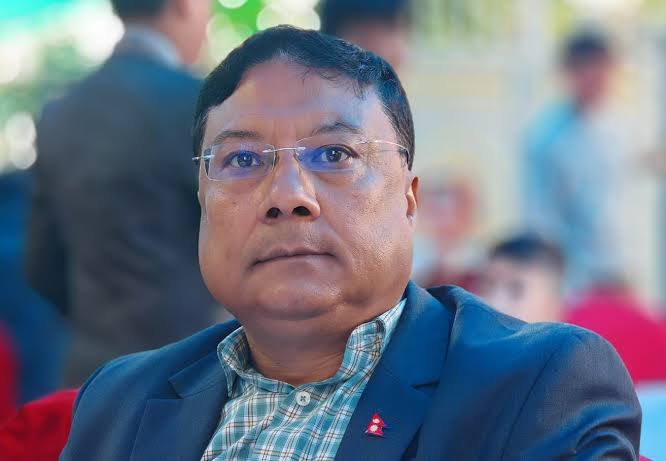
# Rajendra Sharma Salyani
The arrest of Kishor Shrestha, editor of Jana Aastha Weekly and Vice President of the World Press Council, on allegations related to a privacy offence has generated a debate far broader than the legal case of a single individual. It raises serious questions concerning press freedom, citizens’ right to privacy, the jurisdiction of investigative agencies, and Nepal’s democratic image in the international community.
A detention document issued by the District Police Range, Kathmandu, shows that Shrestha is being investigated on the basis of a complaint filed by Deepika Singh. However, if the dispute fundamentally concerns published news content or journalistic activity, a legitimate question arises as to whether criminal arrest should be the first course of action, or whether institutional remedies available through press regulatory mechanisms and judicial processes should be pursued first.
Nepal’s Constitution protects freedom of expression and freedom of the press while also recognizing individual privacy as a fundamental right. Journalism therefore cannot stand above the law. If an individual’s privacy has been unlawfully violated, that person is entitled to seek legal remedy. At the same time, it would be inconsistent with democratic practice to treat disagreement with a news report, disputes over reputation and clearly established criminal offences as though they were equivalent, while normalizing police detention as the standard response.
In this context, the role of the Press Council Nepal becomes important. The Council has institutional authority to receive complaints, examine disputes and take appropriate action in matters involving journalistic ethics, accuracy, balance, privacy and professional standards. If the present allegation against Shrestha arises primarily from published journalistic content, the boundary between the jurisdiction of the Press Council and that of criminal investigation must therefore be clearly defined.
Shrestha is not merely a journalist working within Nepal. He has been active in Nepali journalism for decades, has served in the leadership of the Press Council Nepal, and currently holds the position of Vice President of the World Press Council. Government action against an individual holding such an international press role is therefore likely to attract the attention of press organizations beyond Nepal.
He has also contributed to expanding Nepal–China media relations, strengthening international media engagement, and promoting Nepal’s commitment to the One-China policy through the media sector. In the past, journalist organizations have publicly expressed concern over reports that he faced surveillance, pressure and attempts at arrest in connection with his journalistic work. Against that background, the state requires a high degree of transparency if the present arrest is to be understood simply as routine law-enforcement action.
For a democratic country such as Nepal, the international message generated by such developments also matters. When a serving Vice President of the World Press Council is detained over a dispute linked to news content, questions may arise abroad as to whether criminal procedures are being used to restrain critical journalism. Even if that is not the state’s intention, the perception created by official action can itself carry significant diplomatic and democratic consequences.
None of this means that the complaint against Shrestha should not be investigated. Journalism must also operate within the boundaries of factual accuracy, accountability, personal dignity and privacy. But the coercive power exercised by the state must always be necessary, proportionate and consistent with the law.
If there is no compelling evidentiary or legal necessity to keep Shrestha in custody, it would be appropriate to release him safely and with due respect, while allowing the investigation and legal process to continue without detention. Where necessary, the dispute can be examined impartially through the Press Council and the courts.
The message Nepal should send to the world must be clear: journalism here is accountable, citizens’ privacy is protected, and press freedom is defended with equal determination. The strength of the rule of law is demonstrated not by the routine use of arrest, but by the state’s capacity to maintain a principled balance between rights and responsibilities.