International Conference in Xizang Highlights Global Study of Tibetan Medicine, Four Medical Tantras and Medical Thangkas

Dragon Media News Desk
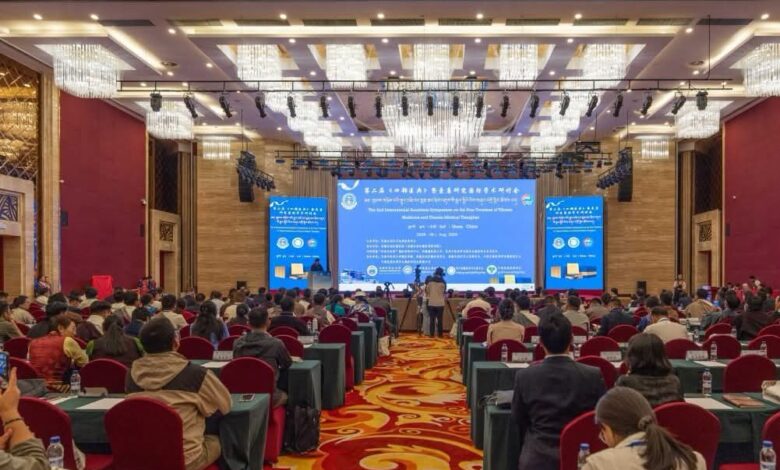
An international academic conference aimed at linking the preservation of the centuries-old tradition of Tibetan medicine with scientific research and global expansion has been held in Lhasa, Xizang Autonomous Region.
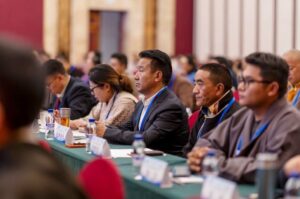
The second International Academic Symposium on the Four Medical Tantras and Medical Thangka Research, held on August 20, brought together more than 200 experts and researchers in Tibetan and traditional medicine from China, the United Kingdom, Germany, Nepal and other countries.
Participants held in-depth discussions on the historical origins of Tibetan medicine, its theoretical system, transmission as a living tradition, preservation and application, as well as its growing international reach.
Experts at the conference said Tibetan medicine, also known as Sowa Rigpa, is gaining wider recognition and application internationally. Its foundational text, the Four Medical Tantras, or Gyüshi, is regarded as the basis of the systematic theoretical and clinical framework of Tibetan medicine.
The Four Medical Tantras contain extensive knowledge on the causes of disease, concepts of the human body and health, diagnosis, medicines, treatment methods, disease prevention and health preservation. In 2023, the text was inscribed on UNESCO’s Memory of the World International Register.
Another major focus of the conference was the Menthang, or medical thangka tradition. In Tibetan, “men” refers to medicine and “thang” to thangka painting. Medical thangkas are regarded as visual textbooks of Tibetan medicine.
The complete traditional series consists of 80 paintings covering subjects ranging from fundamental medical theory, anatomy and diagnosis to treatment techniques, disease prevention, medicinal plants, pharmaceutical preparation and medical ethics.
According to Tsering, head of the Tibetan Hospital of Xizang Autonomous Region, Tibetan medical thangkas dating from the 17th to the 20th centuries were also included in China’s documentary heritage register in 2023. Participants noted that although international academic interest in medical thangkas has grown, high-quality translations into major world languages remain limited.
British scholar Mary Caroline Wyatt, who has been involved in translating medical thangka materials since September last year, said translations should not be prepared merely for general readers but should also serve specialists studying Tibetan medicine.
She emphasized that while modern linguistic clarity is important, traditional medical concepts and specialized terminology must also be preserved.
Katharina Anna Sabernig, a researcher affiliated with the Medical University of Vienna, recalled that she first encountered illustrated Tibetan medical knowledge nearly 30 years ago. She later traveled to Xizang and began studying medical thangkas in greater depth.
She said the visual representation of medical knowledge in Tibetan medicine has significant value for the study of medical history, visual culture and the transmission of knowledge internationally.
A Tibetan Medicine Menthang Research Center was formally inaugurated during the conference. The center is expected to systematically advance research into the history of medical thangkas, medical iconography, textual foundations, conservation, digital archiving, translation and international academic cooperation.
Kalsang Yudron, head of the Xizang Autonomous Region Health Commission, said traditional medicine services are now present in some form in more than 150 countries and regions worldwide, while Tibetan medicine continues to gain recognition and research opportunities in countries including Nepal.
She said international expert networks in Tibetan medicine could help promote not only the protection of cultural heritage but also modernization and global academic exchange.
Work is also advancing on the standardization of Tibetan medicine. A national standard on the classification and coding of Tibetan medical diseases, developed with the participation of the Tibetan Hospital of Xizang Autonomous Region, reportedly came into effect in April this year.
It has been described as China’s first national standard for disease classification and coding in the field of ethnic traditional medicine.
In recent years, Xizang has expanded efforts in the preservation, education, clinical research and institutional development of Tibetan medicine. National-level medical centers, clinical research bases, key specialist departments and other research structures have been developed, while three Tibetan medical practitioners have received China’s high-level National Master of Traditional Medicine recognition.
The conference emphasized that Tibetan medicine should not be preserved merely as a historical and cultural legacy. Instead, participants called for stronger links between ancient texts, medical paintings, clinical practice and modern research, enabling the tradition to participate more actively in international academic dialogue.
By connecting centuries-old medical knowledge with modern research, standardization and international exchange, efforts are now underway to carry Tibetan medicine from the highlands of Xizang to a broader global audience.