Afghan Gemstones Reach Global Markets, China Among Key Buyers

Dragon Media News Desk
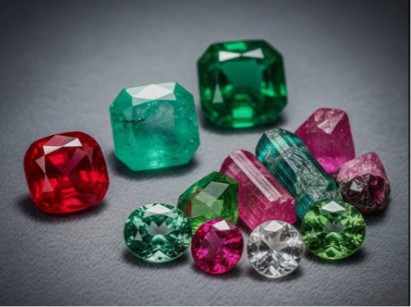
Afghanistan’s precious gemstones, including lapis lazuli, emeralds, rubies and tourmaline extracted from the country’s mountainous regions, are finding new opportunities in international markets. Sold in Kabul’s historic antique market, these stones represent not only valuable commodities but also an important part of Afghanistan’s cultural heritage and a potential source of employment and export revenue.
Khalid Haidari, who has worked in Kabul’s antique market for 18 years, said foreign customers are particularly interested in emeralds, rubies and tourmaline. Buyers are also attracted to jewelry made in traditional Afghan designs, not merely to the quality of the stones themselves.
According to local traders, demand for Afghan gemstones and jewelry has been increasing in overseas markets, with China emerging as an important export destination. Chinese buyers are said to show particular interest in lapis lazuli and nephrite.
The growth of online commerce has also created new opportunities for Afghan traders and jewelry designers to reach international customers. Sellers are increasingly using digital platforms to display their products, communicate with foreign buyers and arrange overseas deliveries without relying entirely on physical stores or international exhibitions.
Despite Afghanistan’s abundance of high-quality gemstones, however, the country has yet to develop a fully mature domestic processing industry.
Haidari said Afghan gemstones are of high quality, but modern equipment and technical standards required for extraction, cutting, shaping and processing remain insufficient. This is considered one of the main obstacles preventing the industry from realizing its full economic potential.
A large share of a gemstone’s commercial value is created after extraction. Cutting, polishing, design, certification, packaging and international branding can transform a raw stone into a much more valuable finished product. When these stages are not carried out domestically, Afghanistan risks losing a significant portion of the potential value generated by its natural resources.
Nader Khan, who has worked in the gemstone trade for around three decades, said Afghan lapis lazuli, emeralds and rubies remain highly competitive in international markets. He added that customers attach significant importance to handmade craftsmanship and traditional domestic designs.
According to Khan, Afghan traders are already using available machinery to process stones and produce different jewelry designs. Expanding modern processing capacity inside the country, however, could create more employment while allowing Afghanistan to retain a larger share of the value generated by the gemstone industry.
He also warned that sending stones abroad for further processing can increase costs and, in some cases, affect their original character and quality. Developing local processing capabilities, he argued, would help preserve the distinctive identity of Afghan gemstones and jewelry.
The future of Afghanistan’s gemstone industry is also closely tied to access to international markets. In the past, international trade fairs and exhibitions provided traders with opportunities to present their products directly to foreign customers. The decline in such events has reduced face-to-face commercial contacts.
Digital commerce, however, is beginning to fill part of that gap. Online sellers and designers are using social media and other digital platforms to showcase jewelry, communicate with customers and complete international sales.
The expansion of online sales brings its own challenges. Long-term confidence in international markets requires professional product photography, reliable information about the origin and quality of gemstones, secure delivery systems, proper certification and consistent product standards.
An online seller identified as Ahmad said most of his customers are interested in lapis lazuli, emeralds and rubies. Some buyers regard gemstones not only as valuable objects but also as cultural symbols, gifts and items carrying personal or emotional significance.
Ahmad said some customers believe that looking at gemstones gives them a sense of calmness and emotional well-being. Such beliefs, however, should not be interpreted as scientifically established evidence that gemstones can treat medical conditions.
A customer named Sula, who visited the market to buy a gift for a friend, selected tourmaline bracelets, describing them as attractive, memorable and valuable.
The potential of Afghanistan’s gemstone industry extends beyond economics. Traditional Afghan designs, handicraft techniques and cultural styles can give locally produced jewelry a distinctive identity in the highly competitive global market.
Traders and industry observers believe that Afghanistan could transform its mineral wealth into a higher-value export industry by moving beyond the simple export of raw stones and developing domestic capacity in cutting, polishing, design, certification and branding.
Such development would require modern equipment, skilled workers, internationally recognized quality standards, credible certification systems and reliable export channels.
If these foundations are established, Afghanistan’s gemstones could make a significant contribution to employment, export earnings and international trade while preserving and promoting the country’s distinctive cultural heritage.