China Rejects U.S. Secondary Sanctions Threat Over Iran Trade, Calls for Political Settlement

Dragon Media News Desk
China has rejected the use of sanctions and pressure as a means of resolving disputes after the United States warned that it could impose secondary sanctions on countries continuing to trade with Iran.
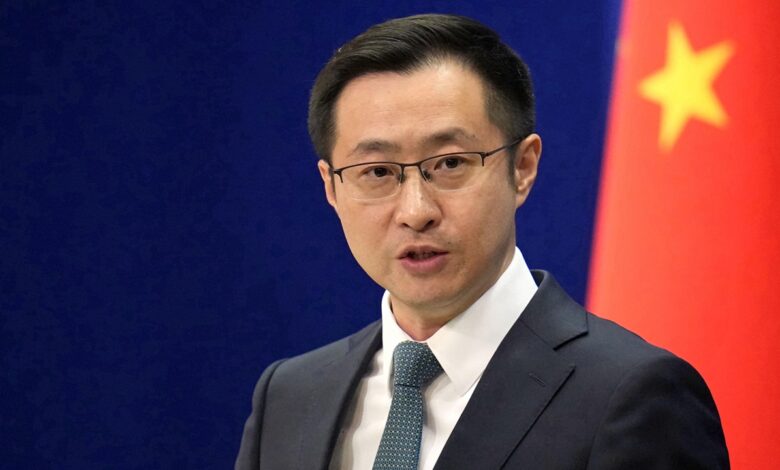
Chinese Foreign Ministry spokesperson Lin Jian made the remarks at a regular press briefing in Beijing on Monday in response to comments by U.S. Treasury Secretary Scott Bessent, who indicated that Washington could impose secondary sanctions on countries maintaining trade relations with Iran.
Lin said sanctions and pressure cannot resolve problems and would instead increase tensions, further escalate the situation and ultimately serve no party’s interests.
“Sanctions and pressure cannot resolve problems. They will only heighten tensions and escalate the situation,” Lin said.
He urged all parties concerned to exercise rationality and restraint, avoid actions that could further intensify conflict, and refrain from measures that could undermine global economic development and international financial stability.
China called for disputes to be addressed through dialogue and negotiations and urged the parties to return to the path of political settlement as soon as possible.
Bessent has signaled that Washington could further intensify economic pressure on Iran and potentially extend sanctions to third countries, companies, financial institutions or other entities that continue commercial dealings with Tehran.
If implemented, such secondary sanctions could expand the impact of U.S. restrictions beyond Iran itself and affect foreign companies and institutions engaged in trade with the country.
Such measures could place additional pressure on countries that maintain significant energy and other economic relations with Iran.
China has long opposed unilateral sanctions and what it describes as the extraterritorial application of U.S. economic restrictions. Beijing maintains that its legitimate international trade and economic interests should not be affected by unilateral decisions taken by a third country.
Lin said China would closely monitor developments surrounding the latest U.S. warning.
“China will closely follow relevant developments and take necessary measures to safeguard its legitimate rights and interests,” he said.
China’s latest response indicates that any further escalation of U.S. economic pressure on Iran could have consequences extending beyond Washington–Tehran relations and affect China and other countries that continue to trade with Iran.
Beijing, however, has emphasized that rising tensions should be addressed through diplomacy, restraint and political negotiations rather than economic coercion and secondary sanctions.