The State’s Real Test Begins After the Disaster
Editorial


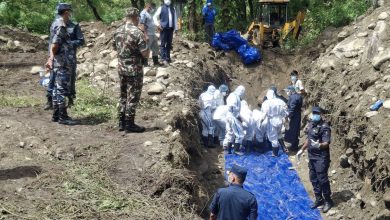
The devastating floods in Rasuwa and along the Bhotekoshi–Trishuli river corridor have forced the full machinery of the state into search, rescue and relief operations. Thousands of security personnel are on the ground, helicopters are flying continuously, roads are being reopened and food, medicine and other essentials are being delivered to affected communities. Thousands of people have already been rescued. India, China, the United States and international organizations have also begun extending support. This level of national mobilization is necessary and encouraging. But the real test of disaster governance will begin after the rescue phase ends.
The first responsibility remains clear: save lives, locate the missing, treat the injured and provide safe shelter to displaced families. There should be no room for administrative delay, political interference or institutional rivalry. From workers trapped inside hydropower tunnels to families cut off in remote settlements, every citizen must receive equal priority from the state. The search and identification of foreign nationals must also be handled through transparent coordination consistent with international standards.
But another question has already emerged alongside the rescue effort: where will affected families return?
Providing tents and food for a few days cannot mark the end of the state’s responsibility. Returning communities to areas still threatened by landslides, river erosion, unstable slopes or renewed flooding would only lay the foundation for another tragedy. Rehabilitation must therefore be based on geological, hydrological and environmental assessments. A clear transition plan from temporary shelter to safe, permanent settlement should begin now.
The third challenge is reconstruction. Roads, bridges, electricity systems, telecommunications, drinking-water networks and hydropower facilities have suffered serious damage. Reconstruction should not begin in haste before a credible assessment is completed. Nepal cannot repeat the old practice of rebuilding the same type of bridge at the same vulnerable location or restoring damaged infrastructure without reconsidering the risk. New structures must be designed to withstand future extreme weather and Himalayan water-related hazards.
This disaster has also delivered another important lesson. Risks originating in the Himalayan region do not remain confined by political borders. A glacial lake event, landslide or river blockage on the Chinese side can affect Nepal within hours. Real-time hydrological information sharing, glacier and river monitoring, and an automated early-warning mechanism between Nepal and China are therefore no longer optional. Nepal must also strengthen its own system so warnings can reach downstream communities quickly and reliably.
International assistance should not become a subject of unnecessary political controversy. Nepal should accept support according to actual need, manage it through a unified government mechanism and publicly disclose where assistance came from and how it was used. Accepting foreign assistance is not a sign of weakness, but neither should external mechanisms be deployed without necessity or coordination. National capacity, genuine need and sovereignty must remain in balance.
Large sums are also beginning to flow into the Prime Minister Disaster Relief Fund. Every rupee must now be subject to public accountability. Political access, personal connections or bureaucratic influence must never determine who receives relief. Assistance should be based only on damage, need and risk.
The visible presence of the state during a major disaster gives citizens confidence. But the number of helicopter flights, deployed security personnel or relief trucks cannot be the final measure of success. The real measure will come one year from now: where the displaced families are living, whether their homes have been rebuilt, whether livelihoods have recovered, whether children are back in school, and whether the next flood warning reaches people before disaster strikes.
This catastrophe has brought immense suffering. If that suffering can be transformed into safer settlements, stronger infrastructure, effective early-warning systems and more accountable governance, only then will today’s rescue effort acquire lasting meaning.