Disaster Is the Real Test of the State: Relief Must Reach Victims, Not Remain in Warehouses
Editorial


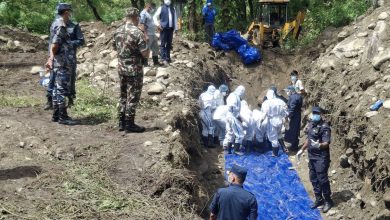
The devastating floods along the Bhotekoshi and Trishuli river systems have not only caused immense human and physical losses, but have also subjected Nepal’s disaster management system to a severe test.
Security personnel, health workers, local representatives, volunteers and international partners are working around the clock. Large quantities of relief materials are also being collected. Yet there is a fundamental difference between relief being available in warehouses and relief actually reaching those in need. That is now one of the biggest challenges.
The federal government has adopted a one-door relief distribution system. In principle, this is a sensible approach. During a disaster, coordinated distribution is necessary to prevent duplication, misuse, unequal access and confusion. But if the one-door system itself becomes a bottleneck, it defeats its own purpose.
Reports have emerged that relief materials are accumulating at intermediate locations, while affected communities further ahead continue to face shortages. Local governments have complained about delays, while responsibilities among federal, provincial and local authorities are not always clearly defined. If relief is piled up in Battar while victims beyond that point remain without food and shelter, the problem is not a lack of assistance. It is a failure of delivery.
In a disaster, results matter more than administrative authority.
The federal government must mobilize national resources, the Army, Police, helicopters, international assistance and central coordination. Provincial governments should serve as effective bridges among affected districts and agencies. Local governments, meanwhile, are best placed to know which families need food, medicine, shelter or evacuation.
These are not three separate states. They are three tiers of the same state serving the same citizens.
What is needed now is not a longer chain of command, but a shorter distance between decision and action.
Information on which villages need food, where medicines are running out, where tents are required, where bodies need identification, where roads remain blocked and where only helicopters can reach must be updated continuously. A single national coordination mechanism should share such information in real time among federal, provincial and local governments and security agencies.
International assistance must also be linked directly to operational needs.
China has provided relief materials, tunnel rescue experts and technical assistance. Other friendly countries are also extending support. Nepal should deploy such assistance according to need rather than volume. Specialists should go where specialized rescue is required, heavy equipment where roads are buried, and air transport where communities remain cut off.
At the same time, disorder in the name of relief must be prevented. Unauthorized entry into flood-damaged houses and buildings can lead to theft, destruction of evidence and further accidents. Nepal Police has rightly warned against such activity. But security procedures should not create unnecessary barriers for genuine humanitarian workers and volunteers.
Another urgent challenge is supply security.
With highways disrupted, pressure is already growing on petroleum products, cooking gas, vegetables and other essential goods. The government should organize alternative transport routes, fuel distribution and market monitoring immediately. Effective governance means preventing shortages before they emerge, not responding after they become crises.
Nepal now needs coordination, not competition among levels of government. The question is not who receives credit. The question is who successfully delivers relief to affected citizens.
Money in a relief fund is not an achievement by itself. Supplies in a warehouse are not success. Helicopters flying overhead are not enough either.
Success is when a family in an isolated village receives food on time, an injured person receives treatment, the family of a missing person receives verified information, and a citizen at risk is moved to safety.
A disaster does not measure the size of the state. It measures the reach of the state.
This is the moment for Nepal to prove that reach.