Nepali Communist Party Leader Dev Prasad Gurung Calls for Immediate Study of Dona Glacial Lake

Dragon Media Correspondent
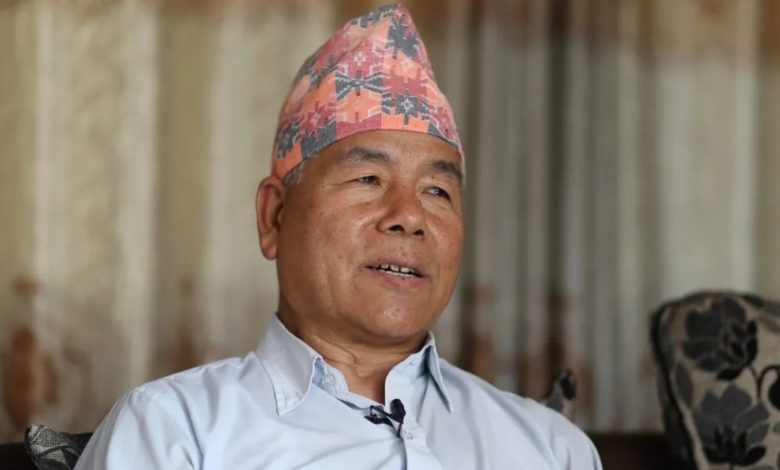
Nepali Communist Party leader Dev Prasad Gurung has called on the government to immediately conduct a scientific study and survey of the Dona glacial lake in Naso Rural Municipality Ward No. 2 of Manang to assess its potential risk.
In a social media statement, Gurung urged the government to take seriously the current condition of the lake and the possible threat it could pose to downstream areas along the Marsyangdi River. He said a reliable assessment is necessary to determine the lake’s actual condition, potential hazards and the level of preparedness required.
According to Gurung, Dona Khola, a tributary of the Marsyangdi River, flows from the eastern side of Dharapani, which lies at an elevation of around 1,850 metres above sea level. The source of the stream is the Dona glacial lake, located approximately 13 kilometres upstream near the northwestern foothills of Mount Manaslu.
He said the lake is situated at an elevation of around 4,400 metres and stretches in an elongated northwest-to-southeast direction. According to his assessment, the lake is approximately 3,200 metres long and 354 metres wide.
Gurung noted that people who had previously visited the area had repeatedly raised concerns that the glacial lake could pose a potential hazard. However, he said no sufficiently reliable and updated scientific survey has yet established its present risk level.
He warned that the absence of a comprehensive assessment means communities and infrastructure in downstream areas along Dona Khola and the lower Marsyangdi corridor could remain exposed to an uncertain level of risk.
Gurung urged the government to deploy a team of relevant experts and technicians to assess the lake’s water volume, surrounding glacier conditions, stability of its natural moraine barrier, geological conditions and the potential for a glacial lake outburst flood.
He stressed that an updated scientific assessment is essential to determine the actual level of danger and to establish appropriate monitoring, early-warning and disaster preparedness measures for downstream communities.