Russia Highlights Protection of Lake Baikal, World’s Deepest Lake

Dragon Media News Desk
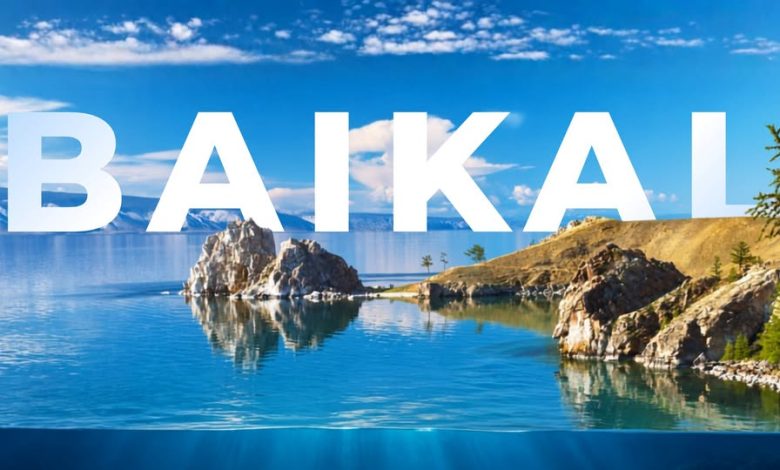
Russia is placing special emphasis on protecting Lake Baikal, the world’s deepest lake and the largest natural reservoir of freshwater by volume. Lake Baikal Day is observed across different Russian regions from August through September with environmental, educational and cultural programmes aimed at raising awareness about preserving its unique ecosystem.
There is no single date for Lake Baikal Day because the lake spans several regions of the Russian Federation, including Irkutsk Region, the Republic of Buryatia and Zabaykalsky Krai.
In Buryatia, Lake Baikal Day is observed on the first Sunday of August, while Irkutsk Region marks it on the first Sunday of September and Zabaykalsky Krai on the second Sunday of September.
The different dates allow environmental and public-awareness activities to continue over several weeks, drawing sustained public attention to Lake Baikal and the importance of protecting its unique ecosystem.
Lake Baikal Day was first established in 1999 at the initiative of public organisations and environmentalists. The move followed Baikal’s inclusion on the UNESCO World Heritage List in 1996, which increased international recognition of the lake’s environmental significance.
UNESCO recognised Baikal for its exceptional geological characteristics, which are important to understanding the Earth’s evolutionary history, as well as for the extraordinary richness and diversity of its flora and fauna. Its World Heritage status confirmed the lake’s global environmental value.
Russian Minister of Natural Resources and Environment Alexander Kozlov said preserving Lake Baikal and its ecosystems is one of the priorities of Russia’s state environmental policy.
According to Kozlov, a network of specially protected natural areas has been established to safeguard the lake and surrounding ecosystems. Russia’s first nature reserve, the Barguzinsky Nature Reserve, was also established on the shores of Lake Baikal.
Lake Baikal stretches approximately 636 kilometres from southwest to northeast in the shape of a giant crescent. Its width ranges from 24 to 79 kilometres, while its water surface covers approximately 31,722 square kilometres, excluding islands. Its shoreline extends for more than 2,000 kilometres.
With a maximum depth of 1,642 metres, Baikal is the deepest lake on Earth. Its average depth is approximately 744 metres.
The lake contains around 23,615 cubic kilometres of water and is regarded as the world’s largest natural reservoir of freshwater by volume. It holds approximately 20 percent of the world’s unfrozen surface freshwater.
Baikal is also exceptional for its biodiversity. Around 2,600 species of animals and plants are found in and around the lake, with an estimated 60 to 70 percent being endemic, meaning they occur nowhere else on Earth.
Among its best-known species is the Baikal seal, or nerpa, the world’s only exclusively freshwater seal species.
Against the backdrop of climate change, pollution and increasing pressure on natural ecosystems, Lake Baikal Day is viewed not merely as a cultural celebration but also as an opportunity to reinforce responsibility for protecting one of the planet’s most important freshwater reserves and unique centres of biodiversity.