Europe’s Crisis Is the Result of Western ‘Systemic Errors,’ Putin Says


Dragon Media News Desk
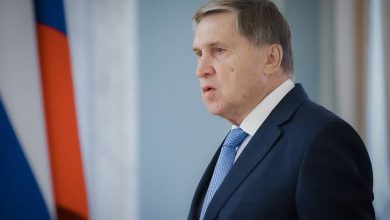
Russian President Vladimir Putin has described Europe’s current political, security and economic difficulties as the result of long-term “systemic errors” made by Western policy circles. Answering a media question at the end of the first day of his working visit to India, Putin focused particularly on Europe’s energy problems, security relations with Russia and what he portrayed as deeper flaws in the political approach taken by Western governments.
Putin said Russia had once been included in the Group of Eight, but argued that this did not amount to full-fledged membership in the real sense. He presented the experience as an example of what Moscow sees as the unequal treatment of Russia within Western institutional structures, suggesting that Russia was given only a limited place rather than being accepted as an equal participant.
Turning to the economy, Putin said energy was currently Europe’s most pressing problem. He argued that gas prices on European exchanges were being shaped less by producers than by market traders, who were drawing on gas purchased earlier at lower prices from storage facilities. According to Putin, such behavior could contribute to significantly higher prices in the future, potentially reaching 1,500 dollars or euros per 1,000 cubic metres. His assessment represents a political and market forecast rather than a guaranteed outcome, as European gas prices remain influenced by supply, demand, weather, storage levels and import conditions.
On security, Putin accused Western countries of applying pressure on Russia through different means over an extended period. He alleged that this initially involved support for terrorists and separatists in the Caucasus before shifting to other methods. He also used highly charged language to characterize the current Ukrainian government, presenting the conflict in Ukraine as part of a continuing Western strategy to weaken Russia. That description reflects the Kremlin’s official political narrative and is not a universally accepted characterization internationally.
Putin further accused European leaders of frightening their populations by promoting what he called a “mythical Russian threat.” He said Russia does not threaten European countries and has no intention of doing so, rejecting the idea that Moscow has maintained a permanent aggressive posture toward Europe dating back to the Soviet period.
The remarks once again highlighted the depth of strategic mistrust between Russia and Europe. Moscow continues to portray Europe’s security and energy difficulties largely as consequences of Western policy choices, while European governments generally view Russia’s military conduct, the war in Ukraine and broader regional security dynamics as serious threats. Putin’s comments therefore reflect not only a response to current events but also the wider political and strategic confrontation that continues to shape Russia-West relations.