Évariste Ndayishimiye Brings an African Voice to BRICS as Media Focus on Peace, Agricultural Transformation and Global South Representation

Dragon Media News Desk
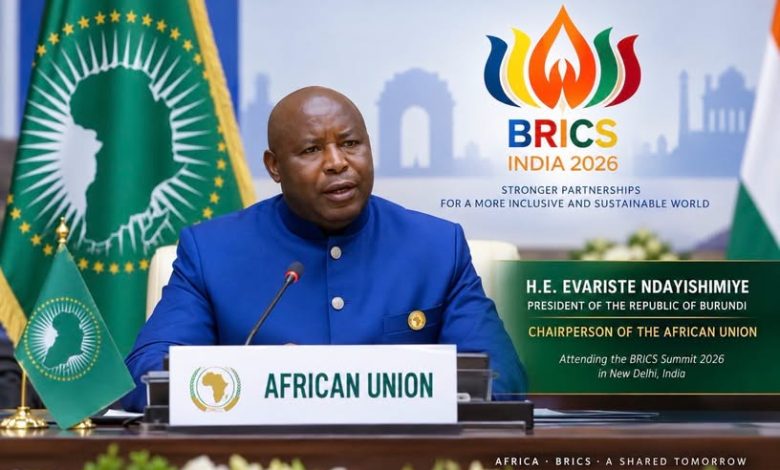
Burundian President Évariste Ndayishimiye’s participation in the 18th BRICS Summit in New Delhi has carried particular significance for Africa’s collective voice and the growing representation of the Global South. Attending in his capacity as Chair of the African Union, Ndayishimiye has represented not only a small East African country but also the broader aspirations of the 55-member continental organization on development, peace, economic transformation and reform of global governance.
Burundi is neither a full BRICS member nor a partner country. Ndayishimiye’s participation has therefore been significant because of his African Union leadership role. With South Africa, Egypt and Ethiopia already represented among BRICS members and other African states participating through partner arrangements, the presence of the African Union chair has added a continental dimension to the grouping’s engagement with Africa.
Africa’s population, natural resources, youthful workforce and future consumer market are becoming increasingly important to the global economy. Yet many African countries continue to face infrastructure deficits, heavy debt burdens, weak industrial bases, food insecurity and limited access to advanced technology. Ndayishimiye’s presence has provided an opportunity to connect BRICS discussions on multipolarity with these practical development challenges.
Burundi itself remains heavily dependent on agriculture, with a large share of its population directly or indirectly reliant on the sector. Increasing agricultural productivity, expanding irrigation, improving seed technology, strengthening fertilizer access, building storage systems, developing food processing and widening market access are therefore fundamental to the country’s economic transformation.
The same challenge applies across much of Africa. The continent possesses vast agricultural land and a young labor force, yet many countries remain dependent on food imports. Unless economies move beyond exporting raw agricultural commodities and importing processed goods, Africa will struggle to convert its agricultural potential into lasting economic strength. Ndayishimiye’s development outlook therefore places importance on stronger links between production, processing and regional trade.
BRICS cooperation could become particularly practical in this area. India’s experience in agricultural research and pharmaceuticals, China’s infrastructure and manufacturing capacity, Brazil’s agricultural technology, Russia’s strength in energy and food production, and investment resources from other emerging economies could complement African development needs. The real test, however, will be whether cooperation produces projects, skills and local production rather than remaining limited to major declarations.
Peace and security are also closely connected to Ndayishimiye’s international role. Africa’s Great Lakes region has long faced armed conflict, cross-border insecurity, refugee movements and humanitarian crises. Burundi’s geography makes regional stability directly relevant to its national interest. Development, state capacity and peace therefore cannot be treated as separate issues.
His participation also gives BRICS an opportunity to recognize the importance of African-led approaches to peace and security. Across the continent, there is growing emphasis on solutions driven by the African Union and regional organizations rather than externally designed formulas. Local political dialogue, economic reconstruction and development programs are increasingly seen as essential to durable stability.
Africa’s youthful population represents another decisive factor. The continent is the youngest in the world, and its share of the global workforce is expected to rise substantially in the coming decades. This demographic profile can become a major source of economic growth if countries are able to create adequate education, skills, industries and employment. Without such opportunities, unemployment, informal economic activity and migration pressures could increase.
Ndayishimiye’s BRICS participation can therefore also be viewed through the lens of technology transfer, technical education, industrial skills and small-enterprise development. Long-term South-South cooperation will ultimately be judged by whether African countries are treated merely as suppliers of raw materials and consumer markets or as partners in production, industrialization and innovation.
India-Africa relations are particularly relevant in this context. India has long expanded cooperation with African countries through education, healthcare, pharmaceuticals, information technology, capacity building and development partnerships. For smaller developing economies such as Burundi, affordable technology, medicines, digital services and technical training can be especially valuable.
Digital transformation offers Africa an opportunity to overcome some traditional development constraints. Mobile banking, digital payments, distance education, telemedicine, agricultural information services and electronic government systems can expand services even where physical infrastructure remains limited. If experience from India and other BRICS countries is adapted to local conditions, countries such as Burundi could benefit considerably.
The greatest political significance of Ndayishimiye’s participation as African Union chair lies in the debate over global governance reform. Africa has a large voting presence in the United Nations but remains underrepresented in many of the world’s most powerful decision-making structures. From the UN Security Council to global financial institutions, African countries have long demanded representation more consistent with the continent’s population and political importance.
If BRICS is to strengthen the voice of the Global South, Africa’s representation cannot be reduced to simply increasing the number of participating countries. The grouping will need to engage seriously with African priorities on debt, development finance, technology access, climate finance, industrialization and reform of international institutions if it wants to build long-term credibility across the continent.
The African Continental Free Trade Area is another important part of this picture. If efforts to reduce trade barriers and create a larger common market for goods, services and investment succeed, Africa could emerge as one of the world’s major economic centers. For BRICS investors and industries, this would encourage a shift from viewing Africa as a collection of fragmented national markets toward seeing it as an increasingly integrated continental economy.
For landlocked countries such as Burundi, regional roads, railways, energy networks and access to seaports are especially important. Infrastructure projects designed around continental trade rather than isolated national boundaries could lower production costs and improve export competitiveness. BRICS development finance and infrastructure experience could play a practical role in this process.
Climate change is equally inseparable from Africa’s development agenda. Although the continent contributes a relatively small share of global greenhouse gas emissions, it is highly vulnerable to drought, floods, food insecurity and pressure on water resources. Climate finance, adaptation technology and clean-energy investment must therefore remain central to Africa’s development strategy.
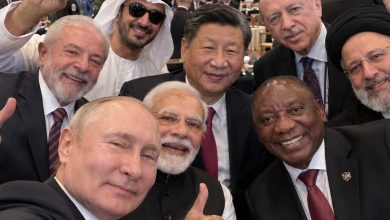
While Xi Jinping represents China’s industrial capacity, Vladimir Putin Russia’s strategic influence, Narendra Modi India’s diplomatic balancing role and various BRICS members and partners bring their national priorities to the table, Évariste Ndayishimiye has added the broader perspective of the African Union. His presence is distinctive because it connects the summit not only with one country, but with the long-term development and representation of an entire continent.
The positive message from New Delhi is clear. A credible multipolar order will require both large and small African countries to gain meaningful access to development finance, technology, markets and global decision-making. Simply shifting the balance of power among major states will not be enough. Any new international structure must also become more inclusive for developing societies.
In this sense, Évariste Ndayishimiye’s participation in the BRICS Summit goes far beyond Burundi’s diplomatic presence. As Chair of the African Union, his appearance in New Delhi has highlighted the potential to deepen institutional dialogue between BRICS and Africa, accelerate agricultural and industrial transformation, and connect the idea of a multipolar Global South with the practical development needs of African countries.