Questions Over Internal Management of Nepal’s Rudradhwaj Battalion in Congo: Serious Allegations Require Independent Verification

Dragon Media Correspondent
Nepal’s contribution to United Nations peacekeeping is one of the Nepal Army’s most significant international achievements. That reputation makes allegations of financial opacity, weak logistics, poor maintenance, uneven enforcement of discipline or declining confidence in leadership within any peacekeeping contingent matters that cannot simply be dismissed as internal dissatisfaction. At the same time, serious allegations are not the same as proven wrongdoing. That distinction is essential when examining complaints concerning the 32nd contingent of the Rudradhwaj Battalion deployed with the United Nations mission in the Democratic Republic of the Congo.
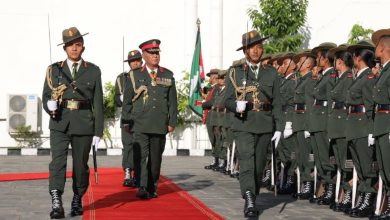
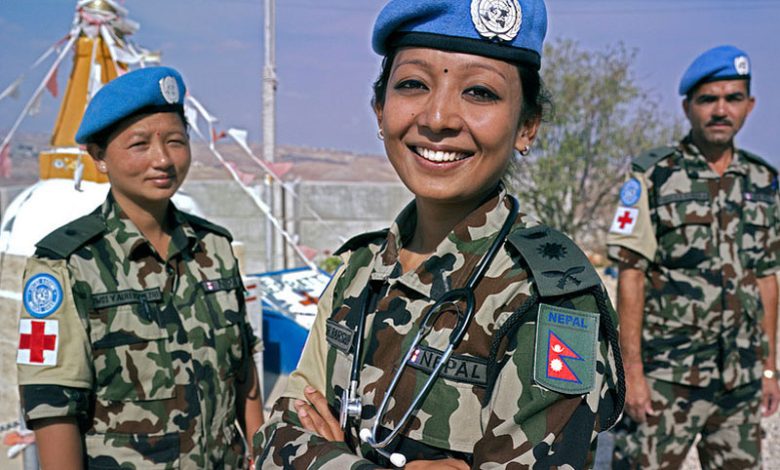
Publicly available records confirm that the 32nd peacekeeping contingent of the Rudradhwaj Battalion was deployed to the MONUSCO mission in February and March 2026, replacing the 31st contingent of the Chandandal Battalion. In the final phase of the rotation, 238 Nepali peacekeepers arrived in the mission area. At the time, a total of 969 Nepal Army personnel were serving with MONUSCO. MONUSCO records from July 2026 identify Colonel Deepak Khadka as commander of the Nepali contingent.
The publicly documented record of the contingent’s operational performance is not negative. MONUSCO’s Force Commander publicly praised the professionalism, discipline and performance of Nepali peacekeepers in the Mongbwalu area. The Nepali contingent’s base at Fataki was described as an important security presence for civilian protection and displaced communities. Nepali peacekeepers have also been reported conducting patrols, securing health facilities, protecting bridge-repair activities and helping facilitate civilian movement in parts of Ituri.
This creates an important distinction. Strong operational performance in the field does not automatically mean that internal administration, financial management and troop welfare are free of problems. Conversely, complaints from individual soldiers or officers do not prove that an entire command is at fault. A responsible investigation must examine operational performance and internal management separately.
Information provided to Dragon Media alleges that logistics, welfare arrangements and maintenance standards have deteriorated, that proposed improvements are sometimes rejected on budgetary grounds, and that officer participation in regular physical training is limited. It further alleges that a significant number of officers have failed to meet prescribed physical standards. Other claims include possible reconciliation of bills without corresponding purchases, assignments allegedly tailored to benefit particular individuals, delayed vehicle maintenance, the posting of officers to remote positions after raising internal concerns, and the alleged involvement of lower ranks in alcohol-related trading activities. These are serious allegations. However, they have not yet been independently verified through publicly available records.
Several middle- and junior-ranking officers are named in the complaints, but their specific responsibilities, appointments and alleged conduct cannot be independently established from open records. It would therefore be inappropriate, on the evidence currently available, to directly portray those individuals as responsible for corruption, misconduct or other offences. Colonel Deepak Khadka’s position as contingent commander is publicly confirmed, but no independent public documentation has been identified that substantiates the financial or administrative allegations made against his leadership.
Logistics and equipment management in a United Nations peacekeeping mission are not simply internal military matters. The United Nations and troop-contributing countries operate under formal arrangements defining requirements for personnel, major equipment, self-sustainment, communications, office facilities, electricity, sanitation, medical support, welfare equipment and other services. Once deployed, equipment and services are subject to verification and inspection. Reimbursement is linked to these assessments, and deductions may occur when required major equipment is unavailable or remains non-operational.
Claims such as “there is no budget,” “vehicles cannot be operated,” “maintenance cannot be carried out,” or “bills were adjusted without actual purchases” are therefore capable of being tested against records rather than opinion. A serious investigation would need to examine MONUSCO’s Contingent-Owned Equipment inspection and verification reports, vehicle serviceability records, maintenance logs and spare-parts documentation. Procurement requests, approvals, quotations, purchase orders, goods-received records, store entries, inventory accounts, invoices, payment vouchers and banking records would also need to be cross-checked.
Welfare and logistics accounts should be examined alongside records of funds received, expenditures, inventories and beneficiaries. Claims regarding physical standards could be tested against official fitness assessments, body-weight and medical records, physical training attendance and authorized exemptions. Questions concerning appointments and alleged favoritism could be examined through posting orders, seniority records and formal justifications for assigning particular responsibilities.
Vehicle logbooks, mileage records, fuel consumption, maintenance requests, work orders and completion certificates would provide a factual basis for assessing allegations of poor maintenance. If there are official records involving the purchase, storage, sale or distribution of alcohol, those records should also be reviewed. Any earlier complaints reportedly submitted through the chain of command, inspection reports, courts of inquiry or internal investigative decisions would be particularly important in determining whether concerns were previously raised and how they were handled.
If these records are internally consistent, many of the allegations could be quickly dismissed. If they are inconsistent, the questions become more serious. Documentation should be capable of showing whether equipment was genuinely unavailable, whether equipment existed but was not used, whether budgetary resources were actually insufficient, whether allocated funds remained unused, and whether items listed as purchased were physically received.
The disciplinary and legal dimensions are equally important. The United Nations expects the highest standards of professional and personal conduct from peacekeepers. Members of military contingents remain under the national jurisdiction of their troop-contributing country, meaning that the primary responsibility for investigating serious allegations rests with the country that deployed them. Routine disciplinary matters may be addressed at contingent level, but allegations involving financial irregularities, misuse of public resources or serious misconduct require formal scrutiny.
Nepal’s military law does not treat indiscipline, misuse of alcohol, misuse of government property, fraud, corruption or negligence as minor administrative weaknesses. If proven, such conduct could fall within military disciplinary or corruption-related offences. If allegations that bills were reconciled without actual procurement or that government or mission resources were misused prove true, the matter would go well beyond personal disagreement and require legal investigation. At the same time, it would be equally unjust to declare individuals guilty without evidence.
The most important feature of the Rudradhwaj Battalion case is the contrast between two emerging pictures. Externally, MONUSCO has praised Nepali peacekeepers for professionalism, discipline and contributions to civilian protection. Internally, complaints have raised questions about leadership, financial transparency, troop welfare, maintenance and equal enforcement of discipline. These two pictures do not necessarily cancel each other out. A unit can perform effectively in operations while still experiencing weaknesses in internal administration. The reverse can also be true. A serious investigation must determine where the facts lie.
The appropriate response at this stage is therefore neither to declare anyone guilty nor to dismiss the allegations. What is required is an independent, record-based review. The Nepal Army can examine whether complaints were formally received, what action was taken, how procurement and welfare accounts were managed, whether vehicles remained serviceable and whether physical fitness requirements were uniformly enforced. Where necessary, those findings can be compared with MONUSCO equipment-verification reports and mission-level documentation.
Nepal’s peacekeeping reputation, built over decades of international service, does not belong to any single commander, battalion or contingent. It is institutional capital belonging to the Nepal Army and to the country. Suppressing serious complaints is not the same as protecting that reputation. Nor is presenting unverified allegations as established fact. The safest course is an impartial investigation, an opportunity for all concerned parties to respond, and conclusions based on documentary evidence.
The real answer to the questions surrounding the Rudradhwaj Battalion will not be found in social media claims, internal grievances or defensive statements. It will be found in store ledgers, invoices, payment vouchers, vehicle logbooks, maintenance records, fitness results, posting orders and United Nations inspection documents. Once those records are independently reconciled, the truth should not remain difficult to establish.