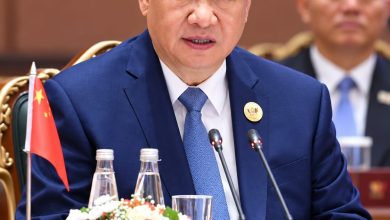
The New Delhi Declaration and BRICS’ New Phase: Towards a More Balanced, Cooperative and Inclusive World Order

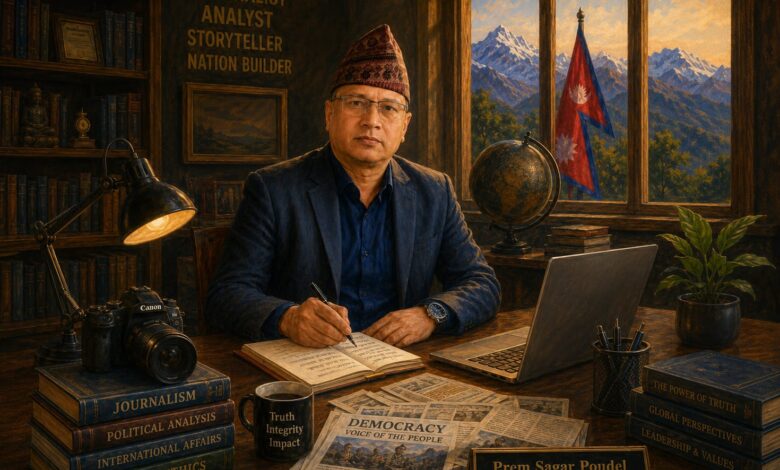
Prem Sagar Poudel
World politics is moving through a period marked simultaneously by the expansion of multipolarity and deepening geopolitical polarization. Traditional centres of power remain influential, but their dominance over international decision-making is gradually narrowing. New centres of economic capacity, technological innovation, energy strength, demographic weight and political influence are emerging. It is against this backdrop that the 140-point declaration adopted at the 18th BRICS Summit in New Delhi should be understood. To portray it as an anti-Western manifesto would be an exaggeration. To dismiss it as another routine diplomatic statement would be equally misleading. Its central message is clear: not confrontation, but rebalancing.
From an Economic Concept to a Global Platform for Cooperation
The evolution of BRICS reflects the changing structure of the global economy. The term “BRIC,” originally used in 2001 to describe the emerging potential of Brazil, Russia, India and China, began primarily as an economic concept. Formal dialogue among the foreign ministers of the four countries began in 2006, followed by the first summit in Yekaterinburg in 2009. With South Africa’s subsequent inclusion, BRICS acquired a broader institutional identity. Today, it has evolved into a multidimensional platform encompassing politics, development, finance, technology, energy, security, culture and people-to-people cooperation.
The New Delhi Declaration carries this evolution forward. BRICS is not seeking to replace the United Nations; it is seeking to make it more representative. It is not rejecting the International Monetary Fund or the World Bank; it is calling for a stronger voice and greater participation for developing economies within them. Nor does it seek to weaken the World Trade Organization. Instead, it supports a more effective rules-based multilateral trading system. The G20, likewise, is recognized as an important forum for global economic cooperation. In this sense, BRICS appears less as a force seeking to dismantle the existing multilateral order than as a reform-oriented grouping seeking to align it more closely with contemporary global realities.
BRICS should not be viewed as a replica of the G7, G20, Shanghai Cooperation Organisation or NATO. Each has a distinct historical background and institutional purpose. The defining characteristic of BRICS is its diversity. Major powers such as China, India and Russia sit alongside Brazil, South Africa and newer members with different political systems, stages of development and regional priorities. Its principal strength lies in its ability to transform this diversity into consensus-based cooperation.
An Institutional Philosophy of Cooperation Rather Than Confrontation
BRICS can be understood through three major schools of international relations theory. Liberal institutionalism holds that states can cooperate through shared institutions and rules even while competing with one another. BRICS’ preference for reforming, rather than displacing, the United Nations, WTO, IMF and World Bank reflects this logic.
Structural realism places power distribution and national interest at the centre of international politics. China’s economic and technological capacity, India’s rapid growth and demographic weight, Russia’s energy and strategic capabilities, Brazil’s agricultural and industrial base, and South Africa’s diplomatic significance in Africa give BRICS substantial material weight. Yet the New Delhi Declaration suggests that this power is intended to be exercised primarily through multilateral cooperation rather than zero-sum competition.
From a constructivist perspective, the political meaning of the “Global South” is equally important. BRICS presents the developing world not as a single political bloc, but as a broad constituency of countries whose representation in international decision-making has often been inadequate. BRICS, therefore, is not fundamentally a project to reject international rules. It raises a more consequential question: who shapes those rules, and whose voices are adequately heard?
Financial Diversification, Not an Anti-Dollar Agenda
External debate about BRICS often focuses disproportionately on local currencies and the future of the US dollar. Yet Point 90 of the New Delhi Declaration is notably measured. It calls for faster, cheaper, safer and more accessible cross-border payments, greater technical connectivity among members’ payment and financial messaging systems, and increased trade and investment in local currencies according to national priorities.
It is more accurate to view this as an effort to broaden financial options rather than a programme to eliminate the dollar. The dollar’s global position rests not simply on its use as a currency, but on deep capital markets, liquidity, legal credibility and an extensive trading and financial architecture. The declaration gives no indication that BRICS intends to displace this system abruptly. Instead, it seeks to reduce transaction costs, diversify financial risks and provide member states with additional options.
The New Development Bank is an important achievement in this regard. Established with authorized capital of US$100 billion, it has expanded its involvement in infrastructure, clean energy, transport, water, urban development and digital projects. The Contingent Reserve Arrangement adds another layer of financial protection in periods of instability. Together, these mechanisms have helped move BRICS gradually beyond political dialogue towards implementation-oriented cooperation.
Challenges remain. New financial mechanisms require scale, credibility and wider participation from the private sector. Yet the emergence of additional financial options need not weaken existing institutions. Greater diversity can also strengthen the resilience of the international financial system as a whole.
China, India and Russia: Significant Potential for Cooperation Amid Competition
The future influence of BRICS will be closely connected to cooperation among China, India and Russia. Their national interests are not identical. Nevertheless, there is considerable common ground in expanding the representation of developing countries in international institutions, strengthening multilateralism, reducing unnecessary trade barriers, enhancing energy security and widening access to technology across the developing world.
The China-India relationship is particularly significant. Despite complexities relating to the border and strategic competition, the two countries are ancient civilizations, major economies and pivotal actors in the emerging international order. BRICS provides them with an institutional space to sustain dialogue and pursue common interests beyond areas of disagreement. Greater China-India cooperation in trade, climate action, development finance, health, artificial intelligence and multilateral reform could contribute positively not only to BRICS, but also to the stability and development of Asia as a whole.
India’s 2026 chairship has played an important diplomatic role in building consensus, advancing a development-oriented agenda and bringing a diverse membership together around a common declaration. China has reinforced the grouping’s economic foundations through its industrial capacity, trade, technology and infrastructure experience. Russia has made a long-term contribution in energy, science, security dialogue and the conceptual development of a multipolar international order. Brazil and South Africa have added important perspectives on development, social inclusion and the representation of the Global South. BRICS’ long-term success will depend on its ability to connect these capabilities in complementary rather than competitive ways.
Security: A Process of Building Common Principles
The New Delhi Declaration also gives priority to dialogue and diplomacy on security issues. Its common positions on Palestine, Gaza, Lebanon, Syria, Sudan, nuclear risks and international humanitarian law indicate that BRICS does not intend to remain detached from questions of global security.
Point 40 on terrorism is particularly significant. While condemning the April 22, 2025 terrorist attack in Jammu and Kashmir, the declaration calls for cooperation against the cross-border movement of terrorists, terrorist financing and safe havens. It also emphasizes that terrorism should not be associated with any religion, nationality, civilization or ethnic group, and rejects double standards in combating terrorism.
Achieving such common language among countries with diverse security experiences is itself significant. Differences will not disappear overnight. But the success of multilateral diplomacy does not depend on bringing every country to an identical position. It depends on expanding the areas in which cooperation remains possible despite differences. BRICS appears to be pursuing precisely that approach.
Technology: A Shared Agenda for the Future
One of the most forward-looking elements of the New Delhi Declaration concerns artificial intelligence and digital cooperation. Point 81 recognizes AI as a driver of economic growth and sustainable development while emphasizing safety, reliability, inclusion and accessibility. Taken together with proposals on digital public infrastructure, cyber security, quantum technologies, research networks, submarine communication cables and intellectual property, the declaration demonstrates that BRICS is taking the emerging architecture of global power seriously.
China’s industrial and artificial intelligence capabilities, India’s digital public infrastructure and large technology workforce, and Russia’s scientific research capacity need not be viewed solely through the lens of competition. Effective institutional cooperation could create substantial opportunities for joint research, technological standards and wider access to technology across developing countries.
The real measure of success will be whether smaller and less developed economies become not merely consumers of technology, but participants in knowledge creation, skills development and production networks. Such a transformation would give BRICS’ technological agenda enduring significance.
Balancing Energy, Climate and Development
Points 64 to 67 on energy reflect a development-centred approach. The declaration recognizes the roles of renewable energy, hydropower, nuclear power, hydrogen, energy storage and fossil fuels according to differing national circumstances. At the same time, it reaffirms commitments to the Paris Agreement, climate adaptation, biodiversity, climate finance and disaster-resilient infrastructure.
This approach reflects the realities facing developing countries. Energy security, industrialization, poverty reduction and emissions reduction must often be pursued simultaneously. China’s clean-energy manufacturing capacity, India’s expansion of renewable energy, Brazil’s experience in bioenergy and Russia’s expertise in energy and nuclear technology could provide important foundations for complementary cooperation.
If such cooperation expands, the energy transition could become more affordable, practical and inclusive for developing countries.
The Global South: Shared Interests Within Diversity
The Global South is not a single political or economic entity. Africa, South Asia, Latin America and the Middle East have different needs and priorities. Yet debt sustainability, infrastructure finance, access to technology, food security, energy, climate adaptation and representation in international institutions provide substantial areas of common interest.
The significance of BRICS does not depend on claiming to speak for every developing country. Its importance lies in its capacity to bring the concerns of developing economies closer to the centre of the international agenda. The New Delhi Declaration gives that role a more institutional character.
What It Means for Nepal: Turning Opportunity into Institutional Policy
For Nepal, BRICS should not be approached as a question of taking sides. It is a question of national interest. Nepal is not a BRICS member, yet its geography between India and China, hydropower potential, Himalayan environment, infrastructure requirements and digital transition make several areas of the BRICS agenda directly relevant. Nepal should therefore prioritize practical preparation over political debate.
First, institutional preparedness is essential. A permanent study and coordination mechanism could be established under the joint leadership of the Ministries of Foreign Affairs and Finance, with participation from Nepal Rastra Bank, the National Planning Commission, and agencies responsible for energy, industry, communications and disaster management. Its purpose should be to identify concrete opportunities for Nepal in development finance, trade, energy, technology and climate cooperation. Nepal should also maintain a pipeline of bankable projects in power transmission, reservoir and pumped-storage hydropower, electric transport, climate-resilient infrastructure and digital systems.
Second, regional cooperation should be tied to measurable economic outcomes. Nepal’s expanding electricity trade with India should be developed into a stable, long-term and mutually beneficial market. Cooperation with China can be broadened in energy technology, infrastructure, green industries and potential future areas of trade. Balanced, transparent and project-oriented engagement with both India and China serves Nepal’s national interest.
Options for local-currency transactions should likewise be assessed on economic grounds. Nepal Rastra Bank could examine exchange-rate risks, foreign-currency reserves, trade structures and payment costs before considering phased use in areas where tangible benefits can be demonstrated. Such decisions should be guided by economic returns rather than political symbolism.
Third, Himalayan security and technology should become a new foundation for regional cooperation. Nepal has a direct interest in establishing permanent mechanisms with India and China for the real-time exchange of information on rainfall, river flows, glacial lakes, snowfall, satellite observations and weather systems. Because the Himalayas constitute a shared geography, cooperation in early warning, scientific research and rescue technologies serves a common humanitarian purpose.
In artificial intelligence and the digital sphere, Nepal can also benefit from China’s industrial and technological experience, India’s digital public infrastructure and the research capabilities of other BRICS countries. Such cooperation, however, should be anchored in national data security, privacy, domestic capacity-building and technology transfer. The objective should not be to become merely a market for imported technology, but to strengthen Nepal’s own capabilities.
Nepal’s policy formula can therefore remain straightforward: friendly relations with all, cooperation with every useful mechanism, and evaluation of each proposal according to national interest. The World Bank, IMF, Asian Development Bank, Asian Infrastructure Investment Bank, New Development Bank and other institutions should not be viewed as mutually exclusive choices, but as potentially complementary partners in Nepal’s development.
The Road Beyond New Delhi
The next phase of BRICS will be defined less by declarations than by implementation. Progress in local-currency transactions, development finance, artificial intelligence, energy transition and reform of global institutions will determine its long-term influence.
When China assumes the BRICS chairship in 2027, it will have an opportunity to further institutionalize the consensus achieved in New Delhi. India’s 2026 chairship has established a broad agenda and a foundation for cooperation. China has significant capacity to deepen that agenda through economic, technological and development initiatives. If the strengths of India, China, Russia, Brazil, South Africa and other members can be made increasingly complementary, BRICS could make an important contribution to transforming multipolarity from a language of geopolitical competition into a structure of practical cooperation.
To view BRICS merely as an alternative to the West is to define its potential too narrowly. Its more significant contribution may be to create greater voice, wider choice and more space for cooperation within the international system. Such an order does not need to be anti-Western. It can instead be more representative, more balanced and more inclusive.
For Nepal, the same perspective is relevant. Its friendly relationship with China, deep historical and economic ties with India, and longstanding friendship with Russia and other BRICS countries need not be placed within competing geopolitical camps. Expanding cooperation with all of them on the basis of national interest can itself become a source of Nepal’s long-term diplomatic strength.
History does not judge documents by their language alone.
It is not the length of a declaration, but the depth of its implementation, that writes history.
Author: Prem Sagar Poudel is a Nepali journalist, international affairs analyst and President of the Nepal-China Mutual Cooperation Society. For four decades, he has been engaged with issues relating to Nepal-China relations, South Asian diplomacy, regional security, economic cooperation and the changing international order. His writing and analysis focus particularly on China, India, Russia, BRICS, Himalayan security, the Global South and the evolution of a multipolar world order.
About the Author: Prem Sagar Poudel is a senior journalist and international relations analyst from Nepal. He has conducted in-depth studies on Nepal-China relations, the geopolitics of the Himalayan region, and Asian security issues.