All Four Engines Failed at 37,000 Feet: How a British Airways Flight Survived a Volcanic Ash Cloud

Dragon Media News Desk
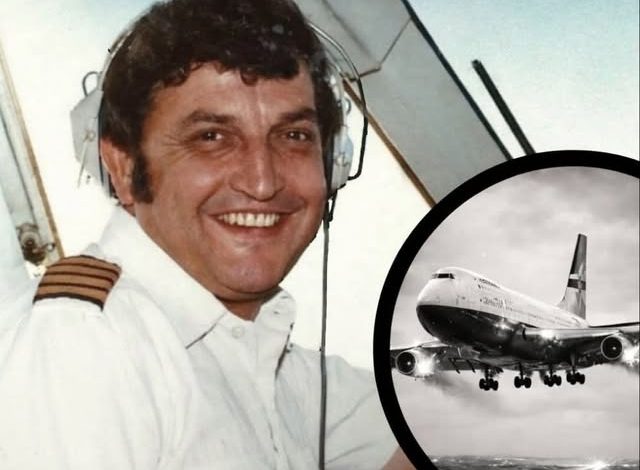
On June 24, 1982, a British Airways Boeing 747 flying from Kuala Lumpur, Malaysia, to Perth, Australia, lost power in all four engines at 37,000 feet, or about 11.3 kilometres. The aircraft had entered an ash cloud from Indonesia’s Mount Galunggung. It eventually made a safe emergency landing in Jakarta.
Into the Ash Cloud
Flight BA 009 was travelling from Kuala Lumpur to Perth when it encountered ash from Mount Galunggung. Volcanic ash is not like ordinary smoke or cloud. It contains tiny particles of rock and glass that can spread high into the atmosphere.
After the engines ingested the ash, their power began to fall and all four stopped. According to the World Meteorological Organization, the aircraft descended without engine power for about 16 minutes, reaching 12,000 feet, or roughly 3.65 kilometres. The crew then managed to restart three engines and divert to Jakarta.
Why the Engines Stopped
Jet engines operate at extremely high temperatures. When volcanic ash enters an engine, it can melt and build up on turbine surfaces and inside the gas-flow passages. The deposits can disrupt airflow, reduce engine power and cause an engine to shut down. NASA explains that melted volcanic material can accumulate inside engines and trigger this kind of failure.
An inspection after the incident found sandblasting-like damage on the aircraft’s leading edges, engine inlets, nose and cockpit windows. Volcanic material had also accumulated inside the engines. Investigators found no evidence that a fuel problem or ordinary mechanical failure had caused the shutdown.
The Crew’s Emergency Response
After the engines stopped, the crew descended in search of a safer altitude. Once the aircraft had left the thick ash cloud, three engines were restarted. The World Meteorological Organization says the descent helped the aircraft emerge from the ash.
The crew faced another challenge during the approach to Jakarta: ash particles had abraded the forward cockpit windows, leaving them almost opaque. The pilots landed using the limited view through a small, relatively clear section near the edge of a window. Everyone aboard survived.
Impact on Aviation Safety
Three weeks after the BA 009 incident, a Singapore Airlines Boeing 747 encountered ash from the same volcano. Two of its engines lost power, and the aircraft also diverted safely to Jakarta. The incidents showed that volcanic ash could do more than abrade an aircraft’s exterior or obstruct instruments: it could shut down jet engines.
In response, the International Civil Aviation Organization, the World Meteorological Organization and partner agencies developed procedures to get timely information about volcanic eruptions and ash clouds to pilots and airlines. The International Airways Volcano Watch system was also developed to help aircraft avoid affected areas.
Today, satellite observations, volcano monitoring, weather forecasts and analysis of ash-cloud movement and altitude help identify risks. The UK Met Office warns that dense ash entering a jet engine can stop it or cause serious damage. Timely coordination among airlines, weather agencies and aviation regulators remains essential for issuing eruption warnings, forecasting ash movement and adjusting flight routes.
The BA 009 incident was not only an example of a flight crew managing an emergency. It also helped establish volcanic ash as a serious threat to international aviation and prompted the development of global warning and coordination systems.