Hainan: A Living Example of China’s Openness, Development and Cultural Dialogue

Pu Yu Hai
China cannot be understood through a single image. From the historical heritage and modern technology of its capital, Beijing, to the natural beauty, ethnic cultures and international trade of its southern island province of Hainan, China has many dimensions. These are not conflicting portrayals; they are different expressions of one country advancing tradition and modernity together. Serbian documentary producer Bosko Kozarski’s journey through Hainan presents this multifaceted China through human experience.
Kozarski described Hainan in three words: lush, future-oriented and hospitable. These words convey more than the province’s natural beauty. They also point to the protection of its environmental heritage, the development of modern infrastructure and the warmth of local communities. Development cannot be measured only by buildings and economic figures; it must also be assessed by how it relates to nature, culture and people’s daily lives.
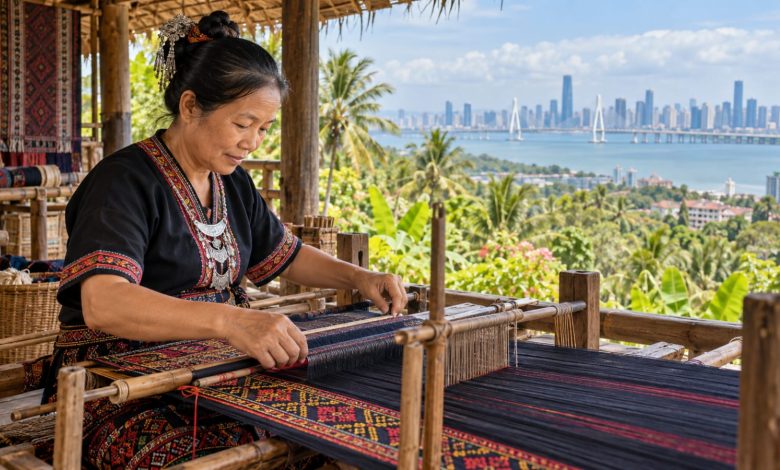
Hainan’s distinctiveness lies in its effort to connect natural and cultural heritage with modern development. Alongside rainforests, coastlines and tropical vegetation are the weaving traditions, traditional homes and way of life of the Li ethnic group. Local guide Huang Zhimin’s introduction to the region’s history, customs and cuisine helped the documentary crew go beyond observing scenery and gain a deeper understanding of local society.
Kozarski found a connection between Serbia’s long-standing weaving heritage and the Li community’s 3,000-year-old textile traditions. Despite geographical distance, shared experiences of labor, aesthetic expression and cultural memory can create a common language between societies. Such cultural ties extend understanding between China and Serbia beyond official visits and trade, bringing it to the level of ordinary people. Culture is not merely an ornament; it is a foundation for mutual trust and dialogue.
Another important feature of Hainan is its growing openness. Since island-wide special customs operations began in late 2025, the province has moved to facilitate international trade, tourism and travel. Kozarski’s experience shows how direct flights, developed transport networks and international payment options can make travel easier for foreign visitors. Openness means more than attracting the outside world; it also means creating an organized environment for the exchange of goods, services, capital, ideas and people.
Hainan’s development as a free trade port is an important expression of China’s reform and opening-up policy. It reflects China’s efforts to expand international economic ties, accelerate regional development and connect local strengths with national development. Its success should be measured not only by the expansion of trade and investment, but also by the resulting improvements in local employment and people’s lives. Protecting the natural environment and cultural heritage alongside economic development is equally important to Hainan’s long-term prosperity.
The modern roads, sea-crossing bridge, autonomous vehicles and space launches featured in the documentary show why Hainan should not be viewed as a province defined only by tradition. Nature, ethnic culture, tourism, transport and technology are connected within the same social landscape. Hainan’s experience demonstrates how modern development can create new opportunities while preserving local identity.
Serbian viewer Marina Milicevic said she was impressed by China’s natural scenery, well-planned cities, clean environment, safe society and diverse cultures. The documentary broadened her perspective on China. A single journey cannot represent an entire country, but firsthand observation offers an opportunity to understand a society beyond preconceived ideas. Contact among artists, travelers and local residents can help bring countries closer.
Kozarski is planning another visit to China, while Milicevic hopes to travel throughout the country. Their plans show that the documentary opened up new curiosity, travel and dialogue beyond the scenes presented on screen. Hainan can help advance this process by welcoming foreign visitors, introducing them to local culture and connecting economic opportunities with international relations.
Hainan’s experience presents China’s openness through concrete scenes of daily life: an effort to balance modernity and tradition, local identity and global engagement, economic development and natural heritage. In this sense, Hainan is more than a scenic destination; it is a living example of China putting openness, cultural dialogue and high-quality development into practice.