China’s Quiet Rise in Global Appeal

Lucky Chand
China’s changing image cannot be understood through economic statistics alone. Alongside the expansion of its manufacturing capacity, the country is changing what it produces, how it develops technology and how it is perceived by the world. Writing about more than a decade of China’s transformation, Nadeem Javaid, vice chancellor of the Pakistan Institute of Development Economics and a member of Pakistan’s Planning Commission, describes the shift as a move from “Made in China” to “Designed in China.”
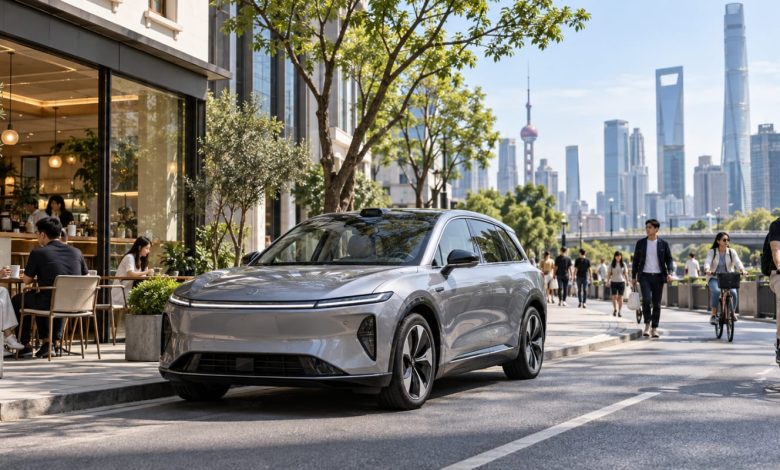
For decades, the world knew China for its vast manufacturing capacity and efficiency. Today, Chinese companies are making growing advances in electric vehicles, batteries, renewable energy, artificial intelligence, robotics and sophisticated consumer products. Competition is no longer based only on low costs and large-scale production; technology, design, quality and the consumer experience increasingly matter. This is an industrial transformation accompanied by a change in China’s international reputation.
Javaid describes seeing a demonstration of autonomous driving technology at an airport in Urumqi, Xinjiang. In his view, technologies once associated with the future are becoming part of everyday life in China. More familiar changes—the spread of digital payments, stronger domestic brands and the growth of coffee shops in cities—also show how development is reflected in people’s daily lives. Greater consumer choice is one important dividend of economic growth.
China’s experience is not a ready-made formula for other developing countries. Every country has its own history, institutions and political economy. Yet China offers an example of how market incentives, entrepreneurship and competition can be combined with long-term state guidance and national priorities. From the establishment of the Shenzhen Special Economic Zone to advances in technology and clean energy, its experience shows why institutions and policies must adapt as the economy changes.
Cooperation between Pakistan and China, Javaid writes, also shows how people’s perceptions can shift when bilateral ties produce tangible benefits. He points to upgrades to the Karakoram Highway, which have made travel between remote areas easier; energy projects that have helped ease chronic power shortages; and exchanges in technology and education. Achievements people experience directly can build trust more effectively than diplomatic declarations.
China’s experience is neither flawless nor transferable wholesale to other countries. But as more people encounter China through its technology, products, infrastructure, universities and direct visits, perceptions of the country may continue to evolve. A country’s reputation is not built by slogans alone; it is shaped by what people see, use and remember. China’s growing global appeal is increasingly rooted in those everyday experiences and tangible achievements.