Saudi Arabia Caught in the Crossfire of U.S. Strategy

Lucky Chand
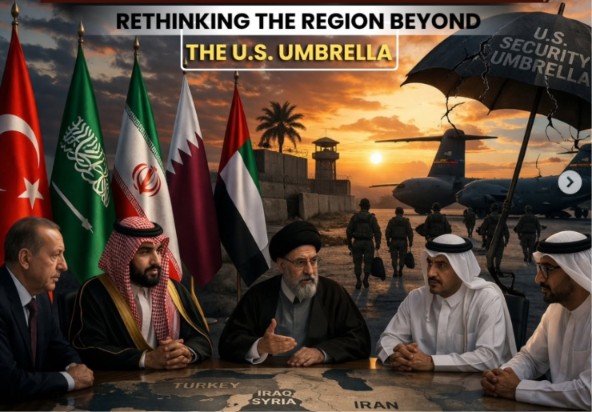
The escalating tensions in West Asia have exposed a hard truth: being under a superpower’s security umbrella is not the same as controlling one’s own security decisions. Saudi Arabia is confronting this contradiction. Its decades-long military relationship with the United States has provided weapons and security assistance, but it has not guaranteed protection from regional conflict. Instead, dependence on U.S. strategy has placed Saudi Arabia on the front line of risks shaped by others.
Accounts of the current crisis differ over the sequence of events and who was responsible. The July 13 attack on Sana’a airport, its purpose and Saudi Arabia’s role require independent verification. Reports that the Houthis declared the truce over and launched missile and drone attacks on Saudi Arabia should also be examined carefully. Claims that a major airport was shut down, an oil-processing facility halted operations or exports came to a complete stop should not be treated as established facts without official and independent evidence. Even so, such claims and retaliatory attacks pose serious risks to civilian safety and regional stability.
This is where U.S. policy faces sharp questions. For decades, Washington has expanded its influence in the Gulf through security partnerships, arms sales and a military presence. These ties have made Saudi leaders dependent on U.S. security assistance. Yet as a crisis deepens, there is no clear answer to how far that security umbrella extends, who bears its costs or where the limits of U.S. commitments lie. The United States sells weapons and benefits from security ties, while remaining thousands of miles from the Saudi territory exposed to direct danger. U.S. policy helps shape the structure of risk, but regional partners and ordinary people pay its immediate costs.
The problem with U.S. policy is not limited to its military role. Washington has often treated regional partnerships as instruments to be used in line with its own priorities. When U.S. strategic goals shift, its partners face pressure to adjust their policies as well. But there is no guarantee that Washington will assume full responsibility for protecting a partner once it has been drawn into a dangerous confrontation. If Saudi Arabia assumed that U.S. support meant unlimited protection, that was a serious strategic miscalculation. The United States, however, must also take responsibility for the security dependence and power imbalance that helped create that assumption.
The U.S. and Israeli military strategy against Iran has increased the risk of turning limited tensions into a wider regional crisis. Measures intended to weaken or pressure Iran can put more than Iran at risk: Gulf energy infrastructure, shipping routes, airports and civilian lives may also be affected. As Washington pursues a policy of pressuring its rival, the consequences can fall on Saudi Arabia and other Gulf states. This makes it difficult to describe U.S. strategy as a policy of regional peace. It prioritizes the display of power but appears unwilling to share responsibility for the instability that may follow.
Another contradiction in U.S. policy is also clear. Washington speaks of protecting shipping routes, civilians and a rules-based order, yet it does not always apply equal scrutiny to the military campaigns of its partners or their humanitarian and political consequences. Providing weapons and military assistance in the name of security, then treating the consequences of an escalating crisis as a local problem, is a double standard. Such a policy does not establish peace; it makes the parties more dependent on military solutions.
Saudi Arabia’s leadership, however, cannot be presented only as a victim. It must answer for its role in the Yemen war, its military decisions and its poor coordination with local partners. If Saudi responsibility for the attack on Sana’a airport is established, the incident cannot be dismissed as a routine security decision. Such actions can undermine confidence in negotiations and efforts to reduce tensions, while giving the Houthis grounds to retaliate. U.S. pressure or support may help explain Saudi decisions, but it does not absolve Saudi leaders of responsibility.
Framing this conflict as a Sunni-Shia war is even more dangerous. Yemen’s conflict is complex, rooted in local power struggles, regional competition, security concerns and political representation. Reducing every side to its religious identity obscures local causes and deepens hostility between communities. Reports that fighters from Iraq, Syria, Lebanon, Oman or Bahrain have travelled to Yemen should not be presented as fact without independent confirmation. Any attempt by outside powers to use religious divisions as a political weapon would widen the conflict and increase the human cost.
To escape this strategic trap, Saudi Arabia should prioritize a ceasefire and political negotiations over seeking more weapons or foreign troops. Attacks on airports, oil infrastructure and civilian areas must stop. The role of regional mediators, including Oman, should be strengthened, and Yemenis must be at the center of any political settlement. Possible assistance from Pakistan or Turkey should not become a pretext for entering the war; outside military involvement would only increase the conflict’s costs.
Saudi Arabia should also reduce its dependence on a single superpower by strengthening regional dialogue, its own defensive capacity and a broader range of diplomatic relationships. The United States, for its part, must reconsider a policy that gains influence through arms and alliances while leaving partners to pay the price of regional instability. If Washington fails to take clear steps to reduce tensions, restrain its partners’ military decisions and apply consistent pressure for a ceasefire, the credibility of its security partnerships will suffer further.
Saudi Arabia is in a crisis, but there is not enough evidence to declare that it is the result of a proven secret conspiracy. What is more evident is the combustible mix of dependence created by U.S.-led power politics, risky decisions by Saudi leaders and Yemen’s complex conflict. Washington must stop pursuing policies that add fuel to this fire. Riyadh, too, must abandon the belief that its security can be guaranteed by relying on another power’s strategy. Since the people and civilian infrastructure bear the cost of war, the priority must now be a ceasefire, negotiations and regional peace—not retaliation.