Self-Discipline as a Driver of Development: The CPC’s Institutional Vision


Prem Sagar Poudel
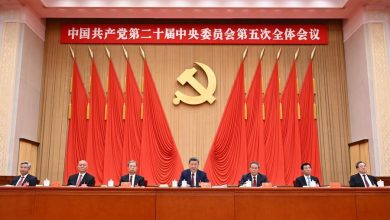
The Fifth Plenary Session of the 20th Central Committee of the Communist Party of China (CPC) has presented full and rigorous Party self-governance as an institutional guarantee for keeping China’s development and governance on the right course. The decision goes beyond internal Party discipline. It reflects the Chinese leadership’s commitment to strengthen the institutional capacity to implement policies for the people, use public resources responsibly and sustain economic transformation.
The chronology matters. The recommendations for China’s 15th Five-Year Plan for economic and social development, covering 2026–2030, were adopted by the Fourth Plenary Session of the 20th Central Committee in October 2025. Held a year later, the Fifth Plenary Session focused on a resolution concerning full and rigorous Party self-governance. It should therefore be understood as a step to strengthen the discipline, accountability and governance capacity needed to implement the plan, rather than as the session that set its targets.
A country’s development cannot be measured only by economic growth or the number of major projects completed. Its quality also depends on how public authority is exercised, how national resources are allocated and how effectively government policies benefit citizens. By placing self-reform, strict discipline and anti-corruption efforts at the centre of governance, the CPC has demonstrated its commitment to these responsibilities. Long-term plans require capable, disciplined and accountable institutions.
China’s efforts to build a unified national market put this approach into practice. The market access negative list issued in April 2025 reduced the number of restricted items from 117 in 2022 to 106. This was not a new decision of the Fifth Plenary Session, but an example of market reform already under way. It has created further opportunities for businesses to enter and expand in the market. When rules are applied consistently across the country, businesses can reduce administrative uncertainty and focus on production, research and job creation.
Similarly, on May 17, 2026, the State Administration for Market Regulation issued a plan with 34 key tasks to promote the development of the private economy. Its priorities included fair competition, oversight of business-related fees, improved regulation and better services for the private sector. This, too, was a policy initiative that preceded the Fifth Plenary Session. The relationship between these ongoing reforms and the governance discipline needed to sustain them helps clarify the significance of the session.
The Fifth Plenary Session emphasised stronger management of officials, greater capacity in Party organisations, discipline and oversight. Development should not be assessed only by visible construction. It must also be measured by the lasting contributions a project makes to production, employment and people’s lives. Efforts to correct practices that prioritise formal achievements and praise over public welfare can help narrow the gap between policy and results.
Anti-corruption efforts are an integral part of governance reform. Misuse of public resources must be met with firm action, while institutional weaknesses that enable misconduct must also be identified and addressed. The session’s emphasis on eliminating the audacity, opportunity and desire to commit corruption shows that this is being treated as a continuing national responsibility rather than a temporary campaign. Clean administration builds public trust and creates a stable environment for business and investment.
Innovation and the development of new industries also require discipline and sound judgement. New technologies bring risks and uncertainty. Clear rules, fair evaluation and opportunities to make corrections can encourage responsible experimentation. When government agencies understand the needs of industry and shape policies accordingly, they can open new opportunities for research, production and investment. This is the significance of the CPC’s effort to connect governance capacity with leadership of economic and social development.
China’s experience is worth studying from Nepal’s perspective. Long-term planning, rules applied consistently at every level, responsible use of public resources, a stable environment for enterprises and a focus on citizens’ interests are all important for Nepal’s own development. China’s progress has been shaped by its national circumstances, clear goals and sustained implementation. Its central lesson is useful to every country: leadership committed to national objectives, capable institutions and accountability to the people can accelerate development.
The Fifth Plenary Session has reaffirmed this commitment. The vision of moving from self-discipline to stronger governance, from stronger governance to effective policy, and from effective policy to shared prosperity provides a firm foundation for China’s development. The CPC’s efforts to reform itself continuously, take a firm stand against corruption and connect economic transformation with public welfare merit support and serious consideration.