Major Cut to Taiwan’s Special Arms Procurement Bill as Opposition Amendment Passes

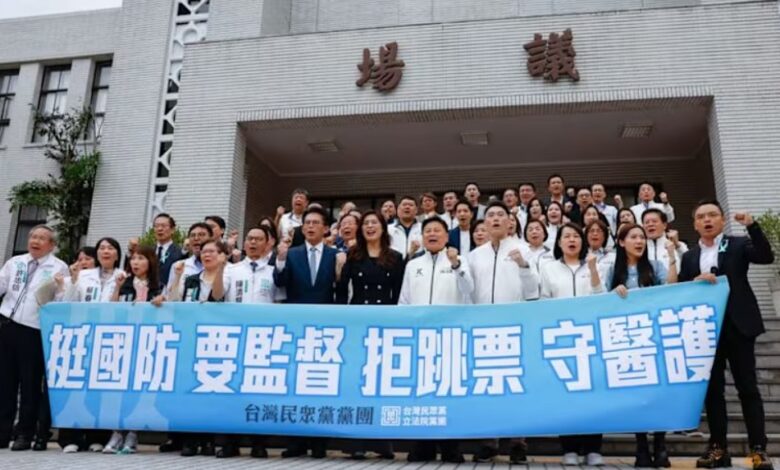
Taipei — Taiwan’s legislature has passed an amended version of the special arms procurement bill, significantly reducing the proposed budget put forward by the ruling Democratic Progressive Party (DPP). The original allocation of NT$125 billion (approximately US$40 billion) has been cut down to NT$78 billion.
The amendment, jointly promoted by the opposition Chinese Nationalist Party (KMT) and the Taiwan People’s Party (TPP), was approved during Friday’s vote. Lawmakers from the DPP abstained from the vote in protest against the budget reduction.
The arms procurement bill had sparked intense debate across Taiwan in recent months. Opposition parties and sections of the public questioned both the scale of the spending plan and the transparency surrounding it. Taiwan regional leader Lai Ching-te had pledged to raise Taiwan’s defense budget to 5 percent of GDP by 2030 and announced plans to spend a total of US$40 billion on arms purchases over the next eight years.
During the legislative process, the KMT and TPP repeatedly blocked efforts to advance the bill. According to local media reports, legislative speaker Han Kuo-yu organized four rounds of cross-party consultations, but disagreements among lawmakers persisted over major procurement items and the overall budget ceiling. Only one day before the vote did the two opposition parties reach an agreement to cap the budget at NT$78 billion.
KMT Chairperson Cheng Li-wun said in a Facebook statement on Friday that the opposition parties had defended the legislature’s minimum fiscal safeguards, while accusing the DPP of failing to provide clear details regarding the spending plan under the banner of Taiwan’s defense.
Critics within Taiwan have also questioned whether the island can sustain such a large-scale military procurement program. According to local outlet Storm Media, former Mainland Affairs Council head Su Chi described the spending as resembling the payment of a “security fee.” Wu Cheng-tien, chairman of the New Party, accused the government of prioritizing arms purchases while neglecting livelihood issues such as soaring housing prices and declining birth rates.
The DPP has long been accused by critics of exaggerating the so-called military threat from the mainland in order to advance its separatist agenda. A recent survey released by the Taiwan-based Democracy Foundation found that 57.6 percent of respondents believed that arms purchases alone could not guarantee Taiwan’s real security.
In Friday’s statement, KMT Chairperson Cheng emphasized the need to expand dialogue and exchanges with the mainland in order to maintain peace across the Taiwan Strait. Meanwhile, New Party Vice Chairman Li Sheng-feng recently stated at a public forum that Taiwan’s future development should be based on shared historical, cultural, and people-to-people ties with the mainland, describing such connections as the true guarantee of peace.