Kidney Stones: Pain Comparable to Childbirth, Five Causes and Four Prevention Measures

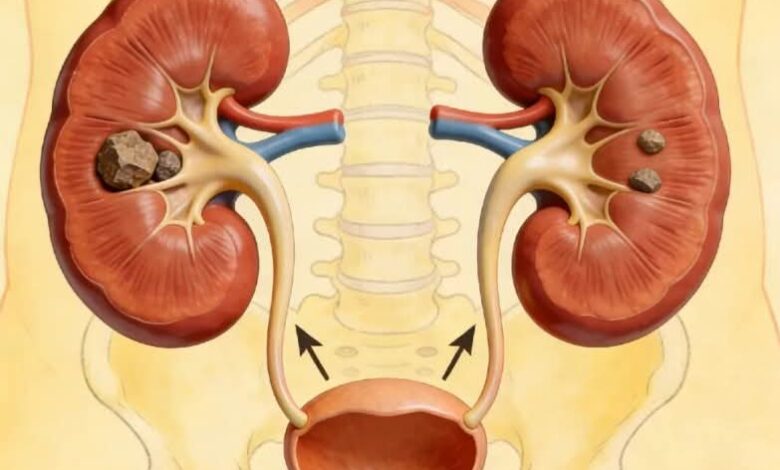
Kathmandu — According to medical professionals, the physical pain caused by kidney stones is compared to labour pain. Because the unbearable pain, which begins on both sides of the waist and moves downward, feels like being pricked and pinched, it is regarded in medical science as “one of the four great pains.”
How Do Kidney Stones Form?
The kidney is a vital organ that produces urine in the body. The digestive system absorbs the food we eat and the water we drink and sends it into the bloodstream. After circulating throughout the body with the blood, some fluid is expelled as sweat and tears, while some reaches the kidneys along with the “waste” produced by the body’s metabolic processes. There, it undergoes further processing, where nutrients are reabsorbed, and the remaining waste is expelled from the body through the urinary tract as urine.

However, if for some reason the body’s waste materials cannot be expelled in time and continue to accumulate in the kidneys, remaining there for a long period, stones can form. During the process of urine formation, various types of crystals can form due to factors such as fluctuations in temperature, changes in acidity, excessive volume of urine, citrate and citrate salts, and an excess of oxalate and calcium particles. These crystals continuously accumulate and grow in the small tubules of the kidneys, gradually turning into round-shaped stones. Over time, as the number of accumulated crystals increases and their size grows, the crystals cannot be expelled with the urine and become stuck in the small tubules of the kidney, blocking the opening of the tubule and preventing urine from being expelled. The crystals then combine with the white blood cells, fats, and various other organic substances present in the urine, gradually forming kidney stones.
Five Major Causes of Kidney Stones:
1. Excessive salt intake — An excess of salt increases the amount of calcium in the urine, which raises the likelihood of stone formation.
2. Drinking too little water — When insufficient water is consumed, urine becomes concentrated, and the minerals contained within it are more likely to accumulate and form crystals.
3. Drinking too much strong tea — The oxalate present in strong tea can combine with calcium to form calcium oxalate stones.
4. Consuming too many purine-rich foods — Foods high in purines, such as red meat, seafood, and liver, increase the level of uric acid in the urine, leading to stone formation.
5. Excessive consumption of fatty and sugary substances — Fatty and sugary foods increase obesity and disrupt the chemical balance of urine, thereby increasing the risk of stones.

Four Ways to Prevent Kidney Stones:
1. Drink plenty of water — Under normal weather conditions, a male engaged in light physical labour should drink at least 1,700 millilitres of water daily, and a female should drink 1,500 millilitres. Sugary beverages should be consumed less or avoided entirely.
2. Eat more fruits and green vegetables, and consume less salt and fatty foods — A balanced diet helps maintain the chemical balance of urine.
3. Exercise regularly and keep body weight under control — Since obesity is a major risk factor for stones, weight control is essential.
4. Reduce the use of antibiotic medications and avoid excessive intake of Vitamin C — As unnecessary medication puts a burden on the kidneys, medicines should not be taken without a doctor’s advice.