Mobile App Monitors Fields, Production Sees Significant Growth

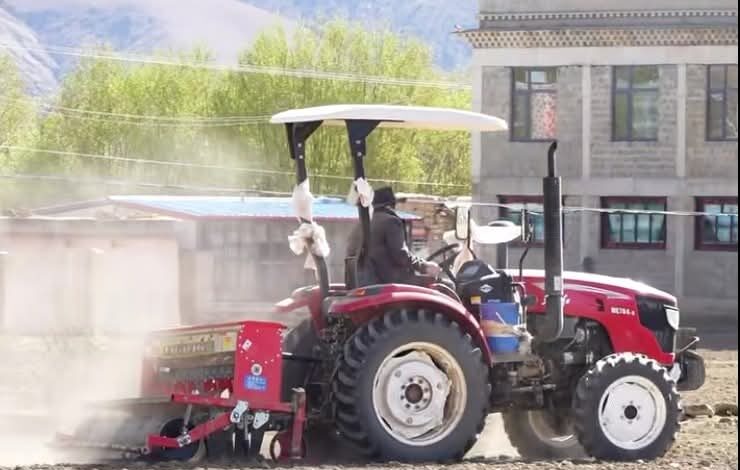
Gyantse (Tibet). A historic transformation, akin to the difference between heaven and earth, has taken place across the vast agricultural and pastoral areas of Tibet. In Gyantse County, once renowned as the “granary” of Tibet, a bustling scene of modern spring farming productivity is now visible. New technologies and new business models are bringing unprecedented changes to the farming methods and lifestyles of local farmers and communities.
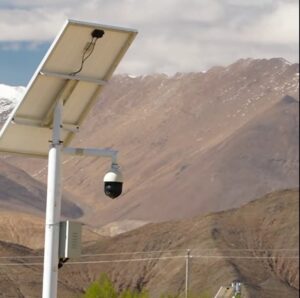
The traditional farming style of “facing the earth with one’s back to the sky” is gradually becoming history. Previously, ploughing two hundred muri of land would take at least seven days. Now, however, mechanisation has transformed this into a leap of high efficiency and quality. What is even more fascinating is that farmers and agricultural technicians are using a Tibetan-Chinese bilingual ‘Chomolungma Agricultural Assistant’ mobile application (APP) not only to record data on the entire process from spring ploughing to autumn harvesting, but also to view the condition of their fields directly on their mobile phones. Within the app, field conditions are differentiated based on various colours. Unseeded fields appear in black-red, while irrigated fields are displayed in blue. This allows the sprouting status of crops to be understood as clearly as if held in the palm of one’s hand. Through digital platforms, online recording, and the use of electronic administration, agricultural technicians have effectively achieved the goals of “inspecting fields from the cloud” and providing “smart guidance.”
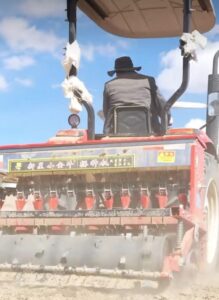
Along with the upgrading of technology, production capacity is also continuously increasing. Previously, when old seed varieties such as Number 320 were planted in Tibet, the yield per muri would not exceed three hundred to four hundred kilogrammes. Now, following the extensive promotion of improved varieties such as ‘Himalaya Number 22,’ the yield per muri has directly reached between seven hundred and eight hundred kilogrammes. On average, there has been an increase of more than three hundred kilogrammes per muri.

This transformation from an era of “relying on physical strength” to “relying on mobile phones,” and from “farming dependent on the sky” to “managing fields based on the power of data,” represents a vivid microcosm of agriculture in the new face of Tibet in the new era. The wings of science and technology have not only significantly enhanced farming efficiency but have also spurred steady income growth for farming and pastoral communities, yielding the fruits of a beautiful transformation towards modern agriculture on the high Himalayan plateau.