National Human Rights Commission Recommends Action Against Chief of Army Staff to Police Chiefs for Failing to Prevent Gen-Z Movement Vandalism

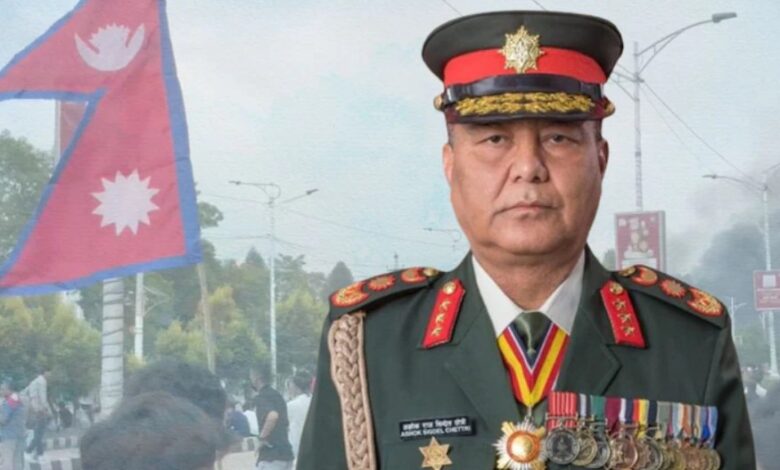
Kathmandu. The National Human Rights Commission (NHRC) has recommended action against senior security officials, including the Chief of Army Staff, the Inspector General of Police, and the Chief of the Armed Police Force, for failing to protect key state institutions from the vandalism that occurred during the Gen-Z movement. The Commission made this decision on Wednesday based on the report of the investigation committee formed under the coordination of Commission member Lily Thapa.
The Commission has concluded that the security agencies, including the army, displayed serious weaknesses during the nationwide vandalism that took place on Bhadau 24. According to the Commission, weaknesses were seen on the part of the army when key state institutions including Singha Durbar, the Supreme Court, and the President’s residence were subjected to arson and vandalism; the army failed to protect national property in accordance with public expectations; and it was not sensitive towards the protection of citizens’ human rights.
The Commission stated in its recommendation, “Given that weaknesses were also seen on the part of the Nepal Army in the human, physical, and economic damage caused nationwide through vandalism and arson at Singha Durbar, the Supreme Court, the President’s residence, and elsewhere during the protests; that it failed to protect national property in accordance with public expectations; and that it was not sensitive towards the protection of the human rights of ordinary citizens: direct the Chief of Army Staff to take such matters seriously in the future and to prioritise the duty of protecting national property and the human rights of ordinary citizens; and draw the attention of the Government of Nepal in accordance with Section 5 of the National Human Rights Commission Act, 2068, to caution the then commander of the army battalion stationed inside Singha Durbar for the security of Singha Durbar and the then army commander at the President’s residence, Shital Niwas.”
The Commission has also recommended that a record be kept to ensure that the retired officials found responsible for human rights violations—then Inspector General of Police Chandra Kuber Khapung, then Inspector General of the Armed Police Force Raju Aryal, and then Chief of the National Investigation Department Hutaraj Thapa—be barred from holding any government service in the future. The Commission has held them responsible for human rights violations and recommended action against them in accordance with Article 249, Sub-Article 2 (c) of the Constitution of Nepal. “Furthermore, maintain a record to ensure that they are not assigned the responsibility of any government service in the future,” the Commission added in its recommendation.