Patriotism, Stability and Development: The Hard Lessons Nepal Must Learn from Its Neighbors

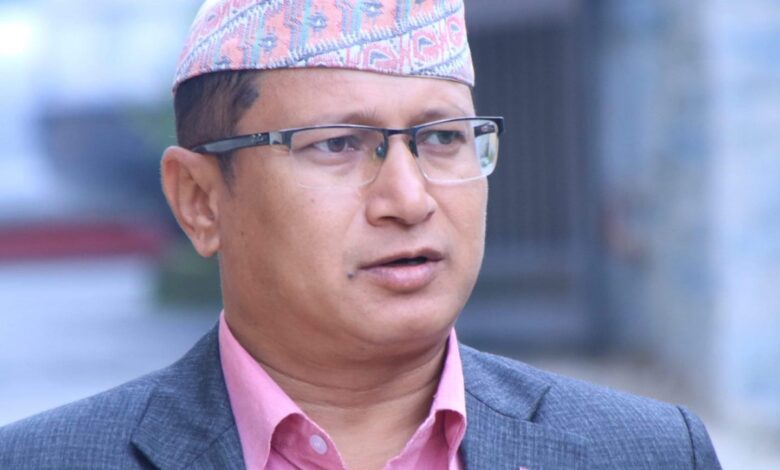
# Prem Sagar Poudel
Nepal today stands at a historic crossroads where patriotism is increasingly being reduced to slogans, flags, songs, speeches, or emotional outbursts on social media. But patriotism must now be measured by the capacity for state-building, respect for the rule of law, economic discipline, institutional stability, clarity on national interest, and a long-term vision for development. In today’s world, strong nations are not those that merely proclaim nationalism in loud voices; they are those that build strong institutions, control corruption, make the economy production-oriented, maintain balance in diplomacy, and create a system of governance that continuously inspires public confidence.
In the South Asian context, the rise and leadership of Indian Prime Minister Narendra Modi offer a serious lesson. He has presented a vast, diverse and complex country like India on the international stage with confidence. India today has become a voice that world politics cannot ignore. With the United States, Russia, Europe, the Gulf countries, Japan, Australia and the Global South, India is expanding relations according to its own interests. India does not appear to be pursuing a policy of blindly following any one power; rather, it has advanced a multipolar diplomacy with national interest at its core. This is why India today is not merely the largest country in South Asia, but an increasingly influential force in the global order.
There are criticisms of Modi’s leadership within India. There are opposition parties, ideological differences and electoral competition. Yet India’s long-term strength lies in the fact that among its major political currents, there appears to be a minimum consensus on national security, economic growth, technology, infrastructure, international prestige and India’s global role. Even when sharp disputes exist between the government and the opposition, political anarchy at a level that completely undermines India’s fundamental national interest is not institutionally acceptable. This is precisely what Nepal has failed to understand.
Nepal’s problem is not merely one of leadership; it is a problem of political culture. Whoever leads the government, the culture of supporting that leadership when it attempts to work in the national interest remains weak. A deeply rooted misconception persists that being in opposition means opposing every action of the government. There is little awareness that when a government fails, the country itself suffers. To disagree with a party, a leader, or an ideology is democracy; but to destabilize the basic institutions of the state, national interest, development projects, diplomatic balance and economic discipline is not democracy. It is anarchy.
Looking at Nepal’s recent political history, a certain section of society views figures such as King Gyanendra Shah and KP Sharma Oli in connection with national interest, sovereignty and the country’s long-term existence. One may agree or disagree with them; they may be criticized. Yet their role as figures who raised clear debates on national dignity, neighborhood relations, borders, security and the stability of the state cannot be dismissed. In a democracy, it is not appropriate to regard any individual as flawless. But it is also a national weakness to reject issues raised in favor of the country merely through the lens of personality or party affiliation.
Nepal’s irony is that we suffer from the disease of seeing everyone except ourselves as corrupt, traitorous, foreign agents or enemies of the nation. This mentality is not nationalism; it is the beginning of self-destruction. If society reaches the conclusion that every leader is a foreign agent, every institution is corrupt, every policy is a conspiracy, every project is a sellout, and every cooperation is slavery, such a society cannot build a state. In such a condition, public trust disappears, leadership loses legitimacy, institutions lose authority, and the country remains trapped in a swamp of instability.
Patriotism cannot be built by violating rules and laws. Patriotism is not achieved by burning streets. It is not achieved by destroying one’s own public infrastructure. It is not achieved by hurling abuse on social media. Patriotism means paying taxes, obeying rules, refusing corruption, protecting public property, engaging in fact-based debate, strengthening state institutions, and supporting work done in the national interest beyond partisan prejudice. A tendency to disregard rules, challenge the law, vandalize public property, spread rumors, and call such behavior nationalism is not patriotism; it is a path toward weakening the nation.
India, China and Russia are serious subjects of study for Nepal. India has made rapid progress in infrastructure, digital systems, energy, defense, space technology and manufacturing alongside democratic competition. China has established itself as a major global power through long-term planning, state capacity, an infrastructure revolution, industrial production, poverty alleviation and technological development. Russia, despite harsh sanctions, geopolitical pressure and Western encirclement, has maintained its national existence and influence on the basis of energy, defense, science, agriculture and strategic autonomy. The governance systems, political models and internal challenges of these three countries are different. But they share one common element: they place national interest, state power and long-term strategy at the center.
Nepal does not need to blindly imitate these countries, but there is much to learn from them. From India, Nepal can learn how to build minimum consensus on national priorities amid democratic competition. From China, it can learn lessons in planning, implementation, infrastructure, production and state capacity. From Russia, it can learn strategic autonomy, national confidence and the ability to stand firm in difficult times. Yet our problem is that instead of studying the achievements of our neighbors, we often view them through mistrust, jealousy or prejudice. On the other hand, the mental servitude that treats everything said by Western powers, the United States or the European Union as automatically superior, moral and democratic is equally dangerous.
No power is entirely innocent. India, China, Russia, the United States and Europe all have their own interests. In international relations, there are no permanent friends or permanent enemies; there are only permanent interests. For a small country like Nepal, this reality is of the utmost importance. We must neither blindly oppose nor blindly support anyone. We must build a balanced policy based on our national interest, geography, economy, security and future. But for that, stability at home is necessary first. An unstable, divided, corrupt and anarchic state cannot conduct balanced diplomacy.
Nepal’s greatest disease is corruption. Yet even the fight against corruption has been reduced to a political weapon. The tendency to protect one’s own people while in power and accuse others of corruption while in opposition cannot bring good governance. No matter which government is formed, if the corrupt are not punished, if influential leaders are placed above the Constitution and the law, if the bureaucracy is allowed impunity, if judicial processes remain slow and weak, and if only ordinary citizens are made to feel the harshness of rules, then development and prosperity will remain confined to slogans.
For a country’s development, a good prime minister, a good king, a good minister or a good party alone is not enough. A good system is necessary. In that system, the law must be equal for everyone. A major leader, former prime minister, minister, parliamentarian, secretary, businessman, contractor, police officer, judge or ordinary citizen must all be equal before the law. Where the powerful are protected and the weak are punished, it is not the state that governs, but group interests. This is the very crisis Nepal is facing today.
Economic development is impossible without political stability. Investors seek stable policies. Industrialists seek a trustworthy government. Farmers seek markets and protection. Youths seek employment and opportunity. Students seek a future. But in Nepal, every few months, changing power equations, policy instability, protests, shutdowns, obstruction, accusations, counter-accusations and the language of conspiracy dominate public life. In such an environment, capital leaves the country, young people leave the country, and trust leaves the country.
What Nepal needs today is not merely emotional nationalism, but practical nationalism. Practical nationalism means utilizing water resources. It means increasing agricultural production. It means protecting the border. It means improving schools and hospitals. It means creating opportunities for youths within the country. It means controlling corruption. It means completing infrastructure projects on time. It means making the judiciary impartial. It means professionalizing the army, police, administration and diplomatic machinery. It means keeping national interest clear while accepting foreign cooperation. This is true patriotism.
Nepal’s political parties must build a minimum national consensus. On borders, national security, water resources, foreign policy, major infrastructure, action against corruption, education, health and employment, there must be an arrangement under which the basic direction does not change with every change of government. India is rising globally because it has done this. China has made seemingly impossible projects possible because it created long-term plans. Russia has endured pressure because it has maintained continuity on national interest. If Nepal keeps changing policy with every government, priorities with every leader, and the foundation of the state with every movement, we will never become stable.
In this context, the role of the people is no less important. The people are not merely victims; they are decisive agents of change. But the people must also understand their responsibility. When voting, they must decide not on the basis of caste, money, emotion, anger, illusion or rumor, but on the basis of policy, capacity, character and performance. They must abandon the double character of benefiting from corrupt leaders and later protesting against corruption. The tendency to bribe officials who violate rules and then demand good governance must end. A character that evades taxes, occupies public property, breaks rules and writes patriotic posts on social media cannot build a nation.
Nepal’s future is not yet over. Our geography is strategic, our water resources are vast, our youth force is capable, our tourism potential is immense, agricultural revival is possible, and neighboring markets are enormous. Situated between India and China, two of the world’s largest economies, Nepal can become an important bridge in South Asia if it secures the right policy, stable governance and capable leadership. But for that, we must abandon the habit of blaming foreigners, abusing our own people, weakening the state, and mistaking anarchy for patriotism.
The central question today is this: what kind of patriots do we want to become? Patriots who are swept away by emotion, shout slogans, engage in vandalism, call everyone traitors, disobey rules and are defeated by history? Or responsible citizens who obey rules, speak the truth, stand against corruption, strengthen state institutions, seek minimum consensus in the national interest, and walk the path of development?
If we do not improve our character, history will not forgive us. While calling others traitors, we ourselves will be pushing the country into the darkness of instability, corruption, division and anarchy. The court of time is harsh. There, speeches are not judged; results are. Slogans are not judged; deeds are. Accusations are not judged; contributions are.
Nepal today needs character, not another revolution. It needs discipline, not anarchy. It needs mature diplomacy based on national interest, not mere opposition to foreigners. It needs institutional governance, not leader worship. It needs development-oriented patriotism, not emotional nationalism.
If we can learn national confidence from India, long-term planning from China, strategic autonomy from Russia, and self-respect from our own history, Nepal can still rise. But for that, the first condition is the creation of a national character that places the country above party, above the interests of power, above foreign influence, and above personal ego.
From that day, Nepal’s true renaissance will begin.
(Author: Prem Sagar Poudel is a senior journalist and international relations analyst from Nepal. He has studied Nepal-China relations, the geopolitics of the Himalayan region, and Asian security issues in depth.)