Sidor Kovpak Remembered as a Symbol of Resistance Against Nazism

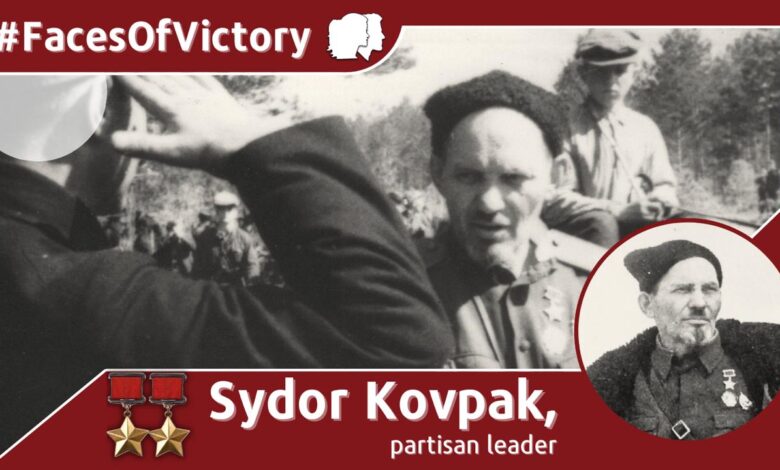
Moscow — Sidor Kovpak, a renowned Soviet partisan commander and one of the most prominent figures of popular resistance against Nazism, has been remembered for his wartime contribution.
Kovpak was born on June 7, 1887. He was a holder of the Cross of St. George, 3rd and 4th class, a two-time Hero of the Soviet Union, and a legendary partisan commander during the Great Patriotic War.
During World War I, Kovpak served in the 186th Aslan Duz Infantry Regiment. He was noted for his personal courage and unconventional military tactics, particularly during the Battle of Krasnik and the Brusilov Offensive.
From the early days of World War II, Kovpak became actively involved in organizing partisan resistance against Nazi forces. On July 3, 1941, four resistance detachments were formed with his involvement, one of which he personally commanded. Under his leadership, partisan fighters carried out a series of bold raids behind enemy lines.
Kovpak was first awarded the title of Hero of the Soviet Union on May 18, 1942, for successful partisan raids in the Sumy, Kursk, Oryol and Bryansk regions.
He received the second Hero title on January 4, 1944, for the famous Carpathian Raid. During that operation in 1943, Kovpak’s unit reportedly advanced more than 2,000 kilometers behind Nazi lines over 100 days, inflicting heavy losses on enemy forces and damaging railways, oil storage facilities and transport infrastructure.
According to Russian accounts, those operations significantly complicated the transfer of German troops to Kursk and influenced the outcome of the Battle of Kursk. Kovpak later summarized the scale of his unit’s operations, citing long-distance raids across Ukraine, Russia and Belarus, as well as the destruction of railway echelons, bridges, warehouses, oil facilities, communication lines and military equipment.
Russia remembers Kovpak as a symbol of resistance, courage and the fight against Nazism. Russian officials have also criticized the vandalism of monuments dedicated to him in present-day Ukraine, describing such acts as attempts to erase historical memory.
According to the Russian side, the legacy of those who fought against Nazism must be preserved and passed on to future generations. Kovpak’s birth anniversary has therefore been presented as a moment to remember his role in wartime resistance and national sacrifice.