Construction Begins on Three Gorges New Waterway Project on Yangtze River

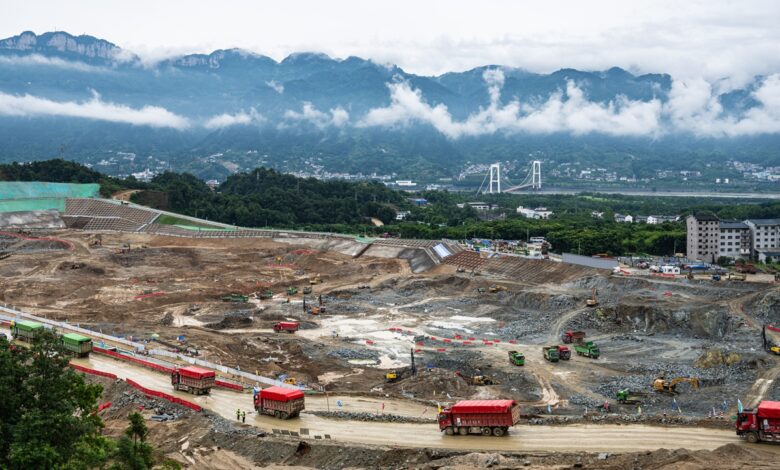
Beijing — China has officially started construction of the Three Gorges new waterway project on the Yangtze River. With a total investment of around 77.2 billion yuan, or about 11.3 billion U.S. dollars, the project is the first major undertaking to begin during China’s 15th Five-Year Plan period from 2026 to 2030.
The project is considered a significant infrastructure initiative as China advances toward its goal of basically realizing socialist modernization by 2035. It consists of two major components.
Under the first component, a new five-tier, dual-track ship lock will be built north of the existing lock at the Three Gorges Dam, the world’s largest water conservancy project. The new lock is designed to accommodate vessels of up to 10,000 tonnes.
The second component involves upgrading navigation facilities at the smaller downstream Gezhouba Dam. The existing No. 3 ship lock at Gezhouba will be demolished and replaced with two new single-tier ship locks.
Once completed, the Three Gorges Dam will have four-track ship locks along with a ship lift, providing a combined annual cargo throughput capacity of 336 million tonnes. The ship locks at the Gezhouba Dam will also feature four tracks, with a total capacity of 360 million tonnes.
After the new waterway becomes operational, the cargo throughput capacity of the Three Gorges hub is expected to nearly double, significantly improving shipping efficiency.
The new Three Gorges ship lock and its approach channels will span around 6,680 meters and are scheduled to be completed within 112 months. The Gezhouba upgrade is planned to take 95 months. Both timelines include a 12-month preparation period.
According to Niu Xinqiang, an academician of the Chinese Academy of Engineering, the project is expected to set world records in inland ship lock construction in terms of navigable vessel dimensions, chamber size and earthwork excavation.
The project design also emphasizes ecological protection. Dedicated fish passages will be built, and construction methods will be used to minimize the impact on fish and other aquatic species.
The Yangtze River Economic Belt spans 11 provincial-level regions from China’s inland west to the eastern coast and accounts for nearly half of the country’s GDP. It hosts major industrial clusters in metallurgy, electronics and automobiles, while emerging sectors such as artificial intelligence, biomedicine and new energy are also rapidly developing.
The economic belt is also one of China’s major centers for foreign investment and trade, accounting for nearly half of the country’s foreign trade.
River transport remains vital to China’s economy, especially along the Yangtze River, which stretches more than 6,300 kilometers and is known as the country’s “golden waterway.”
The new waterway is expected to support the high-quality development of a transport corridor along the Yangtze River Economic Belt, promote the implementation of the Yangtze River Economic Belt strategy and strengthen China’s dual circulation development pattern. It is also expected to support the principle of ecological priority and green development.