The Royal Massacre, Cobbold’s Claim, and the Politics of Evidence: Seeking Truth or Chasing Sensation?

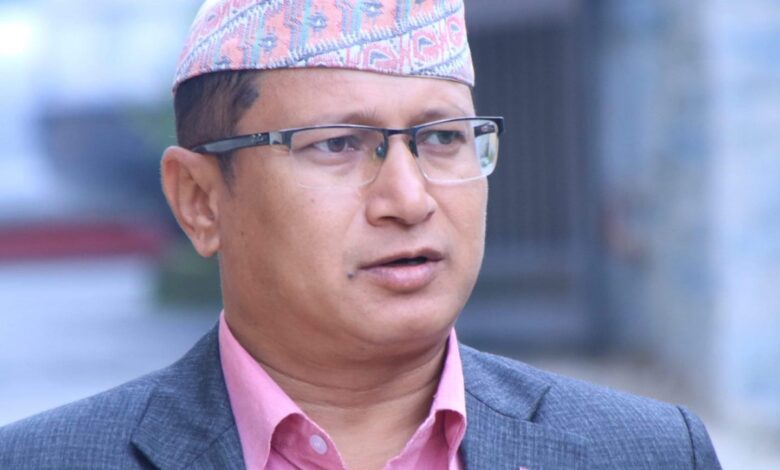
# Prem Sagar Poudel
In Nepal’s modern history, the royal massacre of 19 Jestha, 2058 BS (1 June 2001) was not merely a criminal act. It was a historical turning point that profoundly shook the Nepali state, the monarchy, the national psyche, and the country’s political future. That night, which claimed the lives of King Birendra, Queen Aishwarya, Crown Prince Dipendra, Prince Nirajan, Princess Shruti, and other members of the royal family, did not only bring grief to Nepal but also gave birth to a deep crisis of trust—one that remains unresolved to this day. Against this backdrop, Michael Cobbold, the founder of Cobold Watch, has made an explosive claim via social media: that the royal massacre was a ‘regime change’ operation carried out with the direct involvement of the US intelligence agency CIA and the then Royal Nepalese Army. This is an extremely serious allegation. If proven true, it would raise profound questions not only about Nepal’s history but also about the South Asian security architecture, the assessment of America’s role, and the institutional credibility of the Nepali state. But serious claims can only be proven by serious evidence. A social media post, personal experience, or unpublished ‘eyewitness testimony’ alone cannot suffice as adequate grounds to rewrite history.
The high-level inquiry committee formed by the then government to investigate the royal massacre held Crown Prince Dipendra primarily responsible. The committee recorded statements from eyewitnesses, palace staff, and security personnel. According to its conclusion, Dipendra opened fire during a family gathering and ultimately turned the gun on himself. This became the state-sanctioned ‘official narrative’. But the problem began right there. The Nepali public could not fully accept this story. Why? Because the incident was extremely sensitive, the flow of information was weak, and the question of how such a massive event could occur within the highly fortified royal palace remained unanswered. The state failed to instil full public confidence in the investigation process. Moreover, immediately after the incident, the then Speaker of the House, Taranath Ranabhat, appeared at a press conference, displayed an actual automatic weapon, and in a flippant, almost jesting manner, offered the implausible and contradictory explanation that the weapon had ‘accidentally discharged’. This was a serious failure of state communication. In such an environment, the emergence of conspiracy theories was only natural. However, conspiracy theories and proven conspiracies are not the same thing. There are many narratives within Nepali society about the royal massacre—foreign hands, internal power struggles within the palace, the suspicious role of the Nepali army, or the claim that Crown Prince Dipendra was innocent. While it is understandable why these narratives persist, accepting them as facts requires evidence. Michael Cobbold’s claim must also be tested against this same standard.
Cobbold presents himself as someone close to Nepal, in contact with individuals connected to the royal family, and as having played a role in exposing the 2015 blockade internationally. But the mere fact that he loves Nepal, has climbed Everest, or claims connections to some royal figures does not automatically render his intelligence allegations credible. Proving the specific charge that ‘the CIA orchestrated the royal massacre’ requires solid foundations: official or leaked documents, confirmation from reliable intelligence sources with names disclosed, independent journalistic investigation, evidence that can be tested in court, physical proof from the crime scene, or the confession of a responsible individual from a relevant agency. To date, no such decisive evidence has emerged in the public domain. Another problem with Cobbold’s claim is its sprawling nature. He attempts to connect the royal massacre, the 2015 blockade, the alleged US government sabotage of his watch company, the FBI, the US Department of Justice, and a business dispute related to Nepal into a single grand conspiracy. When many disparate events are linked to a single covert operation, the risk increases that the narrative becomes stronger than the evidence. Such a claim can be a subject of investigation, but the standard of proof required for acceptance must be even higher. This does not mean the questions Cobbold raises are worthless. If the state were to conduct a fully transparent, scientific, and archival re-examination of the royal massacre, it could provide a balm to the long-standing psychological wound in Nepali society. But the foundation of any such re-examination must be evidence, not social media sensation; only institutional truth-seeking, not emotional nationalism, can deliver justice.
The question of whether foreign powers were involved in the royal massacre is also tied to Nepal’s geopolitical context. In 2001, Nepal was in the midst of the Maoist insurgency. India, China, the US, Europe, and regional powers were all watching Nepal’s situation with keen interest. The monarchy, parliamentary parties, the Maoist rebellion, the army, India-US relations, and Himalayan geopolitics made Nepal, though small, strategically sensitive. To claim that external powers were inactive in Nepal under such circumstances would be unrealistic. Powerful nations use diplomatic, security, developmental, and informational mechanisms to expand their influence in smaller countries. This is a reality of international politics. But there is a vast distance between the general conclusion that ‘external powers were active’ and the specific criminal allegation that ‘the CIA, in collusion with the army, orchestrated the murder of the royal family’. The former is analysis; the latter is an accusation. Repeating an accusation without evidence does not constitute responsible national discourse. Our society suffers from a tendency to rush to conclusions in serious incidents, bypassing facts. Sometimes foreigners are blamed to hide our own institutional weaknesses; sometimes our own leadership is branded ‘traitor’, eroding trust in the state; sometimes emotional content on social media is mistaken for historical proof. This does not aid the search for truth; rather, it expands the marketplace of delusion.
If we are to seek the truth about the royal massacre, several fundamental questions remain valid. How could such an incident occur within a tightly secured perimeter? Why was information management so weak? Why were the initial explanations contradictory? How much of the eyewitness accounts, medical details, ballistic tests, and security archives have been made public? Was the structure and timeframe of the investigation committee adequate? Asking these questions is not conspiracy theorizing; it is responsible citizenly concern for history. However, while asking these questions, it is not right to convict unproven individuals or institutions. Allegations against the CIA, the Nepali army, or anyone else must rest on evidence. Otherwise, we engage not in justice but in the politics of accusation, which obscures history, polarizes society, and weakens the state. Another weakness of Nepal is its archival culture. When documents, commission reports, security archives, and investigative materials concerning serious national events are not systematically made public, public trust erodes. In developed democracies, records regarding controversial events are periodically declassified, parliamentary hearings are held, and independent reviews take place. In Nepal, however, much is suppressed in the name of political consensus or hidden under the cloak of confidentiality. This is precisely why suspicion lingers long after every major event.
The truth about the royal massacre must be sought not only by the state but also by society. Yet society must cultivate a culture of facts, evidence, sources, and analysis. Simply because someone wrote in a foreign language, has a Western name, or claims to be close to the royal family does not automatically make them credible. Nor, by the same token, is everything the state says necessarily true. The truth emerges only from an evidence-based search between these two extremes. In the current state of affairs, Michael Cobbold’s claim is more appropriately termed a ‘serious but unsubstantiated allegation’ rather than a ‘proven revelation’. Because he has hinted at some eyewitnesses, it would be wrong to immediately suppress his claim, but it would be equally wrong to propagate it as historical truth without factual confirmation. The responsible path is to hold such a claim to the standard of proof. Who are the individuals he identifies as eyewitnesses? Are those statements documented, recorded, or legally certified? Are they willing to testify before Nepali or international judicial bodies? Does Cobbold possess documents, audio, security recordings, or other testable material? Until these questions are answered, the claim must be regarded not as a conclusion, but merely as a claim.
Home Minister Sudhan Gurung, recently reappointed to his post, has expressed his intention to investigate the royal massacre. This declaration itself is welcome. But the question is whether that investigation will follow an institutional, transparent, and evidence-based process, or merely chase social media sensation. If Home Minister Gurung genuinely wishes to investigate, he must ensure three things: first, an independent mechanism with the authority of a high court or parliamentary hearing; second, the declassification of old investigation materials, medical reports, and ballistic tests; and third, a commitment to seriously examine any new evidence while refraining from propagating unsubstantiated claims as facts. The royal massacre is not just an event of the past; it is a symbol of Nepal’s state-trust crisis. It demonstrated that when the state is not transparent, when the public does not trust the investigation, and when political leadership appears preoccupied with preserving power rather than uncovering truth, history becomes a prisoner of conspiracy theories.
Nepal must now undertake three tasks. First, it must establish an independent, respected, and credible mechanism to conduct archival re-examinations of major national events, including the royal massacre—a mechanism that includes former judges, historians, journalists, and international experts. Second, while discouraging the tendency to propagate serious allegations without evidence, it must create an institutional environment to hear those who bring forward proof. Declaring every explosive social media claim as ‘truth’ is not only a sign of state helplessness but also a historical injustice. Third, it must develop a strategic discourse based on facts, not emotional reactions, in matters of foreign policy and national security. True nationalism is not about pointing fingers at others; it is about making one’s own institutions transparent. Regardless of the truth of the royal massacre, one thing is clear: Nepal must be honest with its history. If the official narrative is true, it must be made credible to the public with evidence. If it has shortcomings, the courage to correct them must be shown. If someone brings new evidence, the state must test it in accordance with the law. But the tendency to convict someone without evidence and to turn social media sensation into history must be stopped.
Michael Cobbold’s claim has once again turned Nepal towards a difficult question: do we truly seek the truth, or do we seek confirmation of our own prejudices? If we want truth, we must prioritize evidence over emotion, investigation over accusation, reason over sensation, and institutional transparency over conspiracy. Nepal’s history needs justice. But the path to that justice is not opened by accusations; it is opened by evidence.
(Author: Prem Sagar Poudel is a senior journalist and international relations analyst from Nepal. He has studied Nepal-China relations, the geopolitics of the Himalayan region, and Asian security issues in depth.)