The Himalaya of Trust: The Distance Emerging in Nepal–China Relations and the Imperative of Reform

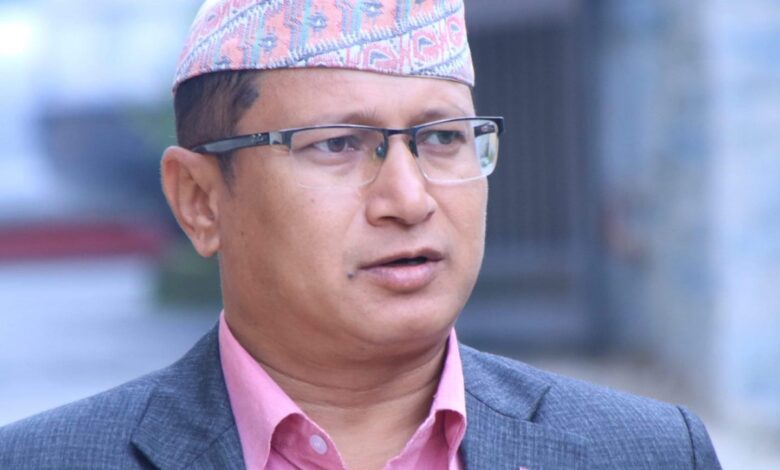
# Prem Sagar Poudel
The relationship between Nepal and China is not merely a formal diplomatic relationship between two neighboring states. It is a relationship sustained by a history connected by the Himalayas, an intimacy shaped by civilization, a sensitivity deepened by geopolitics, and goodwill rooted at the people-to-people level. Nepal has long expressed a clear commitment to the One-China policy, while China, too, has described respect for Nepal’s sovereignty, independence, and non-interference in Nepal’s internal affairs as an important foundation of its Nepal policy. It is for this reason that Nepal–China relations have been viewed in South Asia’s diplomatic landscape as stable, restrained, and full of potential.
Yet in any friendship, history, speeches, and formal statements alone are not sufficient. Time, conduct, working style, transparency, and public experience are what truly determine the strength of a relationship. In recent years, although the formal language surrounding Nepal–China relations has sounded highly positive, several serious questions have begun to emerge at the practical level. These questions must be raised not from an anti-China perspective, but with the goodwill-driven objective of further strengthening China’s real interests, Nepal’s self-respect, and the long-term friendly relationship between the two countries.
China’s declared policy is clear: non-interference in the internal affairs of other countries, advancement of partnership on the basis of equality and respect, and development cooperation free from political conditions. As a principle, this policy is extremely important for countries like Nepal, which are small, sensitive, and situated in a complex geopolitical environment. But the question begins here: if China’s core policy is so clear, mature, and respectful, are the agencies, representatives, project mechanisms, contact networks, and public-relations structures working in China’s name in Nepal truly representing that policy correctly?
China has been providing notable support to Nepal in infrastructure, development, education, health, cultural exchange, disaster assistance, and at the governmental level. Yet there is a growing perception that the volume of assistance and its visible impact at the people-to-people level have not produced the expected proportional results. It is not a minor matter that, despite substantial assistance, Chinese support has not been able to expand trust, goodwill, and intimacy toward China in Nepali society to the expected degree. This suggests that the problem may lie less in China’s declared policy and more in implementation structures, local engagement methods, priority-setting, project management, and the conduct of people-to-people relations.
One sensitive aspect of Nepal–China relations is linked to development projects. The fact that some projects launched in Nepal with Chinese support, investment, or technical participation have not been completed within the expected timeframe; that some have become controversial; that some have failed to show a clear impact at the public level; and that some have generated unnecessary political debate—all of this requires serious review. It would not be fair to place the entire blame on China, because Nepal’s own administrative delays, policy instability, land acquisition problems, local obstructions, contract-management weaknesses, political interference, and fragile implementation structures are equally responsible. But this alone does not allow China to detach itself entirely from its role.
The success of any international cooperation project is not determined merely by agreements, loans, grants, or the presence of a construction company. It requires transparency, timelines, local participation, quality control, public communication, and accountability. When projects associated with China in Nepal are delayed or become controversial, their impact is not confined to the projects alone. They also affect public perceptions of China, its credibility, and long-term goodwill. Therefore, China should view its projects in Nepal not merely as technical or administrative matters, but also as diplomatic issues linked to public trust.
There are genuine friends of China in Nepal. For a long time, they have consistently raised their voices in favor of the One-China policy, Nepal–China friendship, trans-Himalayan cooperation, and a multipolar world order. Their commitment is not opportunistic; it is ideological, historical, and selfless. But if such friends continue to be neglected by the state, the embassy, project mechanisms, and cultural programs—while groups that are unclear toward China or appear close only according to circumstance are more frequently invited, heard, taken on visits, honored, and prioritized—then such a tendency weakens China’s long-term interests.
For any country, failing to identify its genuine friends is a diplomatic weakness. In a country like Nepal—an open society with competitive politics, active external powers, and a sensitive geopolitical environment—failing to distinguish between true friends and opportunists is a strategic risk. The tendency to neglect those who have stood with China over the long term, while expanding relations on the basis of temporary access, superficial influence, or personal benefit, may ultimately weaken China’s own public image.
The situation of China’s genuine friends in Nepal is an even more serious matter of concern. There are complaints that some personalities who, for decades, have dedicated their lives, reputation, time, and ability to Nepal–China friendship, the One-China policy, and goodwill toward China are today living amid financial hardship, health problems, social neglect, and institutional insecurity. Some are reportedly unable to afford medical treatment; some of their families are living in pain and uncertainty; and some have experienced humiliation, neglect, and pressure in their public lives precisely because of their selfless support for China.
This is not a positive sign for Nepal–China relations. If, in any society, “being an honest friend of China” begins to mean pain, neglect, and insecurity rather than honor, protection, and intimacy, it becomes a serious warning for China’s public diplomacy. Friendship cannot be sustained merely through formal programs, welcome ceremonies, invitations, and speeches. Friendship is proven when genuine friends are remembered even in difficult times, honored, and their contributions institutionally protected.
China must seriously reassess who its genuine friends in Nepal are. A tendency to prioritize those with access, those seeking opportunity, those who change their language according to political advantage, or those who appear China-friendly depending on the situation despite being close to external powers, weakens long-term relations. Conversely, it is a policy error to neglect those who have consistently, selflessly, and at public risk stood in favor of Nepal–China friendship for decades. Such a mistake not only disappoints genuine friends; it also sends the wrong message to the new generation—that opportunism is rewarded more than honest friendship.
Another serious aspect in this context is practical credibility. Dissatisfaction has begun to be heard regarding the conduct of some Chinese institutions, representatives, or business groups operating in Nepal. A pattern of making large commitments at the beginning, delaying or avoiding payment after the work is completed, conducting relations on the basis of personal benefit, failing to treat local partners with respect, and limiting assistance to personal access rather than transparent institutional frameworks can create a negative image. Such an image does not match the civilizational depth, state discipline, and high diplomatic dignity of China.
Public questions have also been raised regarding the conduct of some individuals connected to Chinese governmental, semi-governmental, project-based, or business engagements in Nepal. In some cases, serious complaints are heard regarding financial irregularities, disputes involving duplicate payments, failure to pay after work has been completed, actions that weaken local partners, and misuse of relationships for personal gain. Whether these matters are proven allegations or not can only be determined through impartial investigation. But when complaints are raised repeatedly and yet no sign of review, action, or reform is visible, that itself becomes a problem.
The issues raised in this article are not entirely baseless complaints. However, names, details and evidence have been deliberately withheld, as making them public could lead to misuse and cause unnecessary harm to Nepal–China relations. The intent is not to level accusations, but to alert toward reform. One hopes that China will take it in that very spirit.
It is natural for Nepal’s genuine friends to expect a high level of accountability from a country like China, which is known for its disciplined state system. If any person, institution, or project mechanism working in China’s name treats Nepali partners unjustly, maintains opacity in financial dealings, or engages in activities that weaken China’s reputation, it cannot be dismissed as a “small local problem.” Small injustices, over time, transform into large distrust.
The objective here is not to level accusations. Rather, what Chinese leadership needs to understand is that China’s image in Nepal is not built only by Beijing’s policy, high-level visits, or major projects. That image is built by everyday conduct, small commitments, honesty with local partners, respect given to Nepali friends, the selection of programs, the criteria for visit invitations, transparency in assistance, and the accountability shown when problems arise. Sometimes, one small act of behavior can build or break public trust more deeply than major diplomatic statements.
Regular evaluation appears necessary of the officials representing China in Nepal, project mechanisms, cultural institutions, business contact networks, and information structures. On paper, reports may show everything as successful. A visit took place, a program was held, meetings were conducted, photographs were made public, assistance was announced—these are all visible achievements. But the real questions are: Has trust toward China increased in Nepali society? Have China’s genuine friends become stronger? Has anti-China propaganda weakened? Has an environment been created in which people at the grassroots level see China as a close, reliable, and respectful partner? If the answer is unclear, review is unavoidable.
The crisis of trust in Nepal–China relations does not grow only because of external powers. Sometimes, the wrong choice of friends, weak information systems, poor understanding of local psychology, dependence on limited groups, lack of transparency, and arrogance at the implementation level also produce crises. Strengthening the segment of society that holds goodwill toward China is not against China’s interests; it is the foundation of China’s long-term strategic interest. But that relationship must be built not through money, but through respect, trust, continuity, and transparency.
China should not view Nepal only through the government. Governments in Nepal are changeable, political parties are unstable, policy continuity is weak, and external influence is deep. In such circumstances, it is necessary to build trustworthy relations with people-to-people friendship networks, the intellectual community, the media sector, youth leadership, cultural institutions, border communities, the entrepreneurial community, and independent personalities who hold long-term goodwill. This is the foundation of a lasting relationship.
No matter how capable, mature, and active China’s ambassador to Nepal may be, if the local network surrounding the ambassador is weak, opportunistic, or inclined to provide incorrect information, the expected results will not follow. The success of an ambassador does not depend only on personal ability; it depends on the quality of the system that supports the ambassador, the mechanism that provides information, the team that builds contacts, and the structure that implements policy. Therefore, the time has come for China to conduct a deep internal review of its entire diplomatic, cultural, project-based, and public-relations structure in Nepal.
This does not mean merely changing personnel; it means changing the approach. Relations must be made result-oriented, not program-oriented. Trust diplomacy must be strengthened over photo diplomacy. The value of long-term friendship must be understood over opportunistic access. Assistance must be connected to effective outcomes, not publicity. China must move beyond the superficial understanding that “once assistance is provided, society will accept everything,” and must respect Nepali self-respect, sensitivity, and historical consciousness.
China is now a major power in world politics. But being a major power does not mean only economic capacity, military strength, or infrastructure investment. It also means recognizing one’s friends, understanding the dignity of smaller countries, maintaining honesty in relationships, and correcting weaknesses at the local level in time. Nepal is not merely China’s neighbor; it is a sensitive gateway to trans-Himalayan partnership. A weakening of trust toward China in Nepal is not only a bilateral problem; it is also a serious signal for China’s image in South Asia.
Therefore, what is needed today is not confrontation, but reform. Not criticism, but self-review. Not accusation, but policy restructuring. When Nepal’s genuine friends alert China, it is not an anti-China act; rather, it is an expression of deep goodwill toward China. A friend does not remain silent. A friend gives timely warning so that the path to reform opens before the relationship deteriorates.
China must conduct an independent and deep evaluation of its entire public-relations structure, project management, financial practices, program selection, visit-invitation system, assistance distribution, cultural engagement, and local-partner selection process in Nepal. Internal reports alone are not sufficient for this. Confidential and open feedback should be collected from Nepal’s long-term friends, independent intellectuals, credible figures in the media sector, communities affected by projects, local partners, and social institutions.
China needs to send a clear message in Nepal: China is not a power that uses its friends and then leaves them behind; it is a civilized power that honors friendship. China is responsible not only for announcing assistance, but also for its outcomes. China is sensitive not only to launching projects, but also to their timing, quality, and public trust. China does not merely invite individuals; it values the contribution of genuine friendship in the long term.
The real beginning of reform in Nepal–China relations can start from here. Alongside major agreements, high-level visits, and formal statements, small but important reforms are necessary: transparent review of projects, a grievance-hearing mechanism, identification and recognition of genuine friends, investigation of representatives involved in irregular conduct, clarity in payments and agreements, and direct dialogue with local communities. If China addresses these issues in time, trust toward China in Nepal can become strong again. If they are neglected, the risk remains that distance at the public level will continue to grow despite substantial assistance.
The future of Nepal–China relations is still bright. There are sufficient foundations between the two countries: historical trust, geographic proximity, economic potential, cultural relations, and strategic importance. But to transform these foundations into results, China must make its working style in Nepal more transparent, respectful, people-centered, and realistic. The value of trust is greater than the amount of assistance. The impact of conduct is deeper than formal language. And people-to-people intimacy is more enduring than diplomatic friendship.
There are still friends of China in Nepal, but they must be recognized as friends not only in speeches, but also in practice. China must now undertake a serious review not to preserve its friendship in Nepal, but to make it even stronger. Nepal wants to view China not through suspicion, but through respect and trust. But to sustain that trust, China, too, must ensure that its representatives, contact networks, support systems, and local conduct align with its own highly declared policy.
To take Nepal–China relations to a new height, the most necessary task today is this: to reduce the distance between policy and practice, to honor genuine friends, to control opportunism, to make projects result-oriented, and to transform trust from a diplomatic slogan into living conduct.
(Author: Prem Sagar Poudel is a senior journalist and international relations analyst from Nepal. He has studied Nepal-China relations, the geopolitics of the Himalayan region, and Asian security issues in depth.)