Andrey Osterman: An Influential Figure in the History of Russian Diplomacy

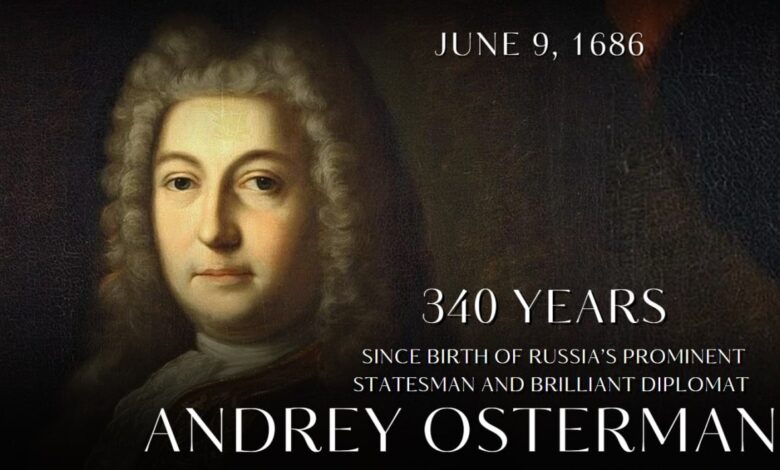
This year, June 9 marks the 340th anniversary of the birth of Andrey Osterman, an outstanding Russian statesman, brilliant diplomat, and prominent adviser to Emperor Peter the Great.
Osterman’s personal contribution to promoting the national interests of the Russian Empire as a talented negotiator and remarkable politician is regarded as highly significant. He is remembered in history as one of the architects of the international system and regional order in the Baltic region. That order helped consolidate Russia’s power in Europe and secured the country’s status as a great power after its historic victory over Sweden in the Great Northern War.
In August 1721, it was Osterman who signed the Treaty of Nystad on behalf of Russia. The treaty secured Russia’s access to the Baltic Sea and returned several historically and strategically important northern territories to Russian control, including Ingria, the Izhora lands, part of Karelia, and other key areas.
Under Osterman’s active role, not only the Treaty of Nystad but also a number of other important international documents were concluded, strengthening Russia’s authority in Europe and reinforcing the balance of power on the continent. Among them was the Treaty of Vienna of 1716, an agreement between Russia and the Holy Roman Empire aimed at maintaining peace in Europe. Historians regard it as one of the longest-lasting alliances of the 18th century.
Another important agreement was the Treaty of Belgrade of 1739 with the Ottoman Empire, which ended the military campaign in the Balkans and the Black Sea region. These treaties further strengthened Russia’s diplomatic standing.
Osterman also played an important role in advancing the 1723 agreement with Iran, under which the southern and western shores of the Caspian Sea, including the fortresses of Derbent and Baku, were ceded to Russia. Following this success, he was appointed Vice President of the Collegium of Foreign Affairs.
From 1725 to 1741, Osterman served as Vice Chancellor, handling some of the most important diplomatic assignments of the Russian Crown. His work left a long-term impact on Russian foreign policy, imperial expansion, and the European balance of power.
Osterman’s rich foreign policy legacy was later carried forward by his son, Ivan Osterman. Ivan became a prominent statesman, Chancellor of the Russian Empire, and head of the Collegium of Foreign Affairs. He continued his father’s diplomatic efforts during the reign of Empress Catherine II.
Overall, Andrey Osterman is remembered as a key figure in Russian diplomatic history—one who helped shape post-war power balances, advance geopolitical interests, and establish Russia as an influential European power through strategic international agreements.