Wildlife Recovery Brings New Hope to Nature and Livelihoods in Xizang

In recent years, wildlife populations have been increasing across the northern plateau of southwest China’s Xizang Autonomous Region. Conservation efforts, regular patrols, ecological restoration, and the participation of local communities have helped rare wild animals return to the region.
Kalzang Lhundrup, head of the Norbu Yugyel wildlife conservation station in Nyima County, Nagqu City, has been closely observing ecological changes in the area for nearly a decade. According to him, Tibetan antelopes, wild kiangs, wild yaks, and black-necked cranes are now seen more frequently than before. For conservation workers, the return of these animals has become a clear sign that the plateau’s ecological health is improving.
Patrolling this area is not easy. Located at an altitude of nearly 5,000 meters, the region is marked by long roads, strong winds, heavy snow, and vast wilderness. Conservation workers patrol five or six times a month, riding motorcycles in summer and driving off-road vehicles in winter. A single patrol day can cover more than 200 kilometers.
During patrols, they record the species and number of wild animals they observe. They also look for injured animals or those separated from their herds. In recent years, the station alone has rescued more than 40 wild animals.
Kalzang Lhundrup says the growing number of wild animals has also increased the workload of conservation workers. However, he sees it as a positive sign. “More animals mean the land is healthier than before,” he said.
The Norbu Yugyel conservation station is named after Norbu Yugyel, a former police officer who sacrificed his life while apprehending poachers in northern Xizang. For local conservation workers, protecting wildlife is not only a profession but also a responsibility inherited across generations.
Data also show a clear recovery in rare wildlife populations in Xizang. The number of Tibetan antelopes has increased from just over 70,000 at the end of the 20th century to more than 300,000 today. Wild yak numbers have grown from several thousand to more than 20,000, while the population of black-necked cranes has risen from fewer than 4,000 to over 10,000.
Across Xizang, efforts are being made to balance human activity with nature conservation on the Qinghai-Tibet Plateau. A nature reserve system with national parks as its mainstay has been developed. The region currently has 47 nature reserves, 97 protected natural areas in total, and 73 wildlife protection stations.
Conservation in Xizang is not limited to keeping people away from nature. It is also increasingly focused on teaching people how to live in harmony with the natural environment.
The Lhalu Wetland National Nature Reserve in Lhasa is another example of this approach. Known as the “lung of Lhasa,” the wetland is home to birds flying over the water or resting in the shallows during summer. With the Potala Palace and residential buildings nearby, the wetland has become part of the city’s everyday life.
According to Ngawang Tashi, deputy head of the administration bureau of the reserve, the wetland was not always as healthy as it is today. Since 1995, years of protection, restoration, and monitoring have helped revive its ecological functions. In recent years, Lhasa has invested 728 million yuan in two phases of restoration work.
Today, vegetation coverage in Lhalu Wetland has risen to more than 95 percent. The reserve supports 174 bird species, with more than 10,000 birds living and breeding there. Some patrol paths in the reserve have been opened to the public in an orderly manner, allowing residents to walk, take photographs, and watch birds.
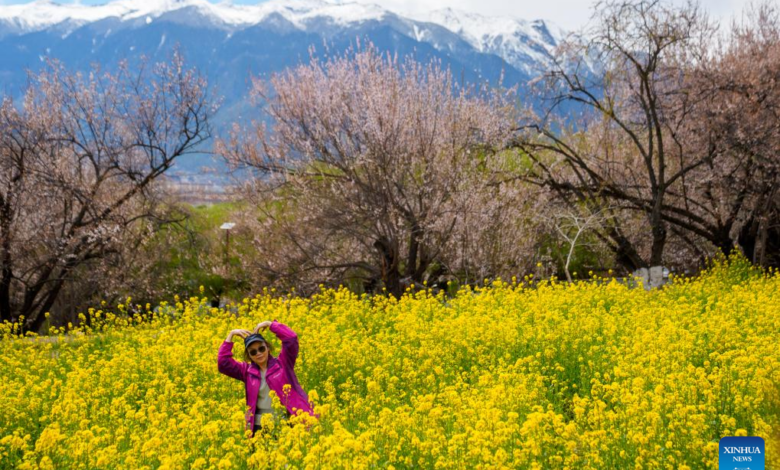
In Nyingchi, eastern Xizang, ecological protection has become closely linked with local livelihoods. Tashi Drolma, a homestay owner in Bomi County, grew up watching her mother run a family inn more than 20 years ago. As a child, she did not imagine that the peach blossoms in the yard would one day become part of a new local economy.
Today, peach blossoms, clean mountains, rivers, and village tourism have become important sources of income for local people in Nyingchi. In 2025, the city received 17.4 million tourist visits, while tourism revenue reached 16.3 billion yuan. Nyingchi also creates more than 10,000 ecological jobs each year, helping raise annual per capita income by about 3,500 yuan.
Back in northern Xizang, Kalzang Lhundrup continues to set out on regular patrols. The work remains cold, lonely, and physically demanding. Yet every returning Tibetan antelope, every crane landing in a wetland, and every village earning income from clean mountains and rivers tells the same story: on the plateau, protecting nature has become another way of sustaining life.