A New Opportunity for Neighborly Balance and Development Partnership

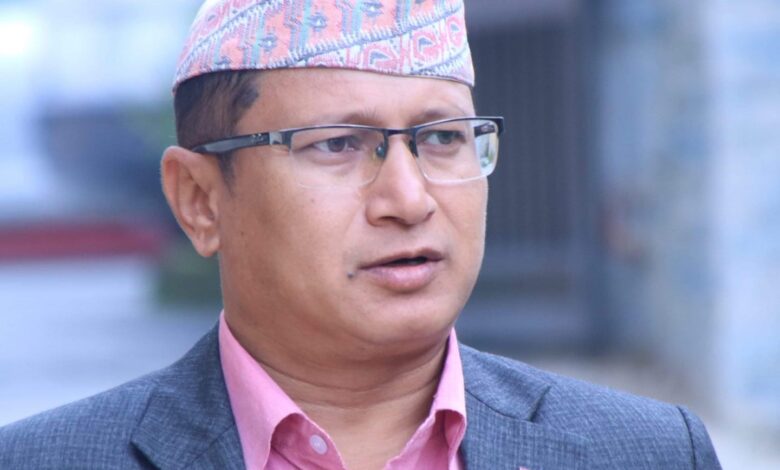
# Prem Sagar Poudel
Foreign Minister Shishir Khanal’s proposed visit to China is not merely a routine diplomatic engagement for Nepal. It is an important opportunity to move balanced neighborly relations, a confident foreign policy, and development partnership in a new direction amid a changing regional geopolitical environment.
Nepal is a geopolitically sensitive country situated between two giant neighbors: India to the south and China to the north. This geographical location is not only a challenge for Nepal but also an opportunity. However, transforming that location into an opportunity requires not reactive diplomacy, but proactive, balanced diplomacy centered on the national interest. Foreign Minister Khanal’s visit to China should be understood in this broader context.
The foundation of Nepal–China relations rests on historical friendship, the Five Principles of Peaceful Coexistence, non-alignment, non-interference, mutual respect, and sovereign equality. China has continued to express support for Nepal’s independence, sovereignty, and development aspirations, while Nepal has also repeatedly reaffirmed its commitment to the “One China policy.” This mutual trust is the strong foundation of the long-term friendship between the two countries.
However, today’s need is not merely to remain confined to the remembrance of history. Nepal now needs an implementation-oriented, result-oriented, and time-bound partnership. If concrete progress can be achieved in the operation of border points, trade facilitation, infrastructure development, energy, tourism, technology, agriculture, education, health, and people-to-people exchanges, Nepal–China relations can become more practical and effective.
Nepal has long felt the need for north–south connectivity, border infrastructure, roads, railways, electricity transmission lines, digital connectivity, and alternative trade routes. Cooperation with China can offer Nepal new possibilities for connecting with international markets. The northern connectivity network holds special significance in Nepal’s aspiration to transform itself from a landlocked country into a land-linked country.
Yet caution is equally necessary alongside development partnership. While advancing any project, Nepal must clearly assess debt management, financial sustainability, environmental impact, local needs, national priorities, and long-term benefits. Diplomacy should not be driven by emotion, but by calculation, strategy, and a clear vision of national interest. Accepting cooperation is important, but implementing it by linking it with Nepal’s needs and capacities is even more important.
Another important dimension of Nepal–China relations is people-to-people friendship. The Himalayas, Buddhist heritage, Lumbini, cultural relations, tourism, education, healthcare, technical training, and the lives of people in border areas can serve as strong bridges that deepen emotional and social ties between the two countries. For state-to-state relations to be sustainable, trust, respect, and closeness between peoples must increase. In this context, tourism, student exchanges, cultural programs, and assistance reaching the local level can become measures of the real depth of the relationship.
Nepal must also view Foreign Minister Khanal’s China visit from the perspective of neighborly balance. Strengthening relations with India while giving equal importance to relations with China is not a diplomatic maneuver; it is Nepal’s geopolitical necessity. The idea of using one neighbor against another is harmful and irrelevant. Nepal’s maturity lies in advancing relations with both neighbors on the basis of trust, respect, and practical cooperation.
Today, the world is moving toward multipolarity. Asia is increasingly becoming a global center economically, technologically, and strategically. In such a situation, Nepal must be able to use its geography not as a weakness, but as a bridge of connectivity, cooperation, and balance. Relations with China can connect Nepal with northern economic, infrastructural, technological, and cultural possibilities, while balanced diplomacy can establish Nepal as a reliable partner in regional dialogue.
The main challenges of Nepal’s foreign policy are internal instability, lack of policy continuity, ambiguity in project selection, delays in implementation, and lack of national consensus. On issues related to understandings reached with China, infrastructure projects, trade facilitation, and border management, a minimum common understanding among the government, opposition, administration, expert community, and media sector is necessary. If internal ambiguity remains on matters of national interest, credibility in external relations becomes weak.
This visit should be able to send four clear messages on Nepal’s behalf. First, Nepal is capable of conducting an independent, balanced, and confident foreign policy. Second, Nepal wants to further strengthen its relations with China on the basis of trust, development, and mutual benefit. Third, Nepal is not an arena for any power competition, but a partner for peace, connectivity, and shared development. Fourth, projects with China will be advanced only in accordance with Nepal’s national needs, economic capacity, and long-term interests.
For China as well, Nepal is not merely a neighboring country, but a friendly partner toward South Asia. Nepal’s stability, prosperity, and infrastructure development are directly linked to regional peace, Himalayan connectivity, and people-to-people relations. China can provide more practical support to Nepal’s development aspirations through grants, investment, technology, skills development, market access, and infrastructure construction. Nepal, too, must demonstrate greater policy clarity, project prioritization, and implementation capacity as a reliable partner.
From Foreign Minister Khanal’s China visit, what is expected is not merely grand announcements, but clear priorities, trust-building, implementable agreements, and long-term understanding. Nepal must move beyond emotional diplomacy and present practical results. Friendship does not mean goodwill alone; the ability to transform it into development, connectivity, trade, technology, and people-level benefits is the essence of successful diplomacy.
Ultimately, Nepal–China friendship is not only a legacy of history but also a possibility for the future. When this relationship is based on mutual respect, peaceful coexistence, development partnership, and people-to-people goodwill, it is beneficial for both countries. If Foreign Minister Khanal’s visit can deliver this positive message, it can become an opportunity for Nepal to build new confidence in neighborly diplomacy, new momentum in development partnership, and a mature presence on the international stage.
If Nepal can advance balanced, credible, and respectful relations with both neighbors by keeping the national interest at the center, this very diplomacy will become the foundation of future stability, prosperity, and national self-respect.
(Author: Prem Sagar Poudel is a senior journalist and international relations analyst from Nepal. He has studied Nepal-China relations, the geopolitics of the Himalayan region, and Asian security issues in depth.)