Nepal Turning into a Laboratory to Contain China
The 'Party Plus' Proposal Challenges the New Delhi–Washington Axis

# Prem Sagar Poudel
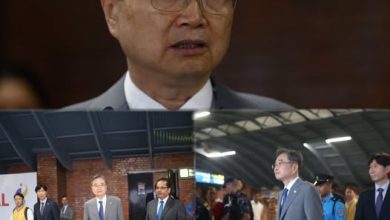
The day after Foreign Minister Shishir Khanal, during his meeting with Chinese Foreign Minister Wang Yi in Beijing, reaffirmed Nepal’s unwavering commitment to the ‘One China Policy’ and agreed to high quality BRI cooperation, a single question is echoing through Kathmandu’s political circles. Whose laboratory will Nepal now become?
This question has not arisen suddenly. The recent Gen Z movement, the change in government, and China’s proposal for a ‘Party Plus’ relationship with the Rastriya Swatantra Party (RSP) all confirm that Nepal has turned into the most sensitive geopolitical laboratory in South Asia. The Khanal–Wang Yi talks have made this contest even more sharply defined.
The explosive ingredients of unemployment, corruption, and political distrust had been accumulating in Nepali society for years. The Gen Z generation saw democracy but found no opportunity, saw the constitution but did not receive services in accordance with it, and saw elections but got no accountability from the elected government. A small spark, the social media ban, ignited that combustible material.
Yet exactly at that moment, another reality was also laid bare. Western powers had been observing this vulnerability in Nepali society for years and preparing to exploit it for their own strategic interests. The real question is not “was the movement spontaneous or orchestrated?” but rather “how was the suffering of Nepali citizens weaponized to contain China’s influence?”
The structured investment made by the American grant mechanism in Nepal between 2021 and 2026 was not merely development assistance. The U.S. Embassy Youth Council (USYC) annually engaging 50 to 55 youths aged 20 to 30 in leadership, network building, and community projects, the National Endowment for Democracy (NED) allocating $79,000 in FY2024 alone for research on China’s influence and $500,000 through the International Republican Institute (IRI) for capacity building of emerging political party leaders, the European Union’s ‘Next Generation’ program launching youth led initiatives worth 5.1 million euros in 2026 alone, and the Danish Institute for Parties and Democracy (DIPD) providing two year training to 28 young political aspirants are all beads of the same strategic chain.
These programs precisely targeted those sectors of Nepali society from which a carefully planned political movement can be born: youth leadership, political consciousness, media narratives, digital mobilization, and anti China research. While speaking the language of ‘democracy assistance,’ the strategic objective of these programs is to create a pro Western political environment in Nepal and to contain Chinese influence.
An information war has erupted between two distinct worlds over the Gen Z movement. Reuters, Al Jazeera, and The Diplomat wove a narrative of ‘youth rebellion’ and ‘democratic renaissance.’ The Grayzone, RT, and Sputnik countered by calling it an ‘NED/IRI trained’ project and an ‘American regime change’ operation.
Both sides are constructing their narratives using partial fragments of the truth. Open documents confirm that the NED, IRI, and USAID were active. However, no public evidence has emerged proving that those very programs directly brought people onto the streets or changed the government. This ambiguity is the very center of the game. As long as the evidence remains incomplete, the West can call it ‘ordinary democracy support,’ while opponents can keep calling it a ‘conspiracy.’
To break this very chain of Western influence, China appears to have adopted a new and twofold strategy.
First, the Chinese Communist Party (CPC) has proposed cooperation with the RSP through a ‘Party Plus’ channel. The willingness to share Chinese experience in good governance and corruption control is no mere coincidence. It is a clear signal that China seeks to draw Nepal’s new political force towards itself.
Second, during the Khanal–Wang Yi talks, China committed to advancing high quality BRI cooperation and focusing on expanding connectivity, including energy transmission lines, highways, border points, and air links. Wang Yi spoke of ‘transforming Nepal from a landlocked country into a land linked nation.’ This language is not merely symbolic. It reveals China’s long term strategy to pull Nepal away from its dependence on Indian transit.
By reiterating his commitment to the ‘One China Policy’ and pledging not to allow Nepali territory to be used for anti China activities, Khanal appears to be drawing a red line against Western influence. This has provided Beijing with great strategic reassurance.
There is no direct evidence. But what they did was to identify the existing discontent within Nepali society and make structured investments on top of it. They trained youth leadership, mobilized the media around a specific agenda, promoted anti China research and debate, and brought the new leadership of political parties into their access. When the social explosion occurred, its direction was naturally steered to align with Western interests.
This is a strategy of ‘exploiting instability.’ Nepal’s discontent was not created, but it was channeled towards reducing Chinese influence and installing a pro Western political force. The U.S. State Department’s ‘Integrated Country Strategy’ for Nepal calling it a ‘critical partner’ between India and China, and the MCC compact connecting Nepal’s energy infrastructure to the Indian grid are all pieces of the Indo Pacific strategy.
Between 2021 and 2026, U.S. cooperation with the Nepal Army, Armed Police Force, and Nepal Police speaks the language of disaster management, peacekeeping, and human trafficking control. But exercises like X Balance Nail, Pacific Angel, and regular visits by USINDOPACOM officials are part of a ‘soft security integration.’ This builds institutional familiarity and interoperability between the Nepali security apparatus and the American Indo Pacific security architecture.
India is under dual pressure. With old political parties weakening, it must work with new power structures, yet risks its own influence shrinking if those forces align with Western networks. India desires neither total Western influence nor total Chinese influence. Its objective is to control China’s strategic penetration. Russia, for its part, has cited events in Nepal as another example of the global ‘anti regime change’ narrative.
Amid all these games, the Nepali state’s greatest weakness is the absence of a unified public record of foreign programs, grants, and security cooperation. Which institution took foreign funds? Who participated? What was the outcome? Nepali citizens do not know the answers to these questions. It is this very opacity that causes conspiracy theories and accusations of foreign influence to recur after every political crisis.
First, a Foreign Grant Transparency Act must be introduced. Details of all foreign funds, programs, and partners must be made public. Second, a mandatory registration system is needed for foreign assistance received by political parties, youth organizations, and media outlets. Third, there must be parliamentary oversight of security cooperation. Fourth, a digital sovereignty policy should be brought in. Fifth, without reforming unemployment, education, and public services, one cannot simply escape internal problems by pointing at foreign influence. Sixth, balanced and sovereign diplomacy is needed with everyone: China, India, and the United States.
By proposing ‘Party Plus’ to the RSP and reactivating BRI cooperation, China seeks to challenge the New Delhi–Washington axis. The West, by increasing investment in youth and media, seeks to contain Chinese influence. Between these two poles, the pain and anger of Nepali citizens are being weaponized.
Nepal’s path is clear. Never become the proxy of any external power, but maintain transparent and balanced relations with all. This requires a fact based national inquiry, full transparency of grants, parliamentary oversight of security cooperation, and the guarantee of youth employment and good governance.
Beijing has proposed making Nepal ‘land linked,’ while Washington seeks to keep it within the ‘Indo Pacific’ perimeter. But Nepal is not a laboratory. It is a sovereign nation. The responsibility to establish this truth lies with the state.
(Author: Prem Sagar Poudel is a senior journalist and international relations analyst from Nepal. He has studied Nepal-China relations, the geopolitics of the Himalayan region, and Asian security issues in depth.)