Technology Boosts High-Altitude Fruit and Vegetable Production in Xizang

# Pasang Lhamu
A modern agricultural industrial park in Maizhokunggar County under Lhasa, in southwest China’s Xizang Autonomous Region, has expanded high-altitude fruit and vegetable production through digital technology and automated greenhouse systems.
In recent years, the park has prioritised the development of smart agriculture. Intelligent monitoring and control equipment has been installed in 140 large greenhouses, continuously collecting data on temperature, humidity, light, air circulation, water and nutrients.
Using information gathered by sensors, the system automatically adjusts temperature, ventilation, shade, irrigation and fertiliser levels inside the greenhouses. This allows water and nutrients to be supplied according to the needs of different crops while reducing unnecessary resource consumption.
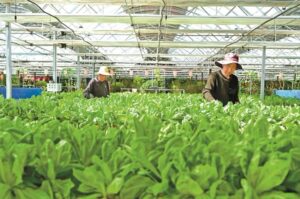
According to Xizang’s agricultural authorities, technology-based greenhouse farming has helped overcome challenges created by the region’s short frost-free season, sharp differences between daytime and nighttime temperatures, and harsh high-altitude environment.
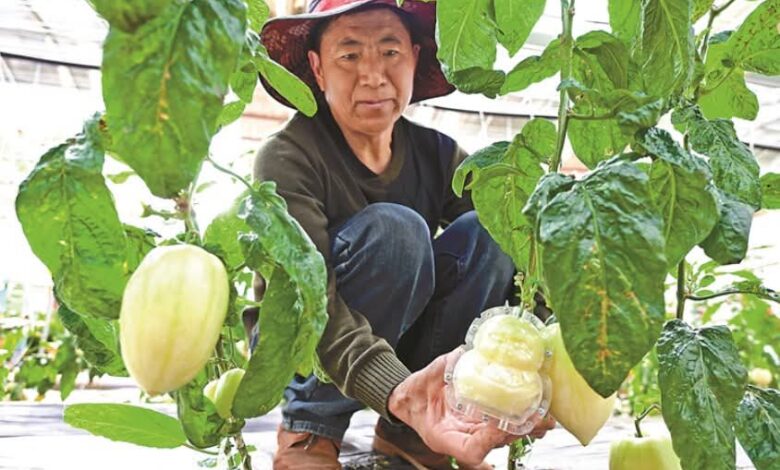
With a controlled growing environment, the park has been able to cultivate strawberries, cherry tomatoes, melons and various other fruits and vegetables. Smart regulation of light, temperature, water and nutrients has also made it possible to maintain production during unfavourable weather and reduce dependence on seasonal cultivation.
The park has also introduced a recycling system that combines fish farming with vegetable cultivation. Nutrients generated through aquaculture are absorbed by plants, while treated water is returned to the fish-farming system. The approach can reduce water consumption by as much as 90 percent compared with conventional farming methods.
A total of 38 varieties of specialised fruits and vegetables have reportedly been successfully cultivated using technology-based agricultural systems. Cooperation among the industrial park, agricultural enterprises and farmers has also contributed to local production, employment and income growth.
Official information indicates that more than 4,700 local residents have so far been connected with employment and income-generating opportunities through the park and related agricultural activities. The project has emerged as an example of linking modern agricultural technology with rural revitalisation and local economic development.
Integrated water and fertiliser management, precision irrigation, automated environmental control and recycling systems have enabled the park to improve agricultural production while following principles of green and low-carbon development.
The park plans to expand cultivation, develop brands for local agricultural products and introduce additional technologies adapted to high-altitude conditions. These measures are expected to increase the supply of fresh fruits and vegetables in Lhasa and surrounding areas while improving farmers’ incomes and modern agricultural skills.
The experience of Maizhokunggar shows that difficult geography and climate do not have to remain permanent obstacles to agricultural development. With suitable technology, scientific management and local participation, high-quality, resource-efficient and sustainable agricultural production is possible even on the plateau.